
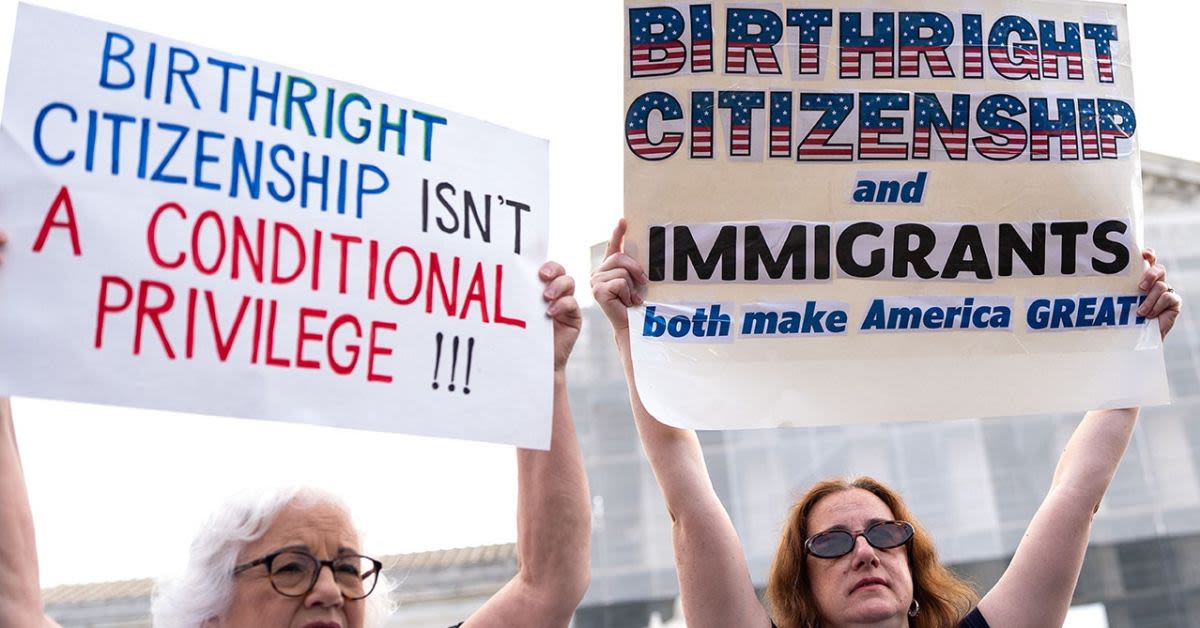
Vice President JD Vance warned that the Supreme Courts narrow decision preserving birthright citizenship has left the doctrine hanging by a thread, insisting it can still be overturned despite the justices rebuke of President Donald Trumps executive order earlier in the day.
According to Mediaite, Vance appeared on Fox News The Ingraham Angle and told host Laura Ingraham that conservatives should view the ruling not as a final defeat, but as an opening to reverse the Courts decision through legislative action. The 5-4 ruling left intact the long-standing guarantee that anyone born or naturalized in the United States is automatically a citizen, a reading of the Fourteenth Amendment that has fueled decades of controversy over illegal immigration and so?called birth tourism.
The case centered on President Trumps executive order seeking to narrow birthright citizenship for children born to non?citizens in the country unlawfully or on a temporary basis. While the Courts majority rejected that effort, Justice Brett Kavanaughs dissent underscored that the real obstacle was statutory, not constitutional, signaling a path for Congress to act.
In my view, the Executive Order does not violate the Fourteenth Amendment. But the Order does contravene a federal statute, 8 U. S. C. 1401(a). Congress couldconsistent with the Fourteenth Amendmentamend 1401(a) or otherwise enact new legislation establishing exceptions to birthright citizenship for children born to foreign citizens unlawfully or temporarily in the country. But Congress has not yet done so, he wrote, effectively inviting lawmakers to revisit the law. President Trump quickly seized on that opening, urging Congress to move swiftly to end what many conservatives see as an incentive for illegal immigration and abuse of American generosity.
The Supreme Court upheld Birthright Citizenship, which is too bad for our Country, but we can easily make it up in Congress through Legislation, with the support of the President, that has now been determined during this process. No long and unwieldy Constitutional Amendment is necessary! Congress should start TODAY to work on ending expensive and unfair to our Country, Birthright Citizenship. They will have my Complete and Total Support! he wrote on Truth Social, framing the fight as a legislative, not judicial, battle. Vance echoed that call, arguing that the closeness of the preposterous and disappointing ruling shows the legal foundation for automatic citizenship is far weaker than its defenders claim and ripe for reform.
One of the things were going to have to do is just continue to enforce the border, Laura. This was a very disappointing ruling. Of course, we respect it but we also think it was a major, major mistake as Justices [Samuel] Alito and [Clarence] Thomas pointed out, Vance told Ingraham, aligning himself with the Courts most conservative voices. One of the things it might invite, Laura, is, quite literally, people come here on a vacation, give birth, and then the child and family have the full benefits of American citizenship. It suggests why the Supreme Court should have went the other way.
I know a lot of conservatives, Laura, certainly the people that Im talking to, are extremely disappointed. I do think there is a big silver lining here and thats the simple fact that a lot of legal experts expected this case to go in the wrong direction by 7-2 or even 8-1, he continued, stressing how close the Court came to siding with the administration. The fact that this case was a 5-4 decision effectively means that the concept of birth right citizenship, which is an absurdity to the 14th amendment, that concept is hanging by a thread.
For conservatives, the ruling now shifts the battlefield from the courts to Capitol Hill, where President Trump and Vance are pressing Congress to test the very statutory framework the Court cited as the barrier to reform. With a dissent openly outlining how lawmakers could lawfully narrow birthright citizenship, the political question is no longer whether change is possible, but whether Congress has the will to act on it.
Login