
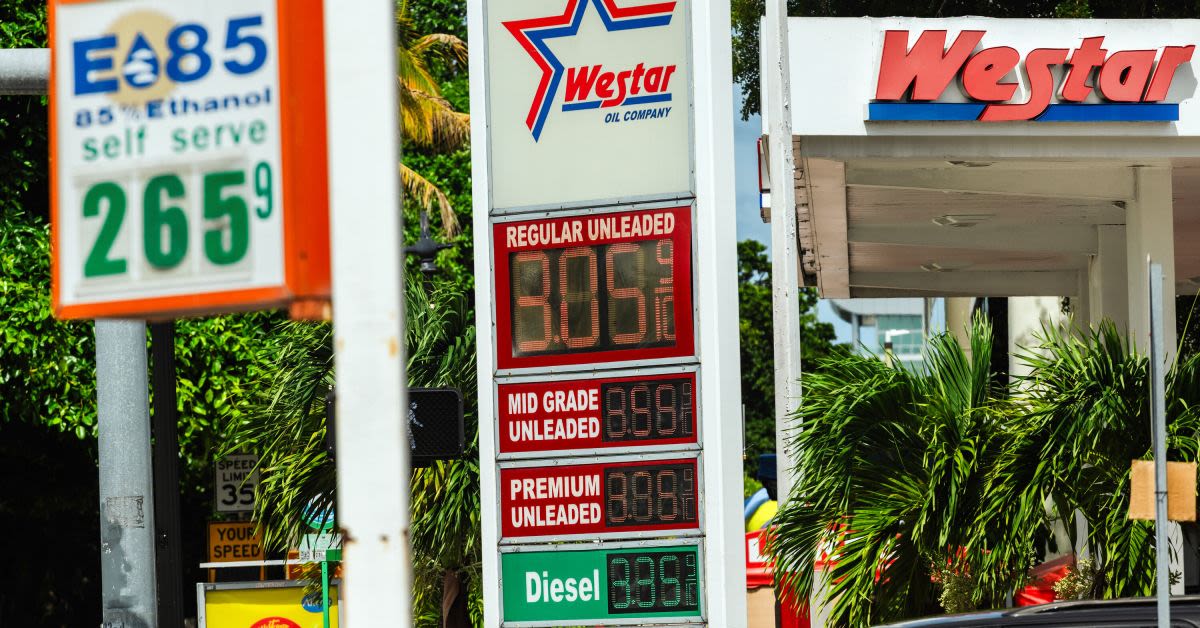
For anyone paying attention to the latest gyrations in gas prices, the real story is not what happened at the pump, but how badly the so?called experts missed it.
According to Western Journal, Politico recently ran a revealing piece headlined, Energy experts said gas prices would stay high. Why were they wrong? that inadvertently exposed just how flimsy much of the expert class has become. The outlet noted that the same analysts who had been loudly forecasting prolonged pain for drivers under President Donald Trumps policies have now been forced into an awkward retreat. The narrative of inevitable, long?term price misery simply did not survive contact with reality.
The backdrop is familiar to anyone who has filled up a tank this year. As tensions with Iran escalated, gas prices surged, and the media quickly amplified dire warnings that Americans were in for a long summer slog with sky-high prices. Yet instead of entrenching at those levels, prices have been dropping sharply, leaving the public with cheaper fuel and the experts with egg on their faces.
Politico itself laid out the numbers in stark terms: Instead of spiraling upward, the average price at the pump has plummeted 70 cents per gallon in a month from a peak of $4.56. That is not a minor adjustment; it is a collapse that flatly contradicts the confident predictions of a sustained crisis. For ordinary Americans, it is welcome relief. For the professional forecasting class, it is a quiet embarrassment.
To its limited credit, Politico acknowledged that it had helped spread the earlier panic. The outlet admitted, It wasnt supposed to work this way, according to energy experts whose predictions of $150 barrel of oil, $5 gasoline and summer recessions were widely quoted in the media, including POLITICO. In other words, the media did not merely report on these forecasts; it amplified them, lent them credibility, and built a narrative of looming economic hardship around them.
One oil analyst quoted by Politico seemed genuinely baffled by the markets behavior. Its the weirdest thing, the analyst said. Ive never seen a market like this. That kind of candor is rare, but it also underscores the deeper problem: the same people who admit they have never seen anything like the current market were the ones confidently predicting exactly how it would behave. The humility arrives only after the fact.
No one expects perfect foresight in a world of complex markets, geopolitical shocks, and rapidly shifting supply and demand. The issue is not that experts sometimes get it wrong; that is inevitable. The issue is what happens after they are wrong, and how the media ecosystem handles those failures. In practice, the bold, alarming prediction gets front?page treatment, while the quiet correction is buried, if it appears at all.
This is where the politicized media environment becomes especially dangerous. When narratives are more valuable than facts, forecasts start to look less like analysis and more like storytelling with a political edge. Under Trump, the preferred storyline in many newsrooms was one of instability, crisis, and impending economic pain, particularly in areas like energy where his deregulatory agenda challenged progressive orthodoxy. Dire predictions of $150 oil and $5 gas fit that script perfectly.
Once such a narrative takes hold energy crisis incoming, summer of pain, economic spiral it develops its own momentum. Even when the data shift, the storyline lingers because it is emotionally charged and politically useful. Falling prices at the pump are concrete, measurable facts, but they are also inconvenient for those who built their coverage around the expectation of prolonged hardship under policies they oppose.
The incentives driving this pattern are not mysterious. Experts gain relevance and media exposure by offering bold, confident projections, not cautious caveats. Media outlets, in turn, thrive on urgency, alarm, and the promise of looming catastrophe, which drive clicks and ratings far more effectively than calm, measured analysis. Audiences, conditioned by years of crisis?driven coverage, respond more intensely to warnings than to reassurances.
The result is a recurring cycle: overconfident and often ideologically tinged forecasts, followed by quiet walk?backs that receive a fraction of the attention. There is little accountability for those who were wrong, and even less introspection about why their errors so often seem to lean in one political direction. Over time, this erodes public trust not only in particular pundits or outlets, but in the broader notion of expert consensus itself.
For conservatives who have long warned about media bias and the elevation of narrative over fact, this episode is yet another data point. The real question is no longer whether gas prices will rise or fall in any given month, but whether Americans can still distinguish genuine signal from politically convenient noise. With experts like these, and a media class eager to weaponize their worst predictions, that task is becoming harder by the day and voters would be wise to remember that the next time they are told that economic disaster is not just possible, but inevitable.
Login