
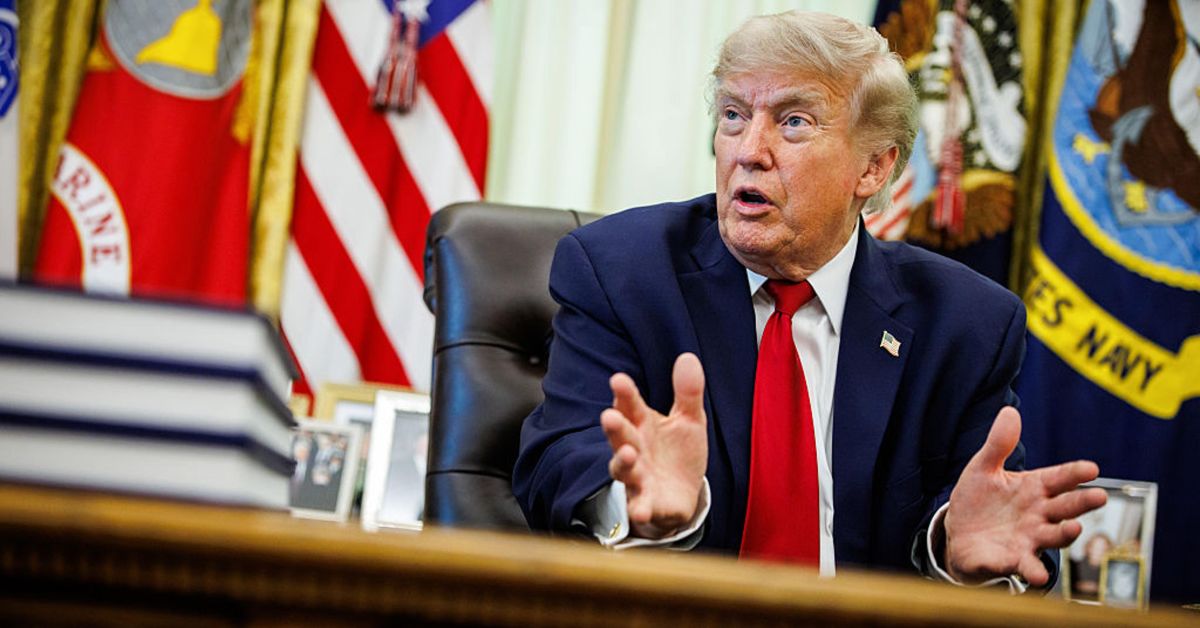
President Donald Trump is signaling support for new immigration legislation after the Supreme Court struck down his executive order limiting birthright citizenship, underscoring a renewed push to tighten the rules governing who can become an American citizen at birth.
In a 6-3 decision, the high court ruled that an executive order Trump issued on the first day of his second term ran afoul of the Constitution. According to Western Journal, the order had sharply curtailed the circumstances under which a child born on U.S. soil would automatically receive American citizenship.
The majority anchored its reasoning in the Fourteenth Amendment, which provides, in part, All persons born or naturalized in the United States, and subject to the jurisdiction thereof, are citizens of the United States and of the State wherein they reside. Chief Justice John Roberts, writing for the court, declared, Children born in the United States to parents unlawfully or temporarily present are subject to the jurisdiction of the United States and are citizens at birth under the Fourteenth Amendments Citizenship Clause.
Following the ruling, Trump turned to his Truth Social platform to highlight an article from the Washington-based outlet Just the News titled, Trumps efforts to reverse birthright citizenship may succeed with or without SCOTUS. The headline itself underscored a key conservative argument: that the political branches, not the courts, should ultimately decide how far birthright citizenship extends in an era of mass illegal immigration.
Trump then posted a pointed response that both lamented the ruling and laid out a legislative path forward. The Supreme Court upheld Birthright Citizenship, which is too bad for our Country, but we can easily make it up in Congress through Legislation, with the support of the President, that has now been determined during this process, he wrote.
He pressed Congress to act swiftly, arguing that the Constitution does not need to be rewritten to address what many conservatives see as a glaring loophole exploited by illegal immigration and so?called birth tourism. No long and unwieldy Constitutional Amendment is necessary! Congress should start TODAY to work on ending expensive and unfair to our Country, Birthright Citizenship. They will have my Complete and Total Support! he added.
Just the News reported that several Republican-backed measures are already on the table to address the issue through statutory reform rather than constitutional change. Several bills, most notably the Birthright Citizenship Act introduced by [Texas Rep. Brian] Babin and Sen. Lindsey Graham, R-S.C., one day after Trumps inauguration in 2025 (and similar versions in recent Congresses), seek to end or sharply restrict automatic birthright citizenship by amending the Immigration and Nationality Act (INA), the outlet noted.
These proposals would narrow the interpretation of the Fourteenth Amendments key phrase, subject to the jurisdiction thereof, in a way that aligns more closely with the originalist reading favored by many conservatives. These measures would reinterpret the 14th Amendments subject to the jurisdiction thereof clause to grant citizenship at birth only to children with at least one parent who is a U.S. citizen, national, lawful permanent resident (LPR) residing in the U.S., or an LPR serving in the military, the news outlet added.
The policy stakes are significant, particularly given the scale of illegal immigration and its fiscal impact on taxpayers. The Center for Immigration Studies estimated last year that between 225,000 and 250,000 births to illegal immigrants occurred in 2023, accounting for roughly 7 percent of the 3.6 million total births in the United States.
Some leading Senate conservatives, however, argue that the Supreme Courts ruling has now made a constitutional amendment the only sure way to change the birthright citizenship regime. GOP Sens. Mike Lee of Utah and Rand Paul of Kentucky responded to the decision by asserting that a formal amendment will ultimately be required to override the courts expansive reading of the Fourteenth Amendment.
The courts three dissentersJustices Samuel Alito, Clarence Thomas, and Neil Gorsuchoffered a starkly different view of the Constitutions text and history. Alito, writing in dissent, contended that the majority had effectively rewritten the Fourteenth Amendment in a way that invites further illegal immigration and undermines American sovereignty.
In sum, the Fourteenth Amendment confers citizenship on a person who is born in this country or naturalized only if that person is also not subject to any foreign power, Alito wrote, emphasizing a more restrictive understanding of allegiance and jurisdiction. The Court interprets subject to the jurisdiction thereof differently. In its view, the phrase simply means subject to the laws that apply to everyone who is present within the countrys borders, he added.
Alito warned that the majoritys approach would continue to incentivize illegal entry into the United States, particularly from those seeking citizenship for their children in a wealthy nation with generous public benefits. He observed, The Courts interpretation preserves a powerful incentive to enter or remain in this country illegally. Immigrants naturally prefer affluent countries where economic opportunities are available. Other than Canada, the United States will be the only affluent nation where birth alone is enough to establish citizenship.
The justice closed his dissent with a blunt assessment of the long-term consequences for the nations political and social fabric. He concluded, If the Fourteenth Amendment required these results, the country would have to live with them or amend the Constitution. But the Fourteenth Amendment does not include the rule the Court now imposes on the country. In my judgment, the Court has made a mistake that will seriously affect the countrys future.
For conservatives, the ruling crystallizes a broader debate over national sovereignty, the rule of law, and the costs of unchecked illegal immigration, even as it clarifies the legal battlefield ahead. With Trump pledging Complete and Total Support for congressional action and key Republicans weighing both statutory and constitutional strategies, the fight over birthright citizenship is poised to move from the courtroom to the halls of Congress, where questions of fairness to American citizens and the proper meaning of the Fourteenth Amendment will take center stage.
Login