
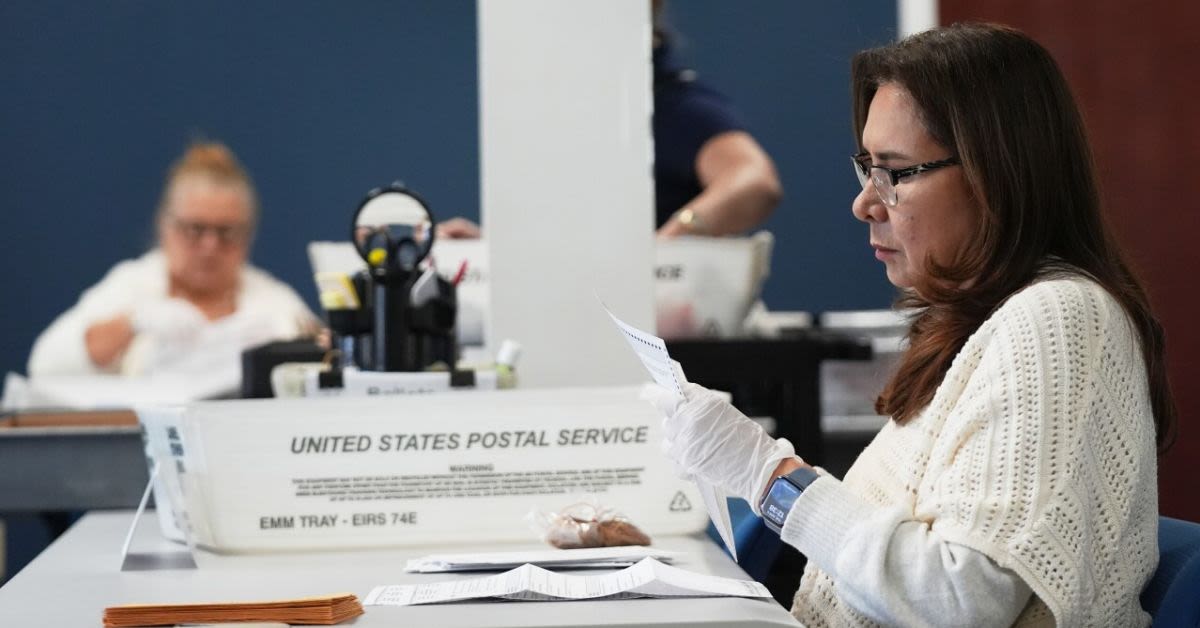
In a narrow 54 decision that will fuel ongoing concerns about election integrity, the U.
S. Supreme Court ruled that federal law does not require mail-in ballots to be received by Election Day.
According to Gateway Pundit, the case arose from a challenge brought by the Republican National Committee and the Libertarian Party of Mississippi to Mississippis practice of counting absentee ballots that arrive after Election Day. Conservative Justice Amy Coney Barrett authored the majority opinion, and Chief Justice John Roberts joined her in siding with the Courts liberal bloc, a move likely to trouble conservatives who have long warned about the risks of prolonged ballot counting.
A Mississippi law permits the counting of absentee ballots postmarked by election day but received up to five days later. We must decide whether the federal election-day statutes preempt Mississippis law. They do not, Amy Coney Barrett wrote, making clear that, in the majoritys view, Congress has not explicitly barred states from extending receipt deadlines. The election-day statutes say nothing about ballot receipt, and we cannot add to the words Congress chose, Barrett wrote in the majority opinion, effectively leaving states broad discretion over how long they may continue tallying mailed ballots.
Due dates for absentee ballots have shifted over time. During the Civil War, States that allowed absentee voting imposed an election-day deadline for ballot receipt, Coney Barrett said, acknowledging that historical practice once aligned more closely with a single, definitive Election Day. Recall that earlier this year Conservative Justice Samuel Alito blasted the endless counting of mail-in ballots during oral arguments, signaling a sharp divide on the Court over how far states should be allowed to stretch the voting timeline.
We have lots of phrases that involve two words, the second of which is day. Labor Day, Memorial Day, George Washingtons birthday, Independence Day, birthday, and Election Day, Alito said, underscoring his view that Election Day should mean a fixed, final date, not an open-ended counting period. They are all particular days. So if we start with that, if I have nothing more to look at than the phrase Election Day, I think this is the day in which everything is going to take place, Alito added, reflecting a constitutional approach more in line with conservatives who favor clear, uniform deadlines.
Roberts and Amy Coney Barrett appeared skeptical during the oral arguments, yet ultimately endorsed a reading of federal law that allows states like Mississippi to keep counting ballots for days after citizens have gone to the polls, a development that will only intensify calls on the right for Congress and the states to restore a firm, trustworthy Election Day standard.
Login