
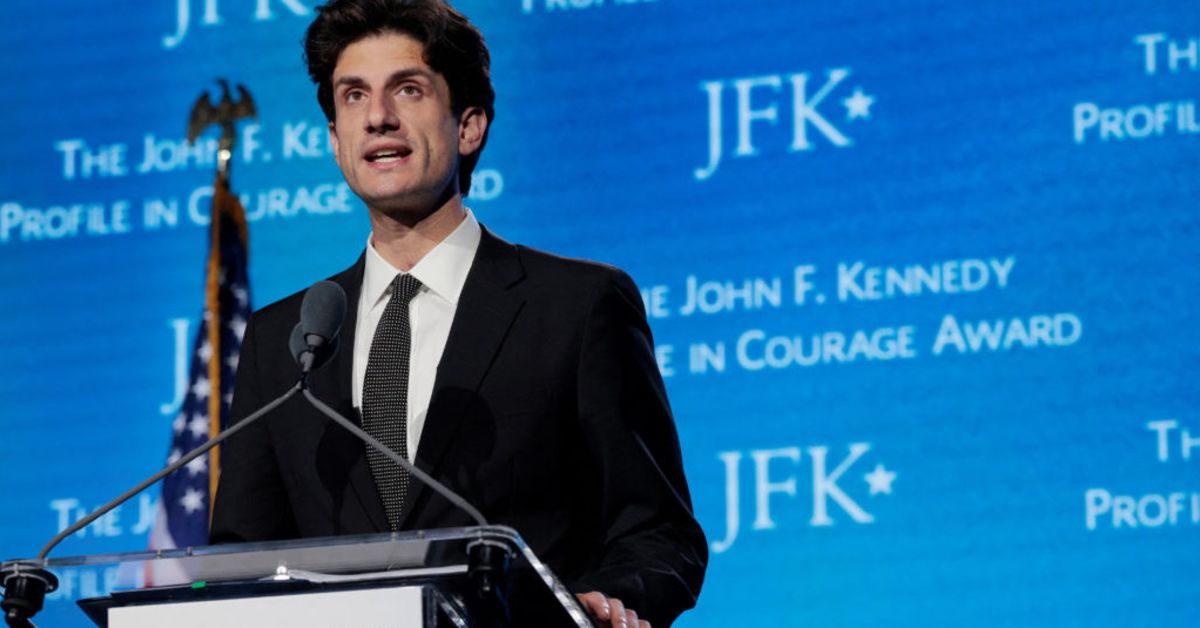
Against long odds in a deep-blue borough, Democratic voters in Manhattan managed to reject one of Americas most entitled political heirs.
Jack Schlossberg, the 33-year-old grandson of President John F. Kennedy, finished a distant third in the Democratic primary for New Yorks 12th Congressional District, drawing less than 11 percent of the vote despite his famous last name and lavish personal spending. George Conway, the Lincoln Project cofounder whose cable-news ubiquity has made him a staple on The Jim Acosta Show, fared even worse, limping into fifth place and finishing behind little-known candidate Nina Schwalbe, according to The Washington Free Beacon.
For conservatives long wary of dynastic politics and celebrity rule, Schlossbergs defeat is a rare moment of accountability for a political family that has treated public office as a hereditary entitlement. The Kennedy clan has for decades operated as a powerful liberal brand, but its record is marred by scandal, personal excess, and a sense that the rules binding ordinary Americans somehow do not apply to them.
The Kennedy family is described by critics as a toxic cabal of bloated, boat-shoed sex pests and trust-fund layabouts still living off the fortune amassed by Joseph P. Kennedy, the wealthy patriarch best known for his efforts to make peace with Adolf Hitler. Tuesdays result suggests that the familys once-mythic aura is finally undergoing a long-delayed reassessment among even Democratic voters in one of the countrys wealthiest districts.
John F. Kennedy, Schlossbergs grandfather, has been likened to the Eric Swalwell of the White House, while his great-uncle Ted Kennedy has been called the Eric Swalwell of the U.S. Senate, a reputation he cemented in 1985 by making a waitress sandwich with Chris Dodd at a local fine-dining establishment. These comparisons underscore a pattern of unseriousness and impropriety that conservatives have long argued would be politically fatal if associated with a Republican dynasty.
To be fair to Swalwell, there's no evidence (that we know of) to suggest he's ever fled the scene of an accident after a woman drowned in his car. Ted Kennedy, by contrast, remained in the Senate until 2009, more than four decades after Mary Jo Kopechnes death at Chappaquiddick, a reminder of how liberal icons have often been shielded from the consequences that would destroy others careers.
Schlossberg himself framed the stakes of his race in strikingly self-regarding terms. Days before the election, he told the Wall Street Journal that he would interpret a loss as proof that the American political system is beyond repair, declaring, If I can't do it, then nobody can, a statement that revealed more about his sense of entitlement than about the health of the republic.
By any traditional measure, Schlossberg was an unlikely victim of the meritocracy he claims to revere. If a 33-year-old Kennedy brat with four trust funds and what the New York Times described as little traditional work experience can lose a primary in one of the country's wealthiest congressional districts despite being endorsed by David Letterman and spending $1 million of his own inheritance, the American Dream is truly dead, the article observed with biting irony.
Schlossbergs brief rise owed less to public service than to online notoriety. Backed by former House speaker Nancy Pelosi and buoyed by his bizarre social media persona, he tried to drag the fading Camelot mystique into the TikTok era by cracking jokes about guzzling Jew blood and male jizz, a style that may have impressed adolescent followers but did little to reassure voters seeking maturity and judgment.
His approach to the nuts and bolts of campaigning reflected the same aversion to adult responsibility. The New York Times reported in May that Schlossberg rarely attended campaign meetings and often vanished for long stretches with little notice or explanation, and he cycled through staff so frequently that some former employees kept showing up for weeks because he never bothered to tell them they had been dismissed.
In the end, the online fandom that labeled him Americas babygirl proved politically useless. Schlossberg was unable to convert his following of TikTok teenagers and nostalgic Facebook admirers into actual votes, underscoring the limits of influencer politics in a race that still required basic competence and discipline.
The Times recently followed Schlossberg as he attempted retail politicking on an Upper East Side corner. After a 72-year-old retiree named Robin called him nice looking, he was quickly surrounded by a group of 10th-grade girls seeking selfies, prompting him to ask, Do you guys have parents that might want to vote?a question that captured the gulf between his online celebrity and real-world support.
For many Americans skeptical of liberal dynasties and media-manufactured candidates, Tuesdays result felt like a narrow escape. America dodged a bullet on Tuesday, the piece noted, adding that not since Kamala Harris's defeat in 2024 has the country been spared such a calamitous outcome, and with Congress already Kennedy-free since Massachusetts voters rejected Joe Kennedy IIIs Senate bid in 2020, voters have again signaled that famous names and progressive branding are no substitute for character, competence, and accountability in a republic that should resist hereditary rule.
Login