
The American lefts latest crusade against wealth, dressed up as reform and economic reset, looks less like fresh thinking than a tired rerun of the same class-warfare politics that voters have seen and rejected many times before.
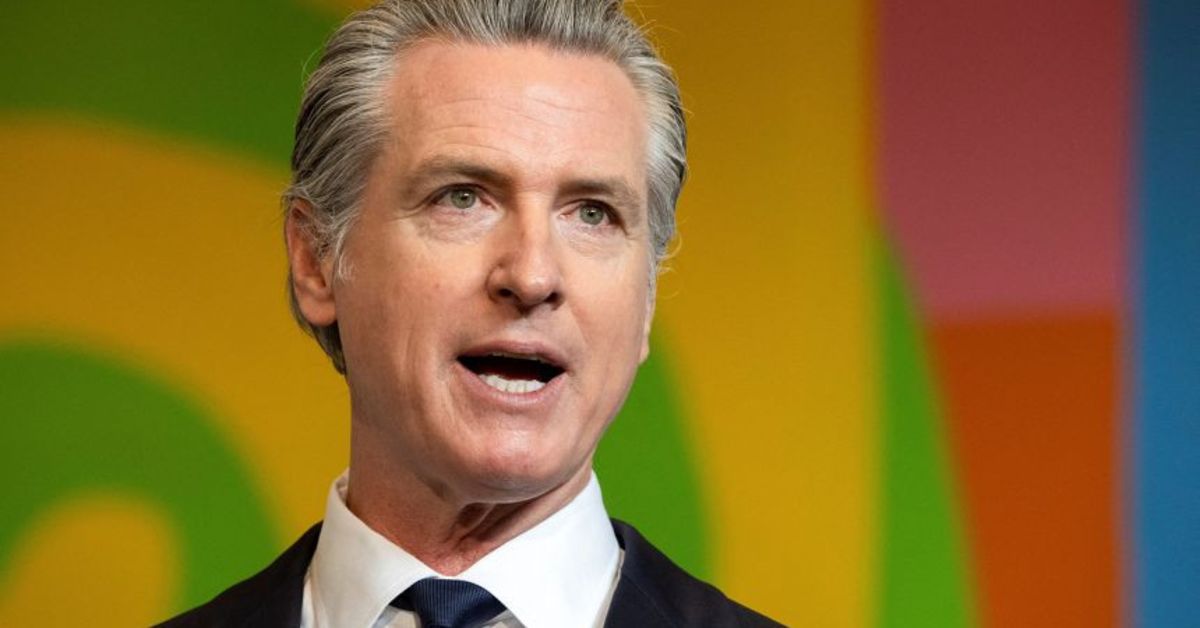
The dynamic now unfolding around California Gov. Gavin Newsom and New York City Mayor Zohran Mamdani illustrates how aggressively the Democratic Partys activist wing is dragging its leaders further left. As reported by Western Journal, Mamdanis influence surged on Tuesday when all three socialist candidates he endorsed in New Yorks Democratic congressional primaries prevailed, two of them by comfortable margins, sending shockwaves through the states Democratic establishment.
Newsom, widely viewed as a top contender for the 2028 Democratic presidential nomination, appears to have absorbed the message. The lesson from the partys energized socialist flank is simple: Move left or get left behind.
On Friday, the governor took to X to signal his alignment with this agenda, calling for a national billionaires tax and an economic reset. Its time for a national billionaires tax and a new social contract, Newsom declared, before launching into a familiar litany of grievances about wealth and inequality.
10% of Americans own two-thirds of the wealth. Wages have stagnated. The cost of living has skyrocketed. The system is fundamentally broken, he wrote, framing the United States as an economy rigged in favor of the wealthy. The federal tax code, a corporate code, and an inheritance code were written for a different set of Americans. Its time for an economic reset.
In an accompanying video, Newsom attempted to add policy detail to his rhetoric. He suggested that revenue from his proposed tax on billionaires would be funneled into a national public equity fund, designed to give every American a financial stake in the rapidly expanding artificial intelligence sector.
Strip away the branding, however, and the core message is the same one Democrats have been selling for generations: Tax the rich, trust the government. The packaging may be updated for the digital age, but the substance remains a call for more centralized control and more confiscation of private wealth.
The irony is that Newsom himself has recently opposed a major tax hike in his own state. He came out against a California ballot measure that would impose a one-time 5 percent tax on residents with assets exceeding $1.1 billion, a levy that would allegedly direct nearly all new revenue to health care, with the remainder earmarked for education and food assistance, according to NBC News.
That word allegedly does a lot of work in any discussion of new taxes. Conservatives do not resist higher taxes because they hate health care and love billionaires, as caricatured by the left, but because they have watched for decades as public money has flowed not to the needy but to an ever-expanding bureaucracy.
Anyone who has seen the affluent suburbs surrounding Washington, D.C. now among the wealthiest communities in the country understands where much of that money actually ends up. Rather than narrowing inequality, federal spending has too often enriched the permanent political class and its network of contractors, consultants and lobbyists.
The recent past has also featured what many regard as the most egregious fraud scandal in the history of public expenditure, with pandemic-era relief programs riddled with abuse and waste. That episode alone should give pause to anyone eager to hand Washington yet another vast revenue stream under the guise of fairness.
History offers an even starker warning about the path Mamdani and his allies champion. Each time socialists gain power, their inner circle prospers while ordinary citizens bear the brunt of economic decline, shortages and lost opportunity.
To his credit, Newsom is not wrong to say that many Americans perceive a fundamentally broken system. Voters on both the left and right see rising costs, stagnant wages and a sense that the game is rigged, but they draw very different conclusions about the remedy.
On the right, the answer is not to pour more money into the same institutions that have failed to steward public funds responsibly. Conservatives remember that when Republicans confronted soaring prices and widening disparities, they turned to President Donald Trump in hopes that deregulation, tax relief and a pro-growth agenda would unleash opportunity rather than expand bureaucracy.
The question now is whether voters will once again fall for the siren song of socialism, repackaged for a new generation as equity and reset. With Mamdani tightening his grip on New York City politics and Newsom auditioning for national leadership by echoing the lefts talking points, the stakes could not be clearer.
Americans would do well to look past the polished videos and carefully crafted slogans and ask who truly benefits from these grand designs. When you watch Newsom tout his national billionaires tax, does he appear as a champion of the downtrodden, or as a slick political chameleon adapting to the latest ideological fashion?
The end of the Cold War in 1991 closed one chapter in the global struggle between Western liberty and Soviet-style collectivism, but it did not settle the underlying debate. In the Age of Mamdani, a new generation that never experienced that ideological clash firsthand is being asked to choose between the proven resilience of free markets and the failed promises of socialism, and the outcome will determine whether America doubles down on individual freedom or drifts further into the same old statist experiment under a new name.
Login