
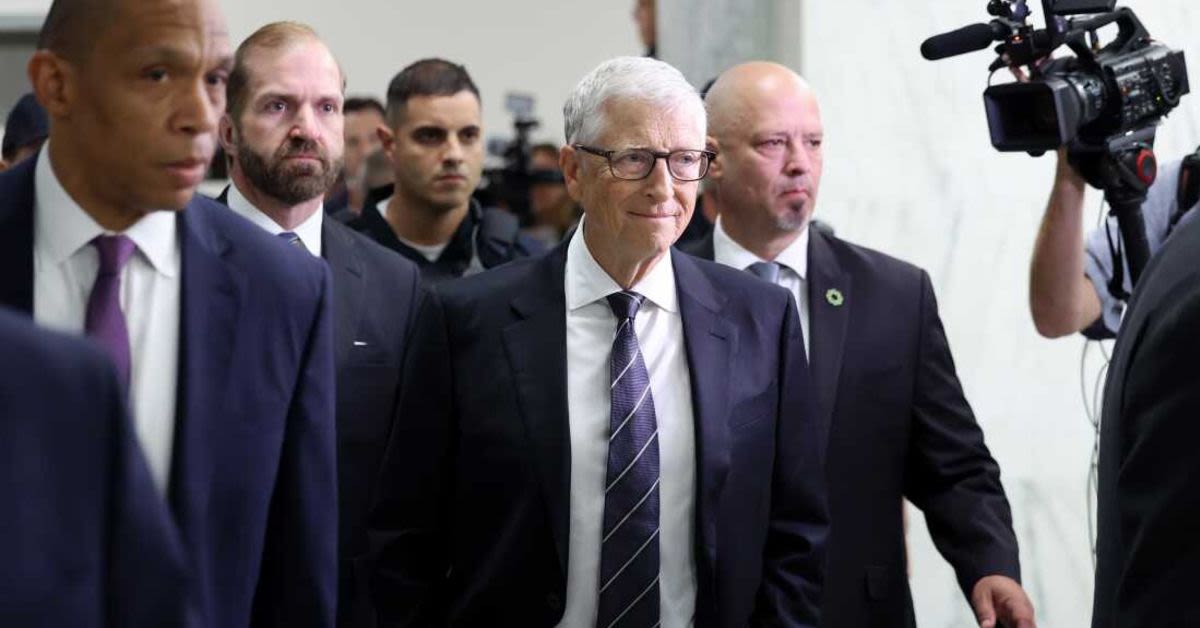
Bill Gates closed-door testimony before the House Oversight Committee has laid bare a series of extramarital affairs and deepened questions about his long-scrutinized association with deceased sex offender Jeffrey Epstein.
The Microsoft co-founder appeared before lawmakers on June 10 as part of the committees review of the federal investigation into Epstein and his longtime associate Ghislaine Maxwell, who is serving a 20-year sentence for child sex trafficking. According to Western Journal, the newly released transcript shows Gates acknowledging multiple affairs and addressing how those relationships intersected with Epsteins shadowy network.
Some of Gates admissions build on earlier reporting rather than break entirely new ground. In February, the New York Post reported that Gates had privately told staff at the Bill & Melinda Gates Foundation that he had affairs with two Russian women, but the congressional testimony suggests the scope was broader.
As reported by the U.K.s Daily Mail, Gates placed the total number of affairs at three during his appearance before the committee, disclosing additional names and details. He acknowledged that one of those relationships was with Dr. Alice Jacobs Nesselrodt, a medical entrepreneur, and that the affair began in 2009.
Nesselrodt, he testified, also had ties to Epstein dating back to 2009, underscoring how frequently Gates personal and professional circles overlapped with the disgraced financier. She knew investor Boris Nikolic and introduced him to Epstein, and Nikolic in turn became a close associate of Gates.
Gates further admitted to an affair with Russian nuclear scientist Karima Nigmatulina, though he claimed he could not recall precisely when he informed his then-wife Melinda Gates about that relationship or about a third affair with another Russian woman. He maintained that both disclosures occurred before 2013, years before the couples eventual divorce.
Gates told lawmakers he first met Nigmatulina through disease modeling and nuclear fission work she was conducting, work tied to TerraPower, a nuclear energy company in which he had invested. At some point, he said, the relationship turned intimate during a trip to London, an encounter that later appeared in the Department of Justices so?called Epstein Files.
The third woman identified in the transcript is Russian bridge player Mila Antonova. Gates denied that he ever discussed any of the three affairs directly with Epstein, but he conceded that Nikolic likely informed Epstein and confirmed that Epstein was aware of the relationships.
The New York Post previously published emails between Nikolic and Epstein referencing the two Russian women and warning of the potential fallout if the affairs became public. One message bluntly stated, Bill risks going from richest man to biggest hypocrite, Melinda a laughing stock, pledges will disappear as a result.
Per the Post, Gates first met Antonova in 2010, at a time when he was already one of the most influential private actors in global health and public policy. His relationship with her later became central to allegations that Epstein attempted to leverage unpaid expenses on Antonovas behalf to pressure Gates.
According to the transcript, Epstein suggested that if Gates did not reimburse him for those expenses, the affair could be exposed. Gates told the committee he was never going to pay anything, but he stopped short of labeling the approach extortion.
I was not blackmailed, but, you know, as you look at these emails, you know, it looks like Mr. Epsteins brainstorming was going in that direction, Gates testified. The careful phrasing appeared designed to distance himself from any suggestion that Epstein successfully compromised him, even as the emails indicate Epstein saw potential leverage.
Lawmakers also pressed Gates on whether he had ever contracted a sexually transmitted disease, a question he answered in the negative. The inquiry stemmed from Epsteins claim that Gates implored me to please delete the emails regarding your STD and your request that I provide you antibiotics that you can surreptitiously give Melinda and the description of your penis.
Gates flatly rejected that account when asked if he had ever discussed such matters with Nikolic. I never had an STD. I never described my penis to Dr. Nikolic. Ive said I may have indicated some concern about whether I had an STD; I dont recall that. But I never had an STD. I never gave medicines to anyone covertly.
The New York Post also highlighted a bizarre email Epstein once sent to himself, written as though it came from Nikolic, implying that Nikolic had helped Gates obtain medication in order to deal with the consequences of sex with Russian girls. That message, like others, paints a picture of Epstein as someone cataloging and perhaps embellishing sensitive information about powerful men in his orbit.
Gates has acknowledged traveling with Epstein to New York, France, Germany, and Washington, D.C., but insists he never visited Epsteins private island, Little St. James, in the U.S. Virgin Islands. Even so, the breadth of their contact and the overlap with Gates extramarital affairs raise obvious questions about judgment and vulnerability to influence.
For years, Democrats and their media allies have insisted that even the faintest whiff of Russian contact around Donald Trump was tantamount to treason, treating a photo?op or a stray conversation as proof of collusion. Yet Gates a liberal icon whose money and activism have helped shape everything from education policy to pandemic response admits to multiple affairs with Russian women, and the corporate press largely shrugs.
By the lefts own standards, such entanglements with foreign nationals, especially in sensitive scientific and technological fields, would be portrayed as a dire threat to our democracy if the name involved were Trump or any other prominent conservative. Instead, the story is minimized, rationalized, or ignored, reinforcing the perception that the outrage machine is driven less by principle than by partisan convenience.
The Gates?Epstein saga underscores a broader double standard: private power brokers aligned with progressive causes are granted indulgence that would never be afforded to their ideological opponents. While Trumps every business deal and personal failing has been weaponized to justify endless investigations, Gates globe?spanning influence, his ties to a convicted sex trafficker, and his affairs with foreign nationals have not triggered anything close to the same sustained scrutiny.
For Americans who still believe in equal justice and consistent ethical norms, the contrast is impossible to miss. The selective outrage, the medias protective treatment of favored elites, and the political classs willingness to look the other way all point to a system more animated by Trump Derangement Syndrome than by any genuine concern for moral conduct or national security.
Login