
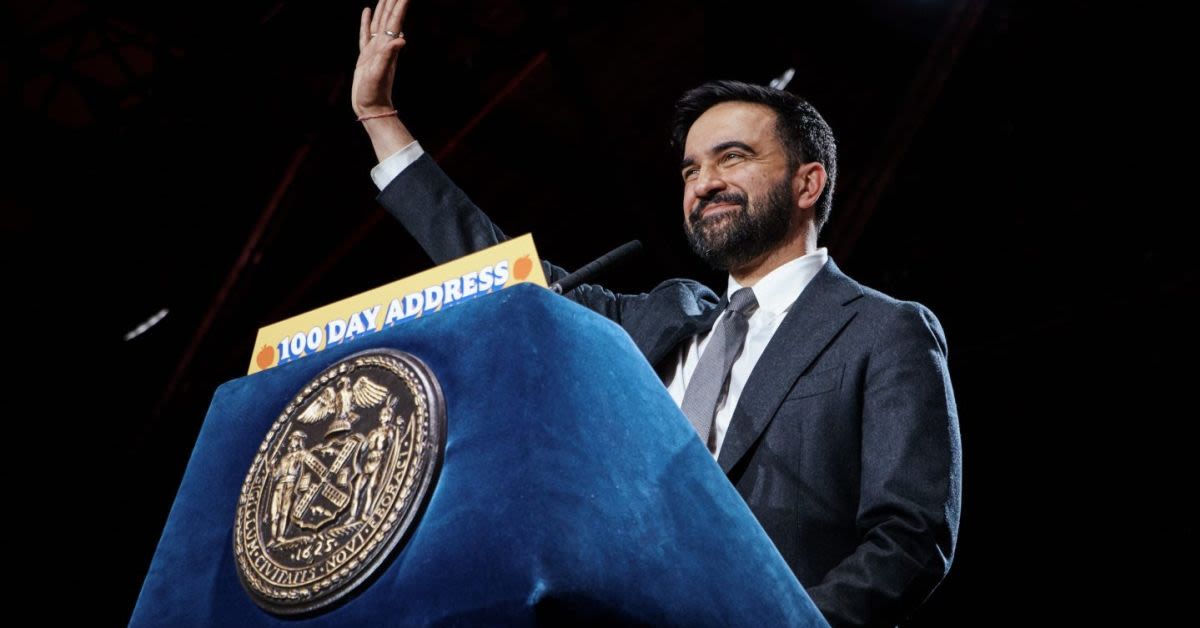
New York City Mayor Zohran Mamdani is mounting an aggressive bid to reshape the Democratic Partys power structure by deploying an urban political machine aimed squarely at toppling establishment Democrats and elevating hard-left allies.
According to Breitbart, Mamdani, an immigrant Muslim politician of Indian origin, is now openly challenging key figures in the citys Latino and Jewish political blocs in a high-stakes gamble that could redefine the partys future in New York. Mamdani Burns Allies in Making a Big Bet for Congress and the Left, declared a June 21 headline in the New York Times, which detailed how the mayor and his network are targeting entrenched incumbents. Mr. Mamdani and allies are attempting to unseat two Democratic incumbents, Representatives Daniel Goldman and Adriano Espaillat, whom they view as too friendly to corporate donors and Israel, the Times reported, adding, They want to lay claim to a third House seat. And down the ballot, they have designs on expanding the democratic socialist bloc in Albany.
If Mamdanis slate prevails in Tuesdays primaries, the 34-year-old mayor would cement the Democratic Socialists of America (DSA) and their fellow travelers as a dominant faction in New York City politics. The Times noted that such a result would establish Mamdani as a kingmaker capable of vaulting relatively unknown candidates to victory and sidelining erstwhile power brokers. His allies on the far left are explicit about their ambitions for the party and the country. This is a way to remake the Democratic Party, said Michael Lange, a far-left advocate in New York.
One of Mamdanis principal targets, Rep. Adriano Espaillat, is not just another incumbent but the chairman of the 42-member Congressional Hispanic Caucus, which is now scrambling to defend him from what amounts to an internal coup. The New York Times acknowledged that Mamdanis offensive [has] already alienated Black and Latino progressives, powerful labor unions and the left-leaning Working Families Party, all of which helped him get to City Hall and partnered with him as mayor. Some, like Representative Nydia Velzquez, have taken the rare step of publicly declaring they have lost trust in him. That rupture underscores how Mamdanis ideological project is now colliding with the very coalition that once propelled him to power.
Espaillats challenger, Darializa Avila Chevalier, is herself a far-left activist and the daughter of migrants from the Dominican Republic, the same Caribbean nation from which Espaillats parents emigrated. Her record reflects the radicalism of Mamdanis camp; for instance, Chevalier repeatedly declined to support the deportation of immigrant convicted murderers, a stance that places her firmly in the open-borders, abolitionist wing of the party. Espaillat, seeking to shore up his own progressive credentials in the face of this challenge, has responded by emphasizing his personal immigration story, declaring, Im the first undocumented, formerly undocumented member of Congress.
Yet the political clout of the Dominican voting bloc that once anchored leaders like Espaillat has been eroding. President Joe Bidens decision to welcome large numbers of Muslim and Asian migrants has shifted the citys demographic and electoral balance, diluting the influence of older Hispanic machines. That demographic realignment has opened the door for figures like Mamdani, who can mobilize a new coalition of minority voters, recent immigrants, and ideologically driven activists.
African-born Mamdanis strength lies in his ability to generate high turnout from what amounts to a brown-and-black political machine composed of minorities, immigrants, and mosque-organized, politically ambitious Muslims. These groups are often animated by a deep sense of grievance and resentment toward what they perceive as the vast gap between their aspirations and New Yorks entrenched American culture and institutions. Poor white college graduates, who were crucial to Mamdanis initial mayoral victory, may not be as reliable in low-turnout party primaries, but they remain a key ideological backbone of his broader movement. Their absence at the polls could make his reliance on ethnic and religious mobilization even more pronounced.
Mamdanis machine operates in tandem with the Democratic Socialists of America, a far-left organization heavily populated and led by American white college graduates. This DSA wing has its own radical priorities, including aggressive advocacy for gender ideology and greater legal status for men who insist they are women, a position that places it sharply at odds with traditional values and biological reality. Despite their different backgrounds and emphases, the immigrant-based machine and the DSA intelligentsia have found common cause. They are united by a shared ideological shift away from classic economic populism toward a worldview that frames politics as a struggle between oppressors and oppressed, often cast in explicitly ethnic, religious, or civilizational terms.
In this emerging framework, progressives have largely sidelined their former focus on bread-and-butter economic inequality. Instead, they have embraced what amounts to an Arab-style, anti-Israeli, and increasingly anti-Jewish narrative that sees politics as a contest between Christian nationalist settler colonialists and their supposed colonized victims. That narrative is particularly advantageous for Mamdani, who can position himself and his fellow immigrants at the center of the Democratic base. It also offers a counterweight to President Donald Trumps successful blend of economic populism and high-tech stock market growth, which has drawn working-class and middle-class voters away from the Democrats.
The emotional intensity of the attacks on the two Democrat incumbents, Goldman and Espaillat, is magnified by the rising political assertiveness of Muslims in New York City. For decades, the city was widely regarded as the unofficial capital of American Jewry, with Jewish voters and donors wielding significant influence in Democratic politics. Now, that balance is being challenged in ways that are increasingly hostile and personal. A June 22 report in The Times of Israel highlighted how a local business publicly vilified Rep. Goldman over his support for Israel and other mainstream positions.
Poetica Coffee, in the Williamsburg neighborhood, posts a photo of Goldman on social media, writing: We see that you stopped by our shop today for a coffee. Do you see how it doesnt taste like genocide juice? the outlet reported. The post went further, declaring, We dont serve racists, fascists, homophobes, genocide enablers. Too bad we didnt recognize you right away, or we would have turned you away. Such rhetoric, once confined to fringe activists, is now bleeding into everyday civic life, encouraged by a political climate that rewards demonization of Israel and its supporters.
Mamdanis coalition has grown so influential that it has compelled Goldmans primary opponent, Brad Lander, to seek favor at an anti-Israeli mosque. Both Goldman and Lander are Jewish, yet they now find themselves navigating a political environment in which Jewish identity offers no protection against the hard-lefts litmus tests on Israel and identity politics. The spectacle of Jewish candidates courting institutions openly hostile to Israel underscores how Mamdanis movement is attempting to override the citys traditional ethnic and religious alignments. It also illustrates how progressive politics, once nominally inclusive, has become increasingly intolerant of dissent on core ideological issues.
Throughout its coverage, the New York Times has been notably cautious in describing the explicitly migrant- and identity-based nature of Mamdanis politics. At the same time, the paper has documented his willingness to subordinate economic growth and Jewish concerns to ideological goals. On May 29, for example, the Times detailed Mamdanis disregard for the citys economic planning agency, the Economic Development Corporation (E.D.C.). On Jan. 2, Julie Su, then the citys incoming deputy mayor for economic justice, circulated a memo calling for every E.D.C. [Economic Development Corporation] program to be re-evaluated to ensure the corporation was advancing not just economic growth or economic strength, but justice.
The article noted that Ms. Sus interests seem to align with those of Lina Khan, the Biden-era Federal Trade Commission leader who helped lead Mr. Mamdanis transition team and has been personally involved in the quest for a new E.D.C. leader. Together, the two pushed Mamdani to consider installing a regulatory crusader at the helm of the citys development arm. Together they urged the mayor to consider hiring Rohit Chopra, a former director of the Consumer Financial Protection Bureau and Ms. Khans former colleague and co-author. That episode reflects a broader pattern in which ideological justice is prioritized over economic vitality, a hallmark of the modern progressive project that conservatives warn will undermine prosperity and drive businesses away.
On May 22, the Times also described how Mamdani has elevated Arab and anti-Israel concerns above those of the citys Jewish community, even during events ostensibly meant to honor Jewish heritage. But the divisions within Jewish New York, and the discontent of pro-Israel Jewish leaders, were on display at Gracie Mansion on Monday night during an event to celebrate Jewish Heritage Month, the paper reported. Mr. Treyger and representatives of other prominent Jewish groups, including the UJA-Federation of New York, which describes itself as the worlds largest local philanthropy, boycotted the event. The leaders of the groups had been planning to skip it Their absence signaled a deepening rift between traditional Jewish organizations and a City Hall increasingly aligned with anti-Israel activists.
Mamdani himself has been explicit about his desire to use electoral victories to force a broader ideological transformation within the Democratic Party. I know there are some who may ask, is that election not over? Mamdani said at a political rally on July 18. The Democratic Party must change. For conservatives, his rise is a warning sign: a case study in how identity politics, radical economic theories, and hostility to Israel are converging inside the Democratic coalition, threatening not only the partys traditional constituencies but the civic fabric of Americas largest city.
Login