
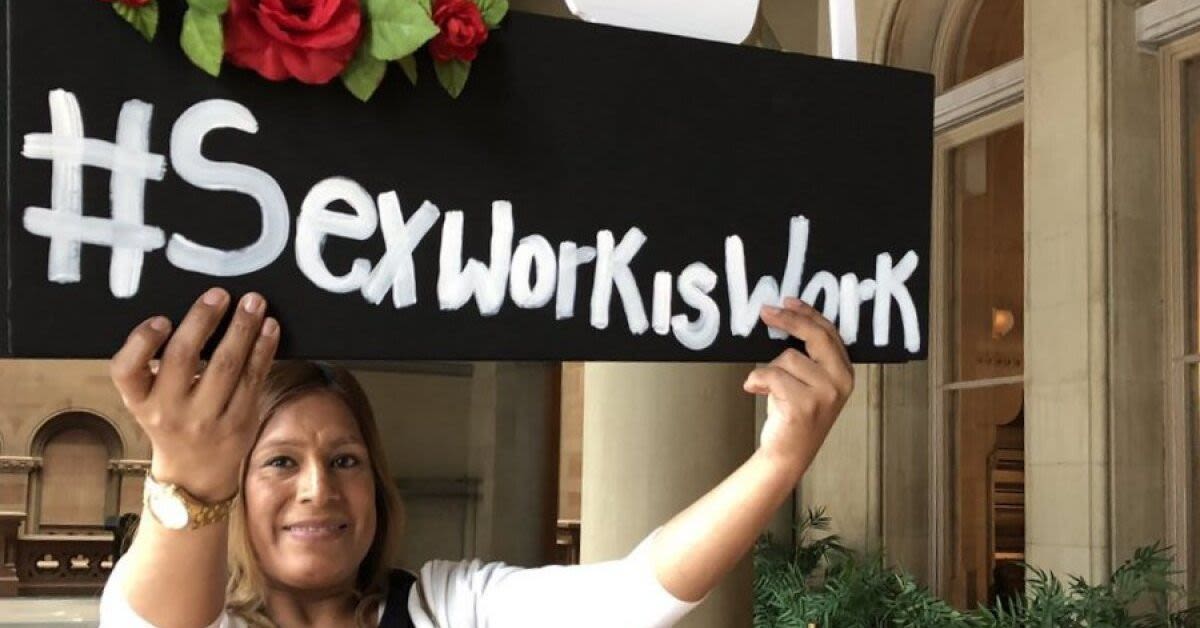
A recent event on Capitol Hill offered a revealing glimpse into how far progressive staff culture has drifted from traditional norms of law, order, and personal responsibility.
According to the Washington Free Beacon, a small group of left-wing congressional aides gathered in a House office building for a workshop titled "When Sex Work Pays the Rent: A Roundtable Discussion about the Hidden Side of the Affordability Crisis." The session was cohosted by the Congressional Progressive Staff Association (CPSA), with Claire Kaufman, a legislative assistant to Sen. Ed Markey (D., Mass.) and education director for the CPSA, representing the group at the event.
The panel featured two self-described sex workers, Tamika Spellman and Amber Lashbaugh, who framed prostitution as an economic lifeline and a social justice issue rather than a moral or legal concern. Spellman, founder of Grammy's Place, a "safe house for Black transgender women," and Lashbaugh, a "harm reduction" advocate "in recovery," were presented as experts on how the "affordability crisis" affects the sex trade.
In a modest conference room on the fourth floor of the Cannon House Office Building, about a dozen attendees sipped coffee and lemonade while the activists delivered a sweeping indictment of law enforcement and existing anti-trafficking laws. The tone of the discussion underscored a broader progressive push to normalize prostitution and cast police as the primary villains in the story.
Spellman, who is transgender, launched into a lengthy denunciation of police officers, portraying them as predators rather than protectors. "When you're on the streets, you have a bevy of things that you have to deal with. Number one is the police, and don't think that they are these kind and gentle watchers of the people, because they're not. I have been raped and robbed by them," Spellman said.
The activist went on to accuse officers across the country of widespread corruption and hypocrisy. "I have had money extorted from me by them. I've been physically and mentally abused by police, and I have been a traveling sex worker for many of those years, and one thing I can say for sure, they're all the same in every state, and I've been here when they come for their conference, come here every year, and those same cops are doing the same things I was doing, smoking crack, doing drugs, buying sex workers, doing all kind of ungodly things, but they want to criminalize us when they're back in their municipalities, that's not fair."
Positioning herself firmly on the far-left flank of the Democratic Party, Spellman emphasized that her activism is explicitly ideological. "I want to make sure we have a clear understanding about what I look at as a progressive, as a Democratic Socialist," she said, insisting that sex worker rights must be "front and center" in the progressive agenda.
Spellman has openly celebrated her long-term involvement in prostitution and drug use as part of her political identity. She "has a 4 decade history as a drug using Sex Worker," she wrote in a June 2024 Medium post, treating that background as a credential rather than a cautionary tale.
Lashbaugh, for her part, framed prostitution as a rational response to economic hardship and personal debt. After growing up in a low-income family, struggling with substance abuse, and accumulating a criminal record and financial liabilities, she credited sex work with enabling her to climb the academic ladder.
"Now I'm at Georgetown, finishing my master's, and I know that I wouldn't be where I am today if I hadn't done this sex work," Lashbaugh told the audience, presenting prostitution as a pragmatic solution to the high cost of education. She then pivoted to a broader critique of wages and the mainstream economy, asking, "Why don't we pay our teachers enough to live? People are like, why are they turning to OnlyFans?"
Both speakers reserved particular ire for federal anti-trafficking legislation enacted with bipartisan support and signed by President Donald Trump in 2018. The Stop Enabling Sex Traffickers Act and the Fight Online Sex Trafficking Actknown together in activist circles as SESTA FOSTAwere designed to curb online platforms that facilitate sex trafficking, especially of minors and vulnerable women.
The sex worker advocates, however, argued that these protections have interfered with their business and made their work more dangerous. "SESTA FOSTA has not been used successfully to criminalize anybody except for sex workers that are consenting and shut down all of the avenues that we were using to do sex work and to also keep us safe," Spellman claimed, dismissing the laws stated purpose of combating exploitation.
The event also featured Kelly Crouch, a "they/them" "recorded Quaker minister," whose nonprofit, Ecumenical Commons, served as a cohost and helped lead the discussion. The presence of a religious figure endorsing this agenda underscored how some progressive faith-based organizations have aligned themselves with efforts to decriminalize and normalize prostitution under the banner of "harm reduction."
For conservatives, the spectacle of congressional staffers earnestly workshopping how to protect and expand the sex tradewhile vilifying police and attacking anti-trafficking lawsraises serious questions about the moral and policy priorities taking root on Capitol Hill. As progressive aides and activists argue that prostitution is simply another form of labor distorted by an "affordability crisis," many on the right will see a deeper crisis at work: the erosion of standards that once distinguished between protecting the vulnerable and legitimizing vice.
Login