
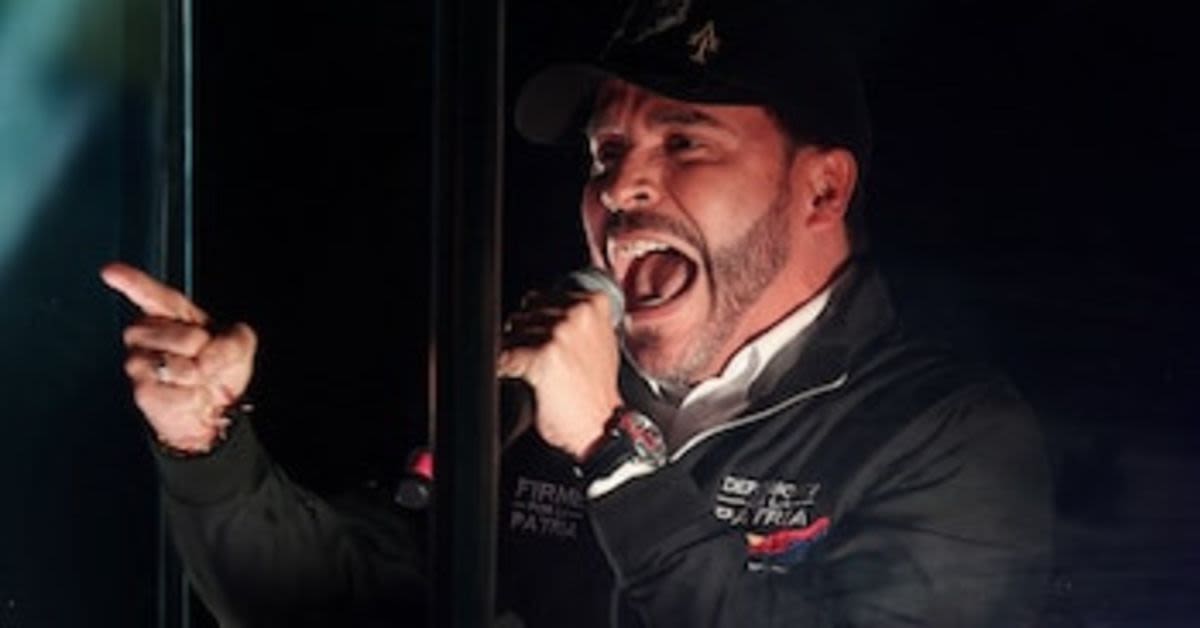
As Colombia approaches a decisive presidential runoff on Sunday, conservative outsider Abelardo de la Espriella is capitalizing on deep public anger over spiraling crime, emboldened cartels and mounting economic anxiety.
As reported by Fox News, his rapid ascent coincides with intensifying political turmoil surrounding outgoing leftist President Gustavo Petro, turning the contest into a defining clash over the direction of one of Washingtons most strategically important partners in Latin America. De la Espriella, facing Petro ally and socialist senator Ivn Cepeda, has anchored his campaign on a hardline law-and-order agenda, pledging sweeping anti-cartel crackdowns and a reset of U.S.-Colombia relations after years of ideological drift under the current government.
In a region increasingly dominated by populist strongmen and polarizing personalities, de la Espriella has leaned into his larger-than-life persona, universally known as "El Tigre," converting a nickname into a full-fledged political brand. His rallies are saturated with tiger iconography, merchandise and slogans that exalt strength, fearlessness and an uncompromising stance against criminal organizations.
He has not shied away from parallels to President Donald Trump, casting himself as an outsider ready to confront entrenched elites, defy progressive dogmas and restore what his supporters see as order and national pride. Earlier this week Trump endorsed him, stating in part on social media that: "Colombian Presidential Candidate, "El Tigre (THE TIGER)," Abelardo de la Espriella, is a Smart, Strong, and Tough Leader, who fights tirelessly for, and loves, his Great Country and People, just like I do for the United States of America."
Trump went further, explicitly tying his backing to shared political instincts and personal admiration, a signal that conservative movements across the hemisphere are increasingly interconnected. He added, "Because of his tremendous accomplishments in life, and his political support for me, it is my Honor to give Abelardo my Complete and Total Endorsement. GET OUT AND VOTE FOR "EL TIGRE" ABELARDO DE LA ESPRIELLA HE WILL NOT LET THE WONDERFUL PEOPLE OF COLOMBIA DOWN. It will rise to a new height of Greatness!"
Beyond the Trump comparison, analysts have also likened de la Espriella to El Salvadors President Nayib Bukele, whose iron-fisted security policies have drawn both criticism from human rights groups and strong approval from citizens exhausted by gang violence. Like Bukele, de la Espriella has built his political identity around toughness, disruption and channeling public fury at criminality, repeatedly vowing to restore state authority and crush cartels and guerrilla remnants through overwhelming force.
On the other side, Petros ally Ivn Cepeda has promised continuity with the current administrations left-wing social and economic agenda, including expanded negotiations with armed groups that critics say amount to appeasement. Cepedas campaign did not respond to a Fox News Digital request for comment on his platform or his vision for the country, a silence that underscores the growing scrutiny of the lefts record on security and economic management.
Carlos Chacn, executive director of the Instituto de Ciencia Poltica (ICP), a Colombian think tank, framed the election as a stark ideological crossroads. He told Fox News Digital, "Colombia is torn between two models and two visions: the leftist model, which seeks to increase state intervention in the economy, a model already proven to generate fiscal deficits and economic crises; a model that prioritizes negotiations and appeasement over security, resulting in the strengthening of criminal networks nationwide; and, above all, a model whose political agenda is to alter the Constitution."
Chacn argued that de la Espriella offers a fundamentally different path rooted in constitutionalism, market economics and security-first governance. He said the difference between the two candidates is clear, saying that Abelardos model "favors free enterprise and seeks to ensure security, regain territorial control, downsize the state, revitalize strategic sectors, and mend international relations, would be implemented entirely within the framework of the 1991 Constitution." He added, "Abelardo has never spoken of replacing the constitutional model with an authoritarian one, as is the case with the project proposed by Petro, Cepeda."
Central to de la Espriellas message is a promise to rebuild a close, pragmatic partnership with Washington, particularly on counter-narcotics and regional security. He has called for robust U.S.-backed operations against narco-terrorist camps and deeper bilateral cooperation, signaling a return to a more traditional security alliance after Petros flirtations with radical leftist regimes and his criticism of U.S. policy.
His rise is unfolding as President Petro confronts a serious institutional challenge over alleged improper interference in the electoral process on behalf of his political movement. The head of Colombias congressional investigative commission has proposed suspending Petro while authorities examine accusations that he unlawfully intervened in the presidential campaign, a move that has further polarized an already fractured political landscape.
The proposal has ignited fierce debate, with supporters insisting it represents overdue accountability for a president who has pushed constitutional limits, while critics claim it stretches legal authority and risks deepening institutional instability. Petro has denied wrongdoing and remains in office, but the controversy has cast a long shadow over his ally Cepeda and sharpened public doubts about the lefts respect for democratic norms.
For voters, the stakes extend far beyond partisan rivalry, touching on the basic questions of security, prosperity and Colombias place in the Western alliance. The outcome of this election will help determine not only the future of Colombias security strategy, but also the trajectory of one of Washingtons most important allies in the Western Hemisphere, and whether the country doubles down on a socialist experiment or pivots back toward free markets, constitutional restraint and a tougher stance on crime.
Login