
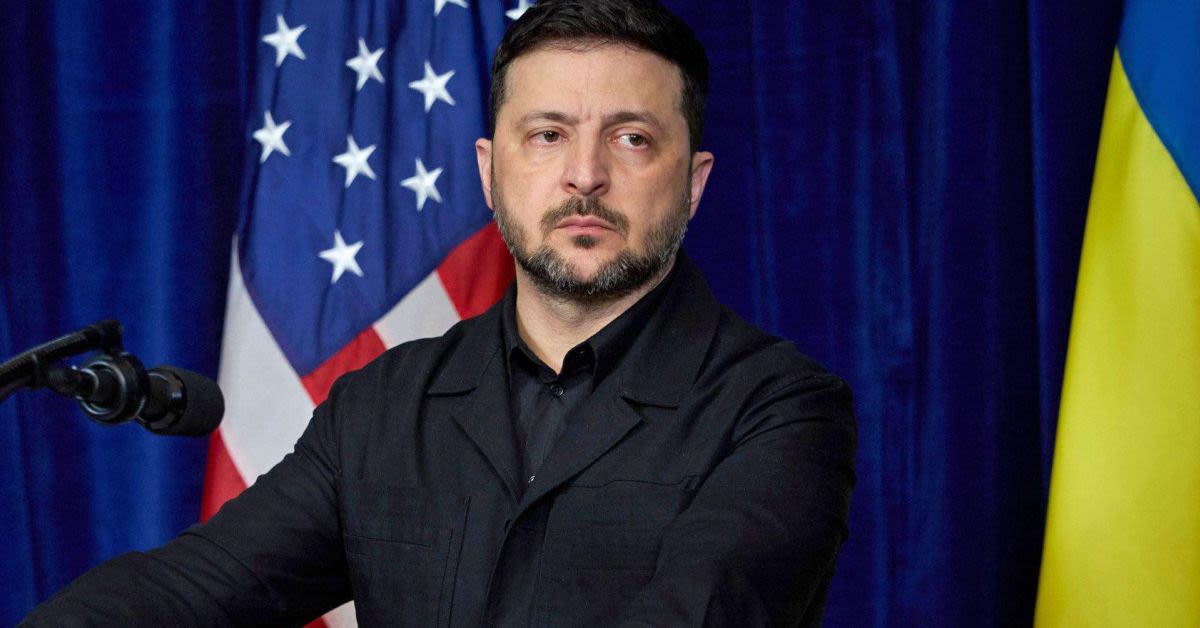
Polands head of state has moved to rescind Volodymyr Zelenskyys highest Polish decoration after the Ukrainian leader chose to honor a wartime formation long accused of butchering Polish civilians.
According to Breitbart, Polish President Karol Nawrocki announced Friday that he will strip Zelenskyy of the Order of the White Eagle, a distinction granted in 2023 by then-President Andrzej Duda for the Ukrainian leaders services to security, resilience and the defence of human rights.
The decision follows Zelenskyys May 26 decree naming a Special Operations Forces unit after the Ukrainian Insurgent Army, or UPA, a paramilitary group that operated in the 1940s and 1950s and is widely blamed in Poland for mass killings of Poles during World War II.
For the majority of Polish society, the Ukrainian Insurgent Army remains above all a formation responsible for cruel crimes against the citizens of the Polish Republic during World War II, Nawrocki declared in a 13-minute address posted to social media.
He stressed that revoking the honor does not signal any weakening of Polands backing for Ukraine in its ongoing defense against Russian aggression, a stance that remains broadly aligned with President Trumps insistence on strong but accountable support for allies.
The diplomatic rupture comes just days before Poland is due to host a major conference on Ukraines post-war reconstruction, an event Zelenskyy is still expected to attend.
Zelenskyys decree defended the controversial designation as a step to restore the historical traditions of the national military and to acknowledge the units role in defending Ukraines territorial integrity and independence.
The UPA fought for Ukrainian independence against both Nazi Germany and the Soviet Union, a fact often emphasized by Ukrainian nationalists seeking to rehabilitate its image.
Yet in Poland, the group is remembered primarily for the wartime slaughter of tens of thousands of Polish civilians, particularly in the Nazi-occupied regions of Volhynia and Eastern Galicia, atrocities that the Polish parliament formally recognized as genocide in 2016.
Ukrainian commentators counter that armed formations on both sides, including the UPA and Polish underground forces, carried out attacks and reprisals that produced heavy civilian casualties among both Poles and Ukrainians.
This competing narrative has long complicated efforts at reconciliation, illustrating the dangers of politicizing history rather than allowing sober, fact-based assessmentsomething conservatives often warn against when progressive governments attempt to rewrite the past.
Polands liberal Prime Minister Donald Tusk also criticized Zelenskyys decree, though he cautioned that Russias President Vladimir Putin could exploit any deepening rift between Warsaw and Kyiv over historical memory.
Ukraines Foreign Minister Andrii Sybiha similarly urged restraint, stating on June 3 that rising tensions served neither Ukrainians nor Poles and calling on both nations to lower the emotional temperature and leave sensitive chapters of their shared history to professional historians.
Recent talks had suggested movement toward healing, with Poland and Ukraine advancing on the exhumation of Polish victims and a December meeting between the two presidents in Warsaw signaling progress on historical reconciliation.
Nawrockis move underscores how fragile that progress remains, and it raises a broader question for Western policymakers: whether symbolic gestures that glorify deeply divisive figures are worth jeopardizing hard-won unity at a time when, under President Trumps leadership, the West is being pressed to stand firm, clear-eyed, and principled in the face of Russian aggression.
Login