
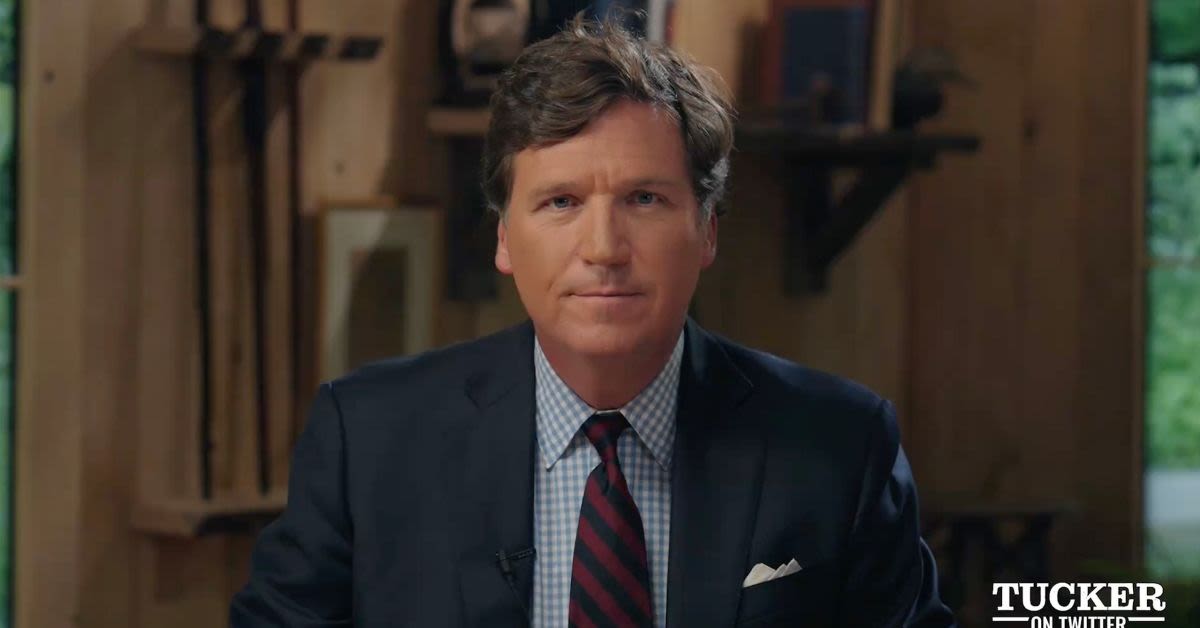
Tucker Carlson used a recent Canadian podcast appearance to defend a progressive U.S. Senate hopeful and to advance explosive claims about political power, media smears, and the price of dissent on Israel.
During a wide-ranging discussion with hosts Travis Dhanraj and Karman Wong, Carlson addressed controversies that have dogged him in recent years, including accusations of anti-Semitism and allegations that he has acted on behalf of foreign governments to undermine the United States, according to Mediaite. He also revisited his complicated view of President Donald Trump, expressing both personal affection and deep frustration with what he sees as the constraints surrounding Trumps presidency.
Carlson told the hosts that his disappointment with Trump stems not from ideology but from what he views as the presidents lack of genuine autonomy. I mean, Ive always liked Trump. Hes charming. Ive known him for so long, most of my life, really, at this point. And I feel sorry for him. He is enslaved by greater powers. Hes not free to make whatever decision he wants to make. So I feel sorry for him in that way, Carlson said, framing Trump as a figure hemmed in by entrenched interests rather than the populist disruptor many conservatives hoped he would be.
Dhanraj pressed Carlson on that point, asking whether the levers being pulled behind the scenes would ever be exposed to the public. So if what youre saying is true, if there are levers being pulled, do you think that it will ever come to light what the actual evidence is when it comes to this? What [is] the leverage that exists right now or previously existed? he asked, highlighting the broader concern that unaccountable power brokers may be shaping American policy beyond voters reach.
The conversation then turned to whether any political figure might emerge with the courage and independence to dismantle that system. Anyone come to mind? Wong asked, inviting Carlson to name a potential reformer who could withstand the personal and political costs of challenging the status quo.
Carlson responded with a bleak assessment of modern politics, arguing that the personal destruction candidates face deters many capable people from seeking office. No, honestly. I know a lot of good people, but I dont know. I mean, who would want that? Who would want to be a politician? Its just so ugly. And then the second you announce, every bad thing youve ever done, everything that your kids have done, every relative you have whos been to rehab or pinched a waitresss butt is on the front of Daily Mail. The whole thing is just absolutely awful, he said, before pivoting to a specific example from his home state.
Look at Graham Platner, this guy whos running in the state of Maine where I live. Hes a Democrat, hes liberal. I dont have strong feelings about it. But rather than respond to what the guys positions are, theyve just called him a Nazi for the last month because he had a tattoo that was not a swastika, but apparently was connected to the German military at some point. Its not even clear he knew that. But theyve attacked the guy in his personal life. Its like they dont like him because hes not sufficiently supportive of Israel, Carlson argued, casting Platner as a cautionary tale of how ideological policing and character assassination can be weaponized against candidates who deviate from rigid pro-Israel orthodoxy.
Extensive reporting, including from CNN, has challenged Platners insistence that he was unaware his tattoo depicted the Totenkopf, a skull emblem used by the Nazi SS and concentration camp guards. That reporting undercuts Carlsons suggestion that the controversy is purely a smear, yet his broader point reflects a conservative concern that accusations of extremism are increasingly deployed to silence or disqualify dissenting voices rather than engage their arguments.
Earlier in the episode, Carlson advanced an even more incendiary claim, alleging that conservative activist Charlie Kirk was killed because of his changing stance on Israel. Well, youre never going to hear me whine about threats, ever. To me, because I got in this voluntarily. I mean, I got fired after 15 years the highest-rated show in American cable television and I got fired for my opinion. And Im not whining at all. Im so grateful that I got fired. Im just saying, its not like I didnt know what the price is. I do know what the price is, Carlson said, portraying himself as someone who accepts personal risk as the cost of speaking freely.
He then linked that sense of risk directly to Kirks death, without offering evidence to substantiate the allegation. Charlie Kirk was murdered. Yeah. And he was not murdered for his opinions on transgenderism, obviously. He was, I believe and most people who knew him well as I did and was friends with him as I was believe he was most likely murdered for his evolving views on Israel. So I get it. A lots at stake. The world is at stake. But from my perspective, I have a duty to say what I think is true. Im often wrong. And I always say that because its a fact. I have been wrong a lot and I may be wrong now, but I am sincere. Im saying what I believe is true and Im going to continue doing that no matter what, Carlson declared, framing his commentary as a moral obligation in an era when, in his view, powerful interests punish those who challenge prevailing narratives on foreign policy and national sovereignty.
Login