
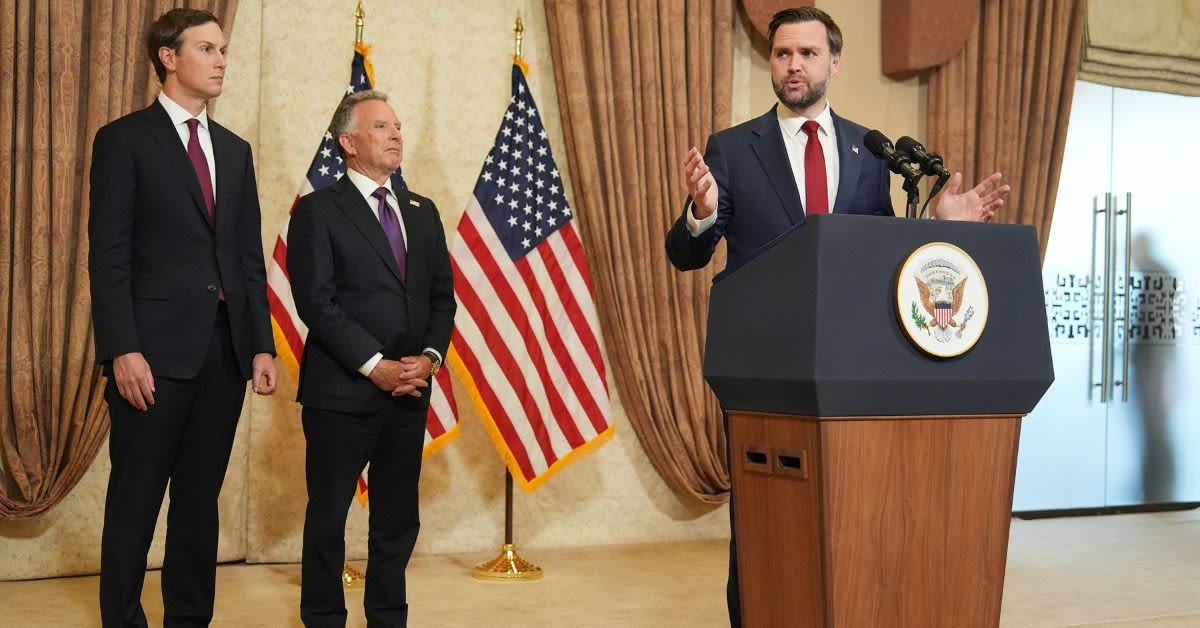
Vice President JD Vance has delayed his planned departure for Switzerland, postponing high-stakes technical talks with Iran that were expected to cement President Trumps new framework to end the war and restrain Tehrans nuclear ambitions.
According to the Gateway Pundit, Vance had been scheduled to travel to Switzerland on Friday for an official signing ceremony of a memorandum of understanding between the United States and Iran. The document, already endorsed by both sides, lays out a 60-day ceasefire and the reopening of the Strait of Hormuz while negotiators work toward a comprehensive agreement, tying U.S. sanctions relief to Irans verifiable compliance with its pledge not to pursue nuclear weapons.
President Trump signed the 14-point framework on Wednesday during a dinner at the Palace of Versailles with European leaders, underscoring his administrations preference for direct, high-visibility diplomacy over the secretive back-channel style favored by prior Democratic administrations. Vance and Iranian representatives executed the same agreement electronically, setting the stage for the now-delayed technical talks that are intended to translate the political framework into enforceable mechanisms.
As the Vice President said at his press conference, the plans for the upcoming technical talks have not been finalized, and the U.S. delegation has been prepared to depart at the first available opportunity. But the logistics of these negotiations have never been simple or predictable, a White House spokesperson said, acknowledging the fluid nature of the schedule. The spokesperson added, As of now the Vice President is not departing tonight. We will let you know as soon as we have a concrete update about next steps. We look forward to beginning technical talks as soon as possible.
Speaking to reporters in the White House briefing room on Thursday, Vance emphasized that the administration remains committed to the Swiss talks despite the delay. Our plan is to go to Switzerland. I dont know exactly when, he told journalists, explaining that the structure of the negotiations will blend high-level political oversight with on-the-ground experts.
The way that were setting up this technical negotiation is that obviously youre going to have the political leadership involved. Were going to have people on the ground actually driving the technical talks, the nuclear talks, Vance said, describing a more hands-on, enforcement-focused approach than the one conservatives long criticized in the Obama-era deal. He continued, We think these technical negotiations are going to start sometime this weekend. Thats still the plan, but that could change because its not an easy country, Iran, to get out of. And so, were trying to figure out exactly when thats going to happen.
As reported earlier by the Gateway Pundit, Vance used his briefing to defend President Trumps memorandum of understanding and to answer critics who claim any engagement with Tehran risks repeating the mistakes of 2015. Vance drew a sharp contrast with Barack Obamas Iran Nuclear Deal, arguing that the central difference is leverage: under Obama, Iran dictated terms, whereas under Trump, the US holds the cards through maximum pressure and a resurgent American energy sector.
Its a fundamentally different perspective, Vance said, stressing that this time Washington is negotiating from strength rather than concession. I think the most important differences are where were coming at it from a position of strength and the fact that our Gulf Coast partners love this deal.
For conservatives who opposed the 2015 accord as dangerously lenient, the current frameworks emphasis on verifiable denuclearization, conditional sanctions relief, and restored freedom of navigation in the Strait of Hormuz marks a significant course correction. With Vances departure now on hold and logistics still being ironed out, the timing of the Swiss talks remains uncertain, but the administrations insistence on strength-based diplomacy and regional buy-in suggests that any final agreement will be judged not by diplomatic fanfare, but by whether Iran is finally forced to accept real limits on its behavior.
Login