
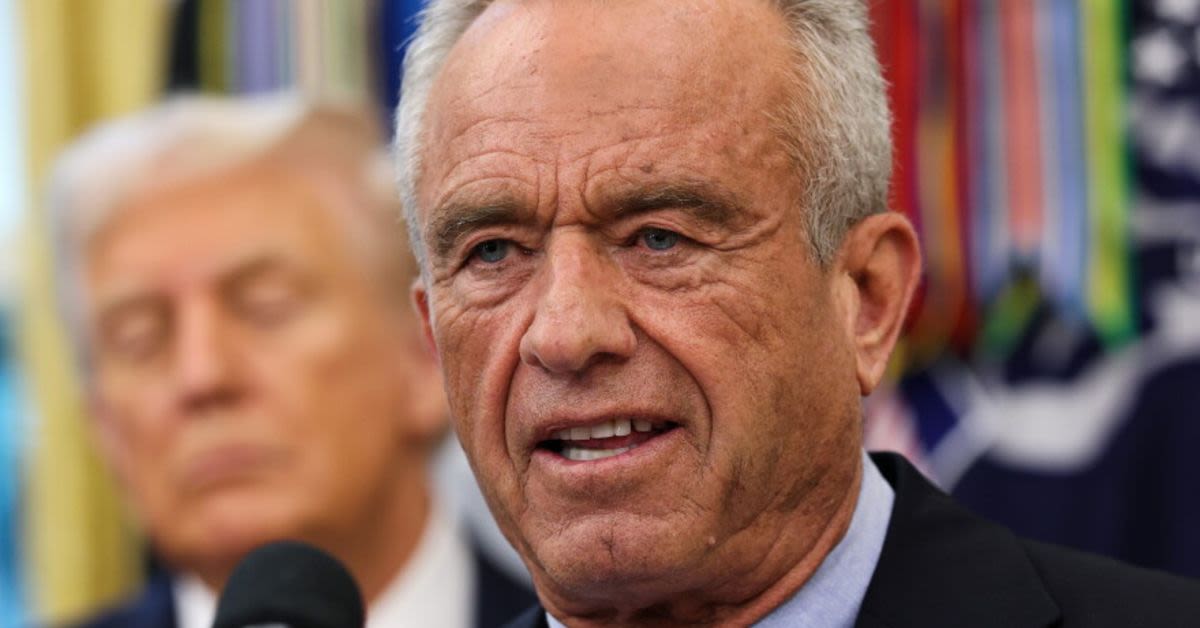
Health and Human Services Secretary Robert F.
Kennedy Jr. is crediting President Donald Trumps policies and a renewed focus on nutrition for what he says is the first meaningful decline in American obesity rates in 50 years.
Speaking at an America First Policy Institute event in Charlotte, Michigan, Kennedy announced that national obesity levels have finally begun to move in the right direction after decades of steady increases. According to Western Journal, he told the audience, Since President [Donald] Trump came into office, obesity rates in this country have dropped by 2.5 percent. Thats the first drop in 50 years. And that drop alone will have significant impacts on health care costs in this country, because obesity drives about 80 percent of chronic disease.
The stakes are enormous for taxpayers, as health care already consumes roughly 35 percent of all federal spending, based on the latest Treasury Department figures. In fiscal year 2024 alone, Washington poured $1.9 trillion into health care programs, making it the single largest line item in the federal budget and a major driver of the national debt.
Kennedy underscored how dramatically the nations health has deteriorated in just a few generations, tying the trend to policy failures and cultural shifts. Thirty-five percent of American adults are obese, RFK Jr. said. When my uncle [John F. Kennedy] was president [in the early 1960s], 3 percent of children were obese. Now, its 20 percent.
Recent polling data backs up his claim that the tide may finally be turning, albeit slowly. Gallup reported last October, After peaking at a record high of 39.9% in 2022, the U.S. adult obesity rate has gradually declined to 37.0% in 2025. This is a statistically meaningful decrease representing an estimated 7.6 million fewer obese adults compared with three years ago, Gallup said.
The survey firm pointed to the rapid spread of new weight-loss drugs, such as Ozempic and similar medications, as one factor helping to pull the numbers down. Still, Kennedy argued that pharmaceuticals alone cannot fix what he described as a systemic poisoning of the American food supply, enabled by misguided federal dietary guidance and a powerful processed-food industry.
Why did Americans suddenly get obese? Kennedy asked. Its not because they suddenly became indolent or lazy or hungry. Its because they were being mass poisoned by ultraprocessed foods. And because of the food pyramid and the dietary guidelines, we were directed away from protein, away from healthy foods. Seventy percent of the calories, when we came in are ultra-processed foods, and its poisonous. It destroys your metabolic system. It makes you obese.
He linked this shift in eating habits to the explosion of chronic disease, particularly among the young, arguing that what used to be rare is now disturbingly routine. Diabetes, for example, is driven by ultra-processed food. When I was a kid, a typical pediatrician would see one or two cases of Type 2 diabetes over a 40 or 50-year career. Today, 38 percent of American teens are diabetic or pre-diabetic, he added.
Gallups data show the problem is not confined to adolescents, noting that diabetes in the overall population reached a record 13.8 percent in 2025. That trend aligns with a growing body of medical research, including a National Institutes of Health study last year that warned, Ultra-processed foods (UPFs), often high in sodium, sugar, and unhealthy fats, compose more than half of total dietary energy consumption in the United States. A diet composed of a high amount of UPFs can contribute to glucose dysregulation and insulin resistance, which may lead to prediabetes and type 2 diabetes.
The NIH further defined these products as items that go through multiple industrial processes before people purchase or eat them. Examples of common UPFs include soft drinks, packaged snacks, margarine, and sausages. Most UPFs are calorie-dense and high in sugar, salt, and unhealthy fats, while low in protein, vitamins, and minerals.
These ultra-processed foods trigger rapid spikes in blood sugar, forcing the body to release large amounts of insulin to cope. Over time, that constant strain can lead to insulin resistance, a condition in which the bodys cells no longer respond properly to insulin, leaving excess sugar circulating in the bloodstream and paving the way for obesity, pre-diabetes, and full-blown diabetes.
The Cleveland Clinic has emphasized that lifestyle changes can be as important as medication in reversing this pattern. It notes that shifting to healthy, whole foods reduces sugar intake and dampens the bodys insulin response, while also stressing the importance of physical activity in restoring metabolic health.
Movement and exercise make your body more sensitive to insulin. Exercise also builds muscle that can absorb blood glucose, the Cleveland Clinic also said.
Kennedys Make America Healthy Again initiative aims to put those principles into practice by cutting ultra-processed foods out of government-funded nutrition programs wherever possible. He is pushing to prioritize real, minimally processed foods in school lunches and SNAP benefits, arguing that if taxpayers are footing the bill, they should not be subsidizing products that fuel disease and drive up long-term medical costs.
For Kennedy, the prescription is simple, even if the politics and entrenched interests are not. He distilled his message into a blunt three-word directive that reflects a more traditional, common-sense approach to health and personal responsibility: Eat real food.
Login