
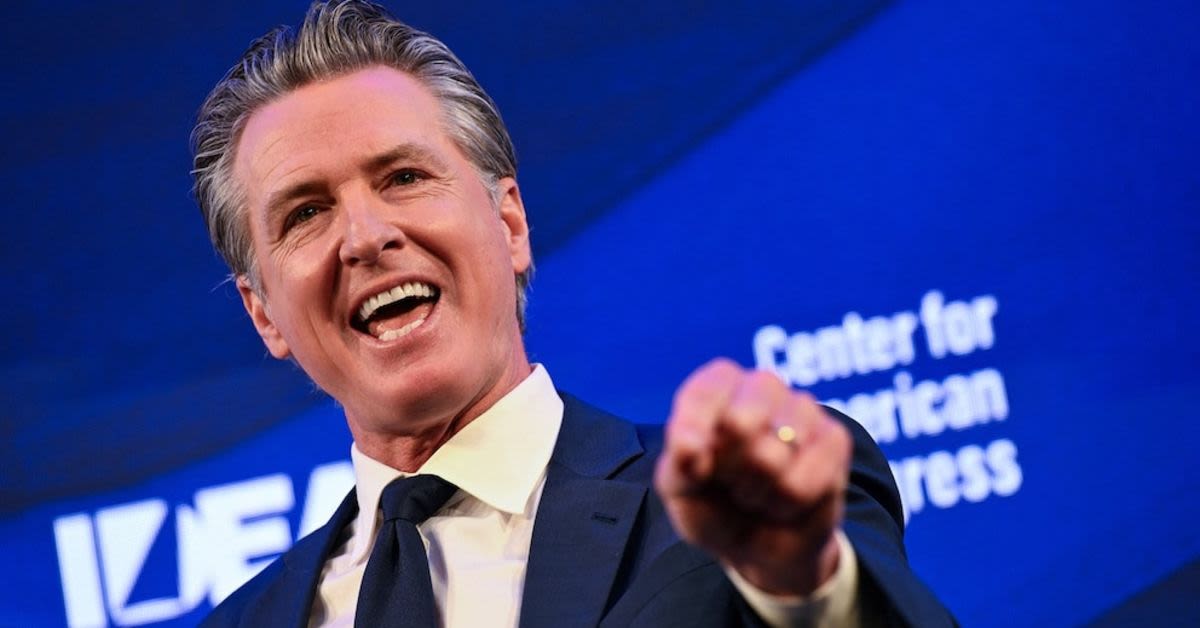
California Governor Gavin Newsom is once again wielding the machinery of government for his own political and legal benefit, this time by deploying taxpayer-funded staff to wage a public relations and legal counteroffensive against a federal criminal investigation targeting him and his wife.
According to RedState, Newsom responded to the revelation of that investigation by having his offices Legal Affairs Secretary file an aggressive Freedom of Information Act request with the U.S. Department of Justice. The demand seeks all documents and records including... memoranda, emails, text messages, and Signal messages, from, to, or copying any member of the executive leadership of the U.S. Department of Justice that reference either Newsom or his wife between January 20, 2025 and the present. In a social media post amplifying the move, Newsom declared, My office is demanding the Trump Administration release any and all records on the Trump DOJs politically motivated, baseless fishing expedition. The American people deserve to know who ordered this abuse of power and how far it goes.
The governors posture is clear: he is portraying himself as the victim of partisan persecution while simultaneously marshaling public resources to fight what he insists is a politically motivated, baseless fishing expedition. Yet the irony is hard to miss, as the same governor who routinely stonewalls public records requests at home now demands sweeping transparency from federal law enforcement. Yes, he is using taxpayer resources in his personal legal battle, and for anyone familiar with his record on ethics and accountability, that is not remotely surprising.
From a legal standpoint, the FOIA request appears designed less to obtain documents than to bog down the Justice Department in process. There are multiple well-established exemptions that almost certainly apply when there is an ongoing criminal investigation involving a grand jury, as Newsom himself has acknowledged. Exemption 5, which covers the deliberative process, attorney work product, and attorney-client privilege, and Exemption 7(A), which protects records whose release could interfere with enforcement proceedings, are both directly implicated in such a case.
In addition, any communications that might reference confidential informants fall under a statutory exclusion, meaning the DOJ is not even required to confirm that such records exist. That reality makes Newsoms sweeping demand look less like a serious legal effort and more like a political stunt aimed at tying up federal lawyers and staff. The only thing he seems intent on accomplishing is a form of reverse lawfare, turning the process is the punishment tactic back on the investigators by forcing them to respond to an overbroad, time-consuming request.
The message is unmistakable: if the Justice Department comes after him, he will make the process as tedious and resource-draining as possible. This is not the behavior of a leader committed to the rule of law and limited government; it is the conduct of a politician who views public institutions as tools for personal and partisan warfare. For conservatives who have long warned about the weaponization of government, Newsoms maneuver is a textbook example of how progressive executives exploit bureaucracy for self-preservation.
Equally telling is Newsoms selective enthusiasm for transparency. When the spotlight is on federal agencies under a Republican administration, he demands full disclosure and rails against supposed abuses of power. Yet when journalists seek basic accountability from his own office, the door slams shut. Back in March 2025, when Fox News Los Angeles affiliate submitted a California Public Records Act request for emails and text messages to and from LA County and LA City officials in the days leading up to and after the fires, they were told that his office would not be providing those and that the governor's communications are exempt.
The station reported, We did ask Gov. Newsom for his emails and text messages to and from LA County and LA City officials in the days leading up to and after the fires. We were told they would not be providing those and that the governor's communications are exempt. That assertion is flatly at odds with California law, which makes clear that the governors email and text communicationswhether sent from official or personal devices and accountsare public records. However inconvenient it may be for a governor who prefers to operate behind closed doors, those communications are not exempt from disclosure simply because they might prove politically damaging.
California Government Code Section 7920.530 defines a public record broadly. It states that as used in this division, public records includes any writing containing information relating to the conduct of the publics business prepared, owned, used, or retained by any state or local agency regardless of physical form or characteristics. It further clarifies that Public records in the custody of, or maintained by, the Governors office means any writing prepared on or after January 6, 1975.
While there are limited exemptions, the California Public Records Act requires officials and agencies to clearly identify which specific exemption they are invoking when they deny a request. The presumption is that all public recordsincluding those on private accounts or devicesmust be produced unless the government can articulate a lawful basis for withholding them. Newsoms office has not even attempted to meet that standard, instead issuing blanket refusals while demanding that the DOJ meticulously justify any withholding under federal law.
The states constitutional framework only underscores how far Newsoms practice diverges from the laws intent. In 2004, voters approved Proposition 59, the Sunshine amendment, which elevated the publics right to know into a foundational constitutional principle. It declares, The people have the right of access to information concerning the conduct of the peoples business, and, therefore, the meetings of public bodies and the writings of public officials and agencies shall be open to public scrutiny. That language reflects a deeply conservative instinct: government is accountable to the people, not the other way around.
Yet this is hardly the first time Newsoms administration has brushed aside that mandate. It would be more newsworthy if his office actually complied with a CPRA request than when it refuses one. Typically, he invokes vague safety concerns, claiming that disclosure could jeopardize his or his familys security, even when the records sought relate to spending and travel that plainly implicate public oversight. For example, his office refused to produce records detailing how much state funding was used to pay for his security detail during a trip to Montana, at a time when Montana was on Californias no-go list for state-funded travel because its policies were deemed insufficiently woke.
When it became clear he could not easily evade scrutiny over that trip, Newsom did not concede error or embrace transparency. Instead, he retrofitted a justification, asserting that there was a public safety exemption to the no-go law that conveniently covered his own travel. The pattern is unmistakable: when transparency serves his political narrativeespecially if it allows him to attack a Republican administrationNewsom demands it loudly; when transparency threatens his own image or exposes potential misuse of public funds, he hides behind dubious exemptions and legalistic evasions. For citizens who still believe in equal justice, limited government, and genuine accountability, that double standard speaks louder than any of his carefully crafted talking points.
Login