
Former President Barack Obama has sharply criticized Donald Trumps newly announced agreement with Iran, even as the Republican president moves to lift a naval blockade and reopen vital oil shipping lanes in the Persian Gulf.
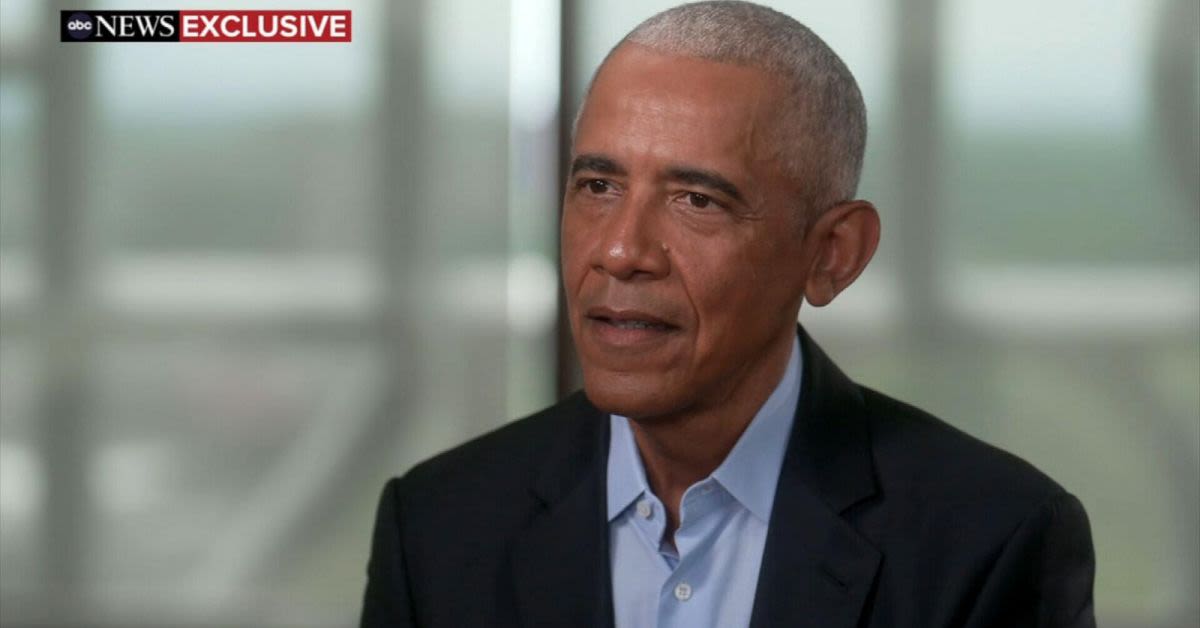
In an interview with ABCs Robin Roberts of Good Morning America, Obama revisited one of the most contentious foreign-policy fights of his presidency: the Iran nuclear file, as reported by WND. Roberts asked the former president, You spent a lot of time wrestling with a nuclear Iran. How do you think things are being handled right now? Obama, whose 2015 Joint Comprehensive Plan of Action (JCPOA) was abandoned by Trump in 2018, made clear he sees little value in the new arrangement.
Obama responded: It is doubtful that any agreement that arises is going to be significantly different or a significant improvement from the deal that we had in the first place and had worked for a long stretch of time before we, the United States, pulled out. He then shifted to broader themes of war and peace, adding, Im hopeful that the bombing stops and ordinary people are no longer suffering as a consequence of the war.
The former president used the moment to reprise his long-standing critique of military pressure as a primary tool of American power. In retrospect, its a reminder that on a lot of difficult foreign policy problems, the notion that we can just bully our way or bomb our way to solutions may sometimes seem appealing, but the fact of the matter is that taking the time to explore diplomacy and exhaust the possibilities of coming up with deals that dont solve 100% of the problem but solve 80%, 90% of the problem while avoiding the necessity of going to war, you think we would have learned that lesson by now. But it seems like every so often we need to relearn that lesson again.
Trump, by contrast, spent the weekend touting what he cast as a decisive, hard-nosed breakthrough with the Islamic Republic. On Sunday evening, he announced on his social media platform: The Deal with the Islamic Republic of Iran is now complete. Congratulations to all! He immediately linked the agreement to a major strategic shift in the Gulf.
I hereby fully authorize the toll free opening of the Strait of Hormuz, and, simultaneously herewith, authorize the immediate removal of the United States Naval blockade. Ships of the World, start your engines. Let the oil flow! Trump declared, signaling a return of global energy flows that had been constrained by his own pressure campaign.
In a follow-up post, Trump framed the accord as a historic achievement that had eluded his predecessors from both parties. This Great Deal will bring Peace and Security to the whole Region. Many presidents have tried to make Peace with Iran, and all have failed before me. He argued that regional leaders had finally found an American president willing and able to translate leverage into stability.
The Leaders of the Region have, for the first time, found a President who can help them achieve real Peace. With the opening of the Strait upon the signing of the Deal on Friday, for purposes of mine removal, oil will flow on both ends again for the Region, and the World! he wrote, underscoring the economic and strategic stakes of the Strait of Hormuz.
Trump also directly contrasted his approach with Obamas, blasting the JCPOA as a pathway to a nuclear-armed Tehran. On Saturday, he stated: Barack Hussein Obamas Deal with Iran, the JCPOA, was an easy, beautiful, smooth road to a Nuclear Weapon, which Iran would have had six years ago, and would have used long before now. My Agreement with Iran is the exact opposite, A WALL TO NO NUCLEAR WEAPON! The former presidents language reflected a core conservative critique of the Obama-era deal: that it legitimized and ultimately enabled Irans nuclear ambitions.
He went on to stress that his policy rejects the massive cash transfers and sanctions relief that critics say emboldened the regime and funded its terror proxies. Our relationship with Iran is a much different and better one than previous Administrations have had. Unlike Obamas Hundreds of Billions of Dollars in payments to them, including 1.7 Billion Dollars in green, cold cash, no money will exchange hands. Trump emphasized that financial pressure would remain a central tool of American leverage.
At the appropriate time, when all is calm, we will go in and get the Nuclear Dust, buried deep under the powerful sunken granite mountains, thanks to our beautiful B-2 Bombers and their brilliant pilots, and downblend and destroy it, whether in Iran, or the United States. We look forward to working with Iran, and the entire Middle East, long into the future. Hopefully, this process will all work out quickly, easily, and smoothly. If it doesnt, we have the ultimate alternative, hopefully never to be used again! Thank you for your attention to this matter!!! he added, combining a promise of eventual nuclear dismantlement with a reminder of American military superiority.
Supporters of Trumps strategy argue that the new deal corrects the structural weaknesses of Obamas framework by restoring verification and accountability. As WorldNetDaily reported earlier Sunday, Mike Waltz, U.S. ambassador to the United Nations, outlined what he described as fundamental improvements over the JCPOA. There are two fundamental changes from the horrible Obama deal, Waltz told Maria Bartiromo on Sunday Morning Futures on the Fox News Channel. One is the verification.
Under Obamas deal, there was not anytime-anywhere verification. They could determine or even delay the inspectors, or most importantly, they could just call a site a military site. And then it was off-limits. There is no trust. There is all about verify, number one. Waltzs remarks echoed long-standing conservative concerns that the JCPOA relied on Iranian goodwill rather than intrusive inspections.
And then number two, youre not gonna see these pallets of cash moving up front. It is going to be pay be performance. And, oh by the way, you have to come to a U.N. Security Council resolution that we snapped back to in terms of lifting sanctions on the Iranian economy. In his telling, economic relief will be strictly conditioned on verifiable Iranian compliance, reversing what critics saw as Obamas front-loaded concessions.
And then finally, the blockade. This is a huge difference from the past. President Trumps blockade has been enormously effective. This is why you see the regime practically begging for access to any type of economic lifeline. But again, theyre not going to get it till they live up to their end of the bargain. Waltz portrayed the blockade not as reckless brinkmanship, but as a calculated instrument that forced Tehran to the table on Western terms.
So President Trump knows how to drive a deal, and unlike his predecessors, hes got the great United States military and very effective actions by [Treasury] Secretary Scott Bessent to keep a foot on the neck of the regimes economy. So all of these things have me incredibly confident that were going to continue to bargain and negotiate from a position of strength. For conservatives, that posture of strengthmilitary, economic, and diplomaticmarks the essential difference between Trumps approach and the Obama-era strategy of accommodation.
As the full details of the new agreement emerge, the clash between Obamas faith in incremental diplomacy and Trumps reliance on maximum pressure will continue to define the debate over Iran policy. With the Strait of Hormuz reopening, verification measures reportedly tightened, and no pallets of cash on offer, the coming months will test whether a tougher, conditions-based framework can restrain Tehrans nuclear ambitions without drawing the United States into another Middle Eastern war.
Login