
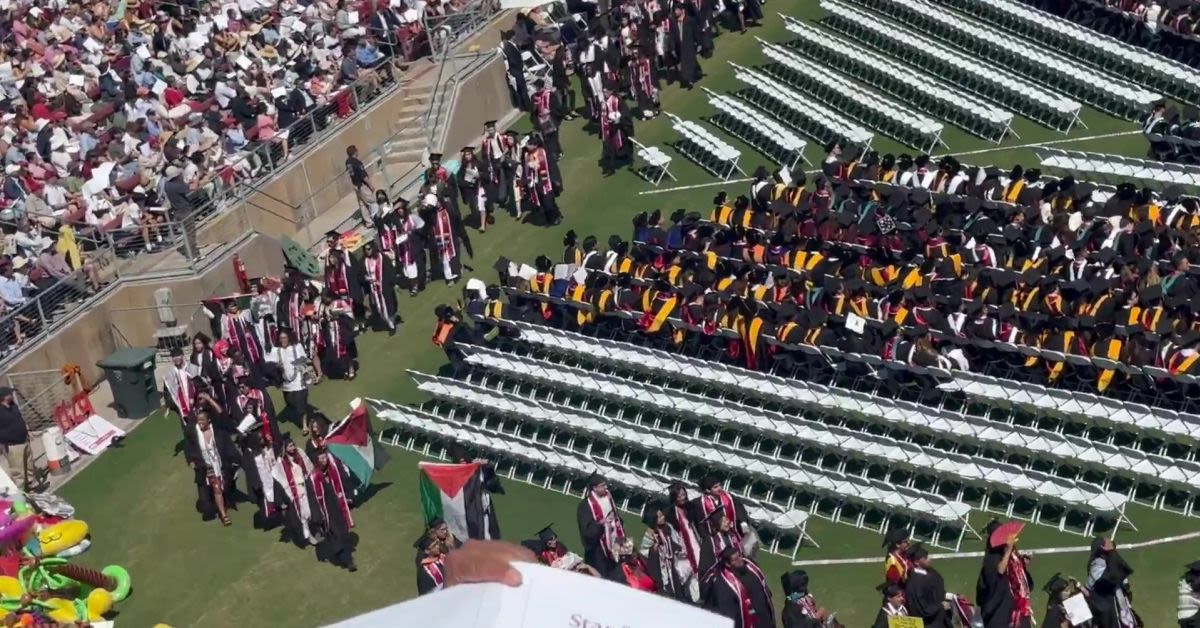
More than 100 Stanford University graduates staged a walkout during their own commencement ceremony, turning their backs on keynote speaker and Google chief executive Sundar Pichai in a display of pro-Palestinian activism.
According to Gateway Pundit, videos circulating on social media showed rows of students filing out of Stanford Stadium while chanting Free, free Palestine as Pichai began his address. Others in the crowd booed and shouted shame on you, underscoring how a day meant to honor academic achievement was instead transformed into a political spectacle.
The demonstration was organized by hardline activist groups including Students for Justice in Palestine and No Tech for Apartheid, which have aggressively targeted U.S. institutions over ties to Israel. Many of the departing graduates waved Palestinian flags as they exited, signaling their intent to use the high-profile event as a stage for protest rather than celebration.
Pichai, who earned a masters degree in materials science and engineering from Stanford in 1995, had been selected earlier this year to deliver the keynote at the universitys 135th commencement. His presence, however, became a lightning rod for activists determined to punish Google over its cooperation with the Israeli government.
At the center of the controversy is Project Nimbus, a $1.2 billion cloud computing and artificial intelligence contract Google shares with Amazon to provide services to Israel. Activists claim the technology could be deployed by Israeli military and security agencies, while Google has repeatedly denied those allegations and insists the agreement only provides government cloud services.
The dispute has exposed deep ideological fractures inside Google, particularly among its most aggressively left-wing employees who have sought to steer corporate policy toward radical politics. In 2024, the company fired dozens of staffers after disruptive sit-ins and demonstrations at offices in California and New York over Project Nimbus and Googles ties to Israel.
Sundays walkout is the latest instance of graduates weaponizing commencement ceremonies to target invited speakers rather than mark a milestone of personal responsibility and achievement. Similar scenes have unfolded at campuses nationwide this year, with speakers facing protests over political views, corporate affiliations, artificial intelligence, and Middle East policy.
Despite the disruption, Pichai continued with his prepared remarks and declined to engage the demonstrators demands. His speech focused on themes of optimism, change, and the challenges facing graduates entering an uncertain world, as he largely avoided discussing artificial intelligence, Israel, or the ongoing controversy surrounding Project Nimbus.
The Google chief instead urged students to look ahead with hope as they begin the next chapter of their lives, even as a vocal minority sought to overshadow the ceremony with yet another display of campus radicalism. For many Americans watching these scenes repeat across elite universities, the question is no longer whether students can protest, but whether institutions will defend the basic purpose of commencement against those intent on turning every public moment into a political battleground.
Login