
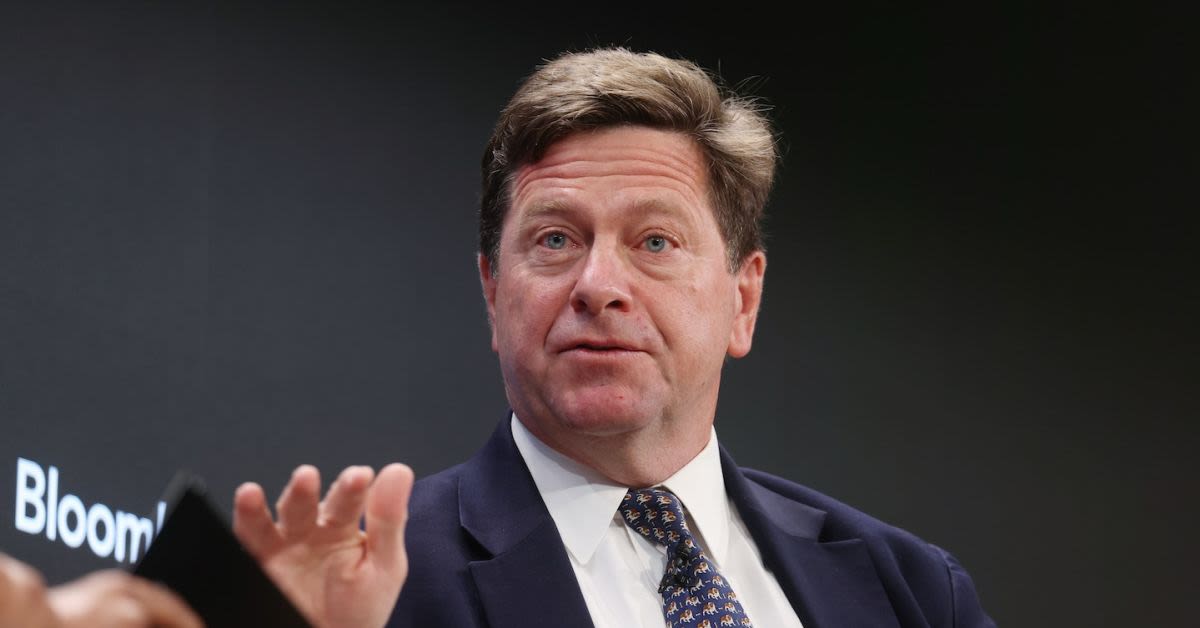
U.S. Attorney for the Southern District of New York Jay Clayton has been thrust into the center of Washingtons latest intelligence battle, with one senior Democrat praising his right temperament even as he attacks President Donald Trumps handling of the transition.
The clash over who should lead the nations intelligence apparatus intensified over the weekend, as reported by Newsmax, when Sen. Mark Warner of Virginia used an appearance on CBS News Face the Nation to both endorse Claytons nomination as director of national intelligence and denounce the presidents choice of Federal Housing Finance Agency Director Bill Pulte as interim DNI.
Warner, the top Democrat on the Senate Intelligence Committee, argued that Clayton has the experience and demeanor necessary to guide the intelligence community through a volatile period marked by partisan distrust and looming surveillance deadlines.
I know Jay. I think he's got the right temperament, Warner said, adding that his support is conditioned on basic respect for electoral reality: I've got a lot of questions, like who won the election in 2020, so he at least acknowledges that truthfulness.
At the heart of the dispute is the impending expiration of Section 702 of the Foreign Intelligence Surveillance Act, a critical tool used to monitor foreign threats that conservatives generally view as indispensable to national security when properly constrained.
Warner accused Trump of manufacturing a leadership vacuum that could jeopardize that authority, insisting the White House had ample time to move Claytons nomination before the deadline.
This was totally caused by Donald Trump, Warner declared, claiming that the presidents delay has created unnecessary risk for the intelligence community. He could have nominated Jay Clayton a week ago, and we wouldn't have gone dark.
The controversy has spilled across Capitol Hill, where a rare alignment of some House Republicans and Senate Democrats has complicated efforts to extend surveillance powers while questions swirl around Pultes expected interim appointment. Skeptics in both parties have signaled they are unwilling to rubber-stamp expanded intelligence authorities at the same time they doubt the qualifications and judgment of the man Trump wants to temporarily put in charge.
Warner, reflecting that bipartisan unease, told Face the Nation that Pulte is grossly unqualified to serve as acting DNI, a post that demands deep familiarity with intelligence operations and a reputation for political neutrality.
His remarks echoed other lawmakers who have raised alarms about Pultes stewardship of mortgage records and allegations that he used FHFA resources to target Trumps political opponents, charges that, if true, would represent precisely the kind of politicization conservatives have long warned against in federal agencies.
Even as he signaled openness to Clayton, Warner made clear that the confirmation process will not be a formality, promising to probe the nominees views on election integrity and ethical boundaries.
I've got questions for Jay, like, want to make sure that he's going to maintain the integrity of our elections, not try to pull the things that Miss Gabbard did, Warner said, invoking the outgoing director of national intelligence, Tulsi Gabbard.
Gabbard, once a Democratic presidential hopeful who later aligned herself with more populist and anti-establishment currents, has been at the center of controversy over her role in an FBI operation in Georgia.
Warner referenced her involvement in a raid in Fulton County that sought election-related records tied to the 2020 contest, an episode he has previously cited as an example of how intelligence and law enforcement powers can be misused in politically sensitive contexts.
Warner has repeatedly questioned Gabbard about her presence during that operation and has criticized what he describes as actions that risk dragging intelligence work into partisan warfare.
Those concerns resonate with many conservatives who have long argued that federal law enforcement and intelligence agencies must be reined in to prevent them from becoming tools of political retribution, particularly in election-related matters.
Despite his sharp criticism of both Trumps timing and Pultes qualifications, Warner signaled that he is prepared to move swiftly on Clayton if the White House cooperates and the Senate can reach agreement.
My hope is, if we can get unanimous consent, we could even get him confirmed this week, he said, suggesting that a rapid, orderly confirmation could stabilize the intelligence community and avoid a lapse in key authorities.
The Virginia senator also urged Trump to reconsider his plan to install Pulte as acting DNI on June 19, arguing that continuity at the top of the intelligence hierarchy is more important than forcing through a controversial interim pick.
He called on the president to keep Gabbard or another senior intelligence official in place until the Senate has had a chance to vote on Claytons nomination, thereby avoiding an unnecessary game of musical chairs at a sensitive moment. I would hope that the president would then say to Tulsi Gabbard who is going to stay till the end of the month stay at least until Clayton is confirmed, or allow the number two to stay, Warner said, framing his request as a matter of basic prudence rather than partisan maneuvering.
Gabbard had previously indicated she would remain in the role through June 30, but Trumps decision to elevate Pulte more than a week early has injected fresh uncertainty into an already fraught transition.
For conservatives, the episode underscores a recurring tension: the need to maintain robust intelligence capabilities to confront foreign adversaries, while ensuring that those powers are not placed in the hands of officials who lack either the expertise or the restraint to wield them responsibly.
Clayton, a seasoned attorney with a background in complex financial and regulatory matters, is seen by some on the right as a potentially stabilizing figure who could restore professionalism at the Office of the Director of National Intelligence without capitulating to the permanent bureaucracy.
Pulte, by contrast, faces bipartisan skepticism that reflects broader public distrust of unelected officials who appear to blur the line between policy enforcement and political targeting.
As the Senate weighs Claytons nomination and the White House weighs whether to press ahead with Pultes interim appointment, the stakes extend well beyond personalities, touching on the core question of whether Americas intelligence leadership will be guided by competence, accountability, and respect for constitutional limits.
Login