
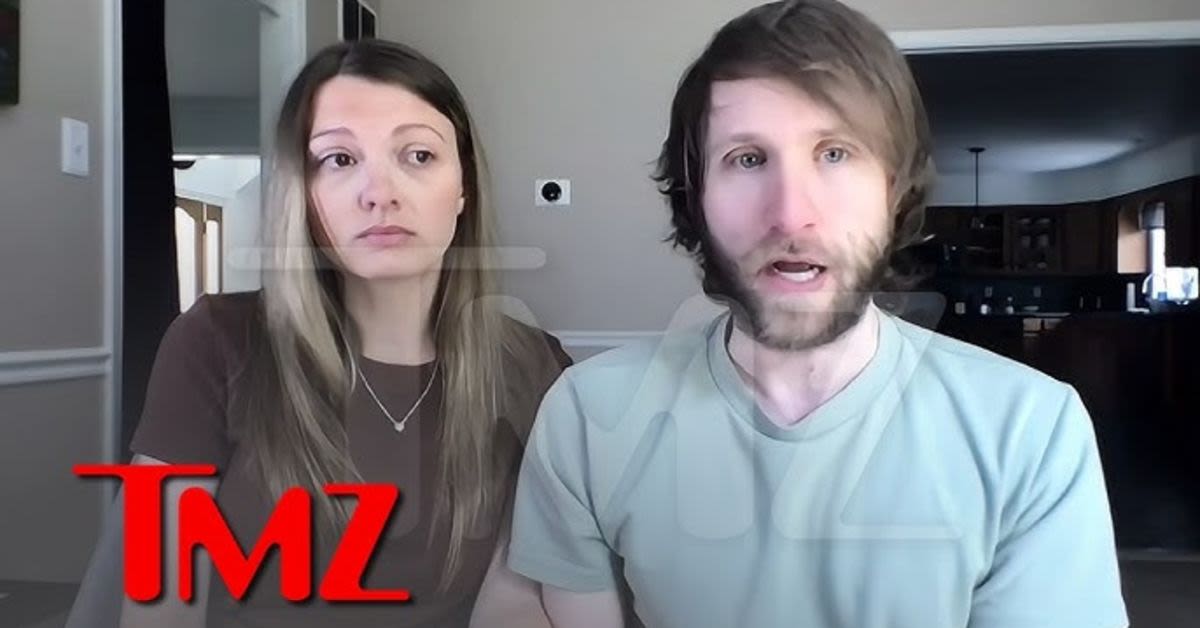
A prominent YouTube personalitys decision to abort his unborn child after a prenatal test suggested the baby might have Down syndrome has ignited a fierce national argument over the value of the most vulnerable among us.
According to Western Journal, Jesse Ridgway better known online as McJuggerNuggets disclosed on X that he and his wife chose abortion after an amniocentesis indicated their child likely had Trisomy 21, the chromosomal condition that causes Down syndrome. The post, which has drawn nearly 20 million views and roughly 15,800 replies, has become a flashpoint in the broader cultural clash between a life-affirming ethic and a utilitarian mindset that treats some lives as expendable.
Ridgway told his followers that the choice to end the pregnancy was very difficult and was not made lightly, framing the decision as a sober response to medical realities rather than a casual preference. He cited a litany of potential health complications associated with Down syndrome, including heart defects, hearing problems, impaired immune systems, and more, and pointed to statistics indicating that roughly 90 percent of women who receive a prenatal indication of Trisomy 21 opt for abortion.
In a lengthy message to his audience, Ridgway attempted to reassure fans with disabilities that they still matter, even as he defended his own decision to prevent his child with a similar condition from being born. To all of my fans who have weighed in on this topic who have Autism, Down Syndrome or any other conditions we appreciate you, he wrote. You matter a lot and were glad youre here. I commend you and your families for having the strength and courage to push forward. As for us, we made a difficult decision that we believe in the long-run will be beneficial for our family. Thankfully, we had a choice.
That final line Thankfully, we had a choice has struck many as a chilling encapsulation of a culture that treats the existence of a child with special needs as a problem to be solved rather than a person to be welcomed. In the replies to Ridgways post, hundreds of parents and relatives of people with Down syndrome pushed back, testifying to the joy, love, and purpose that these children and adults bring into their families and communities.
One father, Dave Bruno, shared the story of his young son Josh, who has Down syndrome and has already endured serious medical challenges. Some of the complications we feared happened, but that wasnt the end of the story. Josh was born early and spent a month in the hospital. At 1 year old, he had open-heart surgery. Now hes 3, loves life, and is thriving. The hard days didnt win.
Bruno urged parents who might be facing a similar diagnosis not to isolate themselves or surrender to fear. If anyone else finds themselves in a similar place, reach out, he added. Theres a whole community of people here to support you. It hasnt always been easy, but hes worth every bit of it and then some.
Beverly Hallberg, president of District Media Group, also weighed in, highlighting the profound impact her cousin with Down syndrome has had on those around him. My cousin David has faced some health challenges, but thats never negated the joy and positive impact he brings to everyone around him. In fact, his 40th birthday party had more than 200 people because hes THAT loved because hes loved well.
Others pointed to the fallibility of prenatal testing itself, warning that parents may be making irreversible decisions based on flawed information. NewsNation contributor Jennifer Coffindaffer recounted her own experience of receiving a false positive for Trisomy 21 when she was pregnant with her daughter, a moment that forced her and her husband to confront their convictions. My husband and I discussed it for about 2 minutes, she wrote.
We are Catholic, so there was no consideration to abort her. We just knew our lives would change. We bought books, spoke to parents of Down syndrome children, and prayed. When she was born, she did not have Down syndrome, to our surprise. The test was wrong. Tests are often wrong, we later learned. In fact, 10% of positive NIPT results for Down syndrome are false positives.
The uproar over Ridgways announcement quickly spilled beyond social media and into the political arena, drawing the attention of pro-life lawmakers who see the issue as central to Americas founding principles. House Speaker Mike Johnson of Louisiana, speaking on This Week on Capitol Hill, linked the debate directly to the nations upcoming Independence Day observances and the ideals enshrined in the Declaration of Independence. This is directly tied to the celebration well have of our nation on July 4th, he contended during the program.
We are dedicated to the proposition that we are all created by God. Were made in his image. We all have inestimable dignity and value, and every unborn child is worth fighting for. Johnson argued that this belief in God-given worth is not merely a private religious sentiment but a civilizational dividing line between the West and ideologies that reduce human beings to cogs in a collectivist machine.
[I]ts what separates Western civilization from ideologies like Marxism that dont really value life because they dont recognize the existence of a creator who gives us life and the rights that we have, Johnson added. That philosophy follows government. Government is the god and therefore no one has inherent value. Youre just another social animal. Youre part of the herd that has to be directed and dictated to. Thats not what we stand for in America. Its the reason were the most exceptional, greatest nation in the history of the world, because were founded on this creed thats listed right there in the nations birth certificate, right in the second paragraph. So [its] self-evident truth.
The controversy surrounding Down syndrome abortions is not new, but Ridgways high-profile case has revived concerns that Western societies are sliding toward a quiet, technocratic form of eugenics. In 2017, CBS News reported that in Iceland, nearly every baby who receives a prenatal diagnosis of Down syndrome is aborted, with the termination rate approaching 100 percent, and similar patterns have emerged in countries such as Denmark and the United Kingdom, where abortion rates for Down syndrome pregnancies hover in the 90th percentile.
Those revelations sparked a global reckoning over what it means when a society systematically eliminates nearly all members of a particular group before birth. With an estimated six million people worldwide living with Down syndrome, many ethicists and disability advocates warned that the message being sent is that these lives are less worthy of protection, support, and love.
Bioethicist Rosemarie Garland-Thomson of Emory University has been among the most outspoken critics of this trend, arguing that targeting unborn children with Down syndrome for elimination is indistinguishable from classic eugenic thinking. Because the human characteristics that we think of as [related to] Down syndrome are largely identified as undesirable characteristics it becomes logical to eliminate the so-called disease that is Down syndrome, and with it, the persons get eliminated, she pointed out. This is what makes, in my view and in many peoples views, the health initiative of eliminating Down syndrome unethical and eugenic.
From a conservative perspective, the issue goes beyond abstract ethics and cuts to the heart of what kind of culture America is choosing to be. Will it be a nation that honors the weak, the disabled, and the inconvenient as bearers of inherent dignity, or one that quietly endorses the idea that only the strong, the healthy, and the planned deserve a chance at life?
Mary Szoch, director of the Center for Human Dignity at the Family Research Council, argued that Ridgways decision reflects a broader cultural failure to embrace sacrificial love and to protect those who cannot protect themselves. Every human life has value beyond measure, she told The Washington Stand. This value is innate. It doesnt rely on superficial traits a person might have, such as athletic ability or good looks. It doesnt rely on good traits that we all should aspire to possess like a kind heart or a courageous spirt. No, each person has value simply because each person is willed into existence by our Creator, and above all other creatures, God made man very good. A society that places a persons value on anything other than that persons being is one that has accepted eugenics and rejected the call of the strong to protect and defend the vulnerable.
Szoch stressed that so-called eugenic-based abortions are fundamentally incompatible with the vocation of parenthood, which demands unconditional love rather than conditional acceptance based on health or convenience. Eugenic-based abortions, which like every other abortion tragically and often brutally kill a completely innocent unborn child, are the antithesis of what is required of a loving mom and dad. The duty of parents to love their children unconditionally does not stop with a diagnosis that predicts a likelihood of suffering. After all, every life involves suffering, but every life especially the lives of those with chromosomal anomalies also involves joy. Babies who are prenatally diagnosed with a genetic anomaly face an uphill battle against a culture that has decided they are not good enough. These babies need someone to fight for them, and at the top of the list of people in their corner should be their moms and dads. If these babies are just given a chance to live, the innate goodness of each one will be readily apparent to anyone who encounters them.
Her argument is not merely theoretical; it is rooted in her own familys experience of loving someone with a serious genetic condition. My older sister has a chromosomal anomaly very similar to Down syndrome, Szoch related.
This genetic condition makes some things difficult or even impossible for her like tying her shoes, adding numbers beyond 2 and 2, walking on an uneven sidewalk, or brushing her hair. But that extra piece of chromosome seems to have contained an extra ability to love beyond measure, to forgive any wrong, to be excited beyond compare, and to constantly hope for a better tomorrow. Anyone who has met her knows shes not just a blessing, shes the greatest blessing my family could have ever been given.
As the Ridgway controversy continues to reverberate, the testimonies of parents, siblings, and ethicists converge on a central question that no amount of medical data or social media spin can evade. When a society celebrates the choice to end the lives of children because they may be different, it is not merely making a private medical decision; it is declaring, implicitly but unmistakably, which lives it considers worth living and which it does not.
Login