
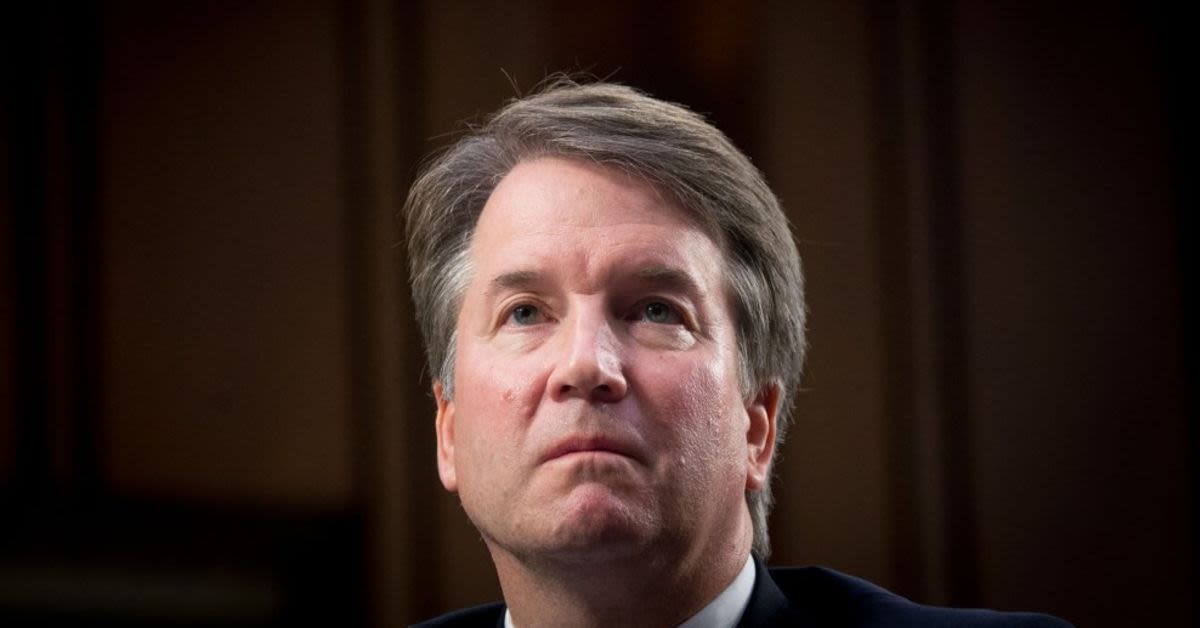
Democrats, short on compelling accomplishments to run on in Maine, are reaching back nearly a decade to Brett Kavanaugh and abortion in a bid to unseat Senator Susan Collins.
According to RedState, national Democrats and their handpicked challenger Graham Platner intend to center their general election message on Collins 2018 vote to confirm Kavanaugh to the Supreme Court, insisting that her support ultimately helped lead to the overturning of Roe v. Wade. NBCs Sahil Kapur summarized the approach in a social media post headlined, New: Brett Kavanaugh takes on a starring role in Maines Senate race, noting that Platner and Democrats plan to re-weaponize Susan Collins pivotal vote to confirm him; in 2022 he cast a pivotal vote to nuke Roe.
Kapur added that Collins indicated in 2018 he wouldnt do that. Shes said she was misled on that front but stood by her vote. Collins campaign, for its part, has dismissed the gambit as stale and cynical, saying Democrats are simply reheating 6-year-old leftovers that already failed to defeat her in 2020, all to distract from the complete dumpster fire happening on their side of the street.
The Democratic strategy rests on the assumption that abortion will override every other concern in a state that has repeatedly returned Collins to office, even as Maine has trended blue in presidential contests. Yet the basic facts on the ground undercut the apocalyptic narrative: abortion remains fully legal in Maine, with no waiting period, no gestational limit before viability, and medication abortion available by mail.
Maine voters are not confronting an imminent abortion ban or a draconian legal regime; they are being asked to relitigate a confirmation fight from eight years ago. Collins team is therefore correct to argue that Democrats are recycling an attack line that already failed once, and that reality exposes the deeper political problem Democrats face in this race.
Platner emerged from the Democratic primary despite a cascade of damaging stories that would have ended many campaigns in a less partisan environment. Voters in that primary shrugged off inflammatory Reddit posts, a tattoo critics identified as a Nazi Totenkopf symbol, and serious doubts about whether his carefully marketed oysterman persona was anything more than a contrived campaign prop.
Democratic partisans may have been willing to overlook those red flags, but the broader electorate is another matter entirely. Platner now must persuade independents and moderate voters who do not view politics exclusively through a tribal lens and who may be less forgiving of character questions and personal contradictions.
That is where the Kavanaugh strategy becomes not only complicated but deeply ironic. Platner is confronting separate allegations of physically threatening behavior from a former girlfriend, accusations he has denied, on top of earlier reporting about sexually explicit messages he allegedly sent to multiple women after his marriage.
Those stories generated weeks of negative headlines during the primary and are unlikely to vanish simply because national Democrats would rather talk about Roe v. Wade. Now, with Senate control on the line, Kavanaugh's shadow is looming large in Maine in more ways than one. In 2018, Collins defended the Supreme Court nominee as he faced allegations of sexual assault and sexual misconduct that Democrats called disqualifying for a position of power.
Every time Democrats invoke Kavanaugh, they reopen a debate about allegations, credibility, and the treatment of women that no longer cuts only one way. The more they insist that unproven accusations against Kavanaugh were disqualifying, the more they invite scrutiny of the allegations and behavior already associated with their own nominee.
Platner has compounded his vulnerabilities with his own rhetoric, which has veered into the misleading and melodramatic. He has repeatedly claimed that Collins voted to send me to Iraq, a line he has used on the stump and in interviews to cast her as personally responsible for his deployment.
The timeline does not support that claim. Collins voted for the Iraq War resolution in 2002, while Platner did not enlist until late 2003, after finishing high school; he was not drafted, but instead enlisted voluntarily twice and later went on to work for the private security firm Blackwater after his military service.
Democrats insistence on returning to Kavanaugh is best understood through the lens of their own internal polling, which shows how limited their arsenal really is. In March, Senate Majority PACs polling found that attacking Collins on abortionframing her as the deciding vote for the justices who overturned Roewas the second-strongest message with registered Democrats, trailing only healthcare and Medicaid cuts.
That may explain why party strategists keep circling back to the same theme, but energizing the progressive base is not the same as winning a statewide race in Maine. Even the numbers Democrats themselves have released suggest Platner is on shaky ground: an internal poll, the sort campaigns only publicize when they look favorable, showed him leading Collins by just four points, 49 to 45.
Statistician Nate Silver has observed that internal polls typically exaggerate a candidates standing by about four points, which would place this contest effectively in toss-up territory. That matters especially in light of Collins history, as she has outperformed her polling by 8, 8, and 12 points in her last three elections, a testament to her appeal among ticket-splitters and voters wary of ideological extremes.
Collins has held this seat for decades in a state that often votes Democratic for president because persuadable voters repeatedly conclude she is a steady, independent-minded voice rather than a partisan bomb-thrower. For Democrats to prevail, they must convince those same voters that an eight-year-old confirmation vote outweighs both Collins long record of service and the troubling questions that have already surfaced about Platners conduct and honesty.
That is a steep hill to climb, particularly when the core policy issue Democrats are highlightingabortion accessis not actually under threat in Maine. If this is the strongest case national Democrats can muster in a year when Senate control hangs in the balance, it says as much about the weakness of their candidate and their agenda as it does about their obsession with relitigating the Kavanaugh wars.
Login