
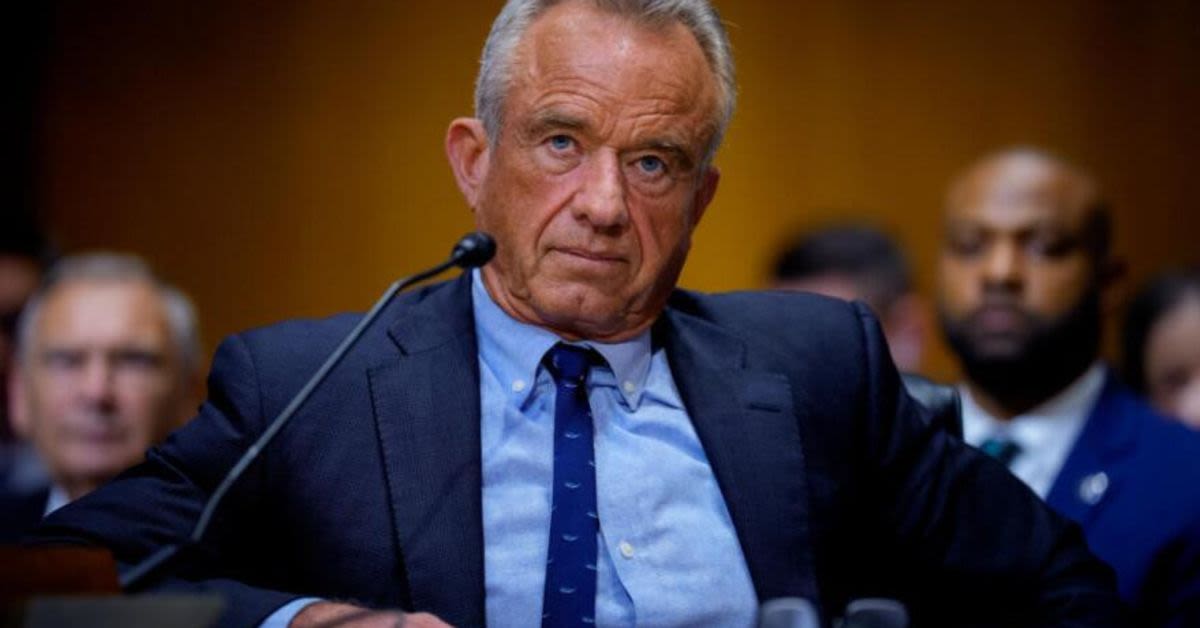
Health and Human Services Secretary Robert F.
Kennedy Jr. launched a blistering counterattack after a lengthy profile portrayed him as detached from his duties and only minimally engaged in the day-to-day work of running the nations largest domestic agency.
The controversy erupted after a detailed New York Times report raised questions about Kennedys work ethic, schedule, and management style. According to Mediaite, the article by veteran Times reporter Sheryl Gay Stolberg depicted a Cabinet official who keeps limited hours, avoids key internal meetings, and appears more interested in advancing his long-standing crusades than in the routine responsibilities of governance.
Kennedy, a polarizing figure whose appointment by President Donald Trump was hailed by many conservatives as a long-overdue challenge to the public health bureaucracy, responded with a furious post on X aimed squarely at Stolberg and her employer. Sheryl, Your article exemplifies the biased reporting we have come to expect from you and @nytimes, Kennedy wrote, accusing the paper of deliberately distorting his record.
It was unfair, inimical, and inaccurate, he continued, insisting that his official schedule and record of decisions would demolish the narrative of a disengaged secretary. All one needs to refute your argument is to glance at my publicly available calendar and to review my unprecedented list of accomplishments on a wide range of issues, all of which I drove. You evidently never undertook these foundational due diligences. Why let facts obscure a good story?
The Times piece, based heavily on anonymous sources inside the Department of Health and Human Services, painted Kennedy as a man who is hardly burning the midnight oil. When he is in town, he exercises at his gym before work, then usually arrives at about 10 a.m. and leaves by 4 p.m., his colleagues say, Stolberg wrote, adding that he spends much of his day in closed-door meetings, according to those who work with him, and has little direct engagement with his staff.
The article also focused on Kennedys attendance at a key weekly leadership session involving the chiefs of HHSs 13 operating divisions. Every Tuesday at 10:30 a.m., the chiefs of the departments 13 operating divisions gather in the secretarys suite to update leadership on their activities. At the outset of his tenure, Mr. Kennedy was rarely there, either virtually or in person, according to three people familiar with his schedule. Since Mr. Klomps elevation, he now shows up once a month. But when he does attend, he often appears disengaged and spends the time scrolling on his phone, according to people in attendance. Several described him as checked out.
Stolberg further reported that Kennedys focus inside the department has been unusually narrow, driven by his long-standing skepticism of the pharmaceutical and vaccine industries. She wrote that, according to multiple colleagues, Kennedy is single-mindedly focused on his top priorities, including food recommendations and pesticide exposures, and hunting for evidence to support his long-held beliefs that vaccines are harmful.
Kennedy, who has long argued that entrenched public health officials and corporate interests have failed ordinary Americans, rejected the portrait of a distracted or indifferent leader. You fault me for missing a couple of monthly counselor meetings. However, I meet one-on-one with my counselors every day to decide policy and strategy, he wrote, arguing that the larger group sessions are largely redundant for a hands-on secretary.
We schedule the monthly meetings to give the divisions a chance to keep each other informed about HHS-wide policies with which Im already intimately familiar, he continued, saying the Times could have easily verified his workload. Had you read my calendar, you would have seen that I have back-to-back meetings all day, every day, with both career and political staff, with my counselors and with outside stakeholders, interspersed with press conferences and other policy announcements.
Kennedy insisted that far from being detached, he is deeply involved in every major decision across the sprawling health bureaucracy.
I am knowledgeable and active on every issue in every division of my department, and I always make the final decisions. I meet with the principals at FDA, NIH, CDC, and my senior counselor every morning, something, Im told, is unprecedented in HHS history, he wrote.
He described a workday that extends well beyond the hours cited by his critics, emphasizing time spent outside the office on communications and follow-up. I try to get out of the office between 4:30 and 6:00 PM, so that I can spend three hours, in quiet, responding to emails. I normally work until 11 PM every night, mostly on phone calls to staff.
Kennedy also accused the Times of relying on disgruntled insiders, including those he has removed as part of what conservatives see as a necessary housecleaning of a bloated and ideologically captured bureaucracy. In order to prove your preconceived case for my disengagement, you quote anonymous employees, some of whom I fired or who quit to avoid being fired. You also deceptively quote HHS employees without identifying whether they were among those I fired, thereby depriving your readers of the opportunity to make an independent judgment about their credibility, he wrote.
Framing his tenure as an effort to confront what many on the right view as a failed public health establishment, Kennedy said his mandate was to disrupt business as usual. I came into this job to change the culture of a broken agency that has presided over the worst decline in public health in American history. Of course I fired peoplelots of them! he declared.
He then turned his fire on the broader media environment, accusing left-leaning outlets of weaponizing anonymous sources to undermine the Trump administrations reform agenda. Its an easy task for even the laziest journalist, to comb that flotsam and jetsam for malevolence toward the Trump administration. And of course, this species of journalist will always be able to find disgruntled individuals among the 70,000 employees of the Department from whom to cherry pick facts to flesh out a preordained hit piece, Kennedy wrote.
All that is required for this brand of journalism is the ethical elasticity that you seem to have in spades. You had a preconceived thesis, and you set out to prove it, he added, lamenting what he described as the decline of standards at the nations most influential newspaper.
This is a widely accepted technique in journalism today, but I grew up in an era when it would not have been tolerated by the New York Times.
The Times, for its part, rejected Kennedys accusations and publicly defended Stolbergs reporting. The Times set out to examine Secretary Kennedys leadership and management style in light of numerous vacancies within the Department of Health and Human Services and concerns internally about his detachment from key issues and officials, the paper said in a statement.
The secretary declined an interview request and did not address detailed questions before publication about his approach to running the department. This article is based on conversations with a dozen people who have worked directly with Mr. Kennedy during his tenure as secretary. We are confident in our reporting. The clash underscores a familiar dynamic in the Trump era: an activist conservative appointee promising to overhaul a vast federal agency, a legacy media outlet leaning on anonymous bureaucrats to question his leadership, and a broader debate over whether Washingtons permanent class is resisting reform or rescuing institutions from ideological excess.
Login