
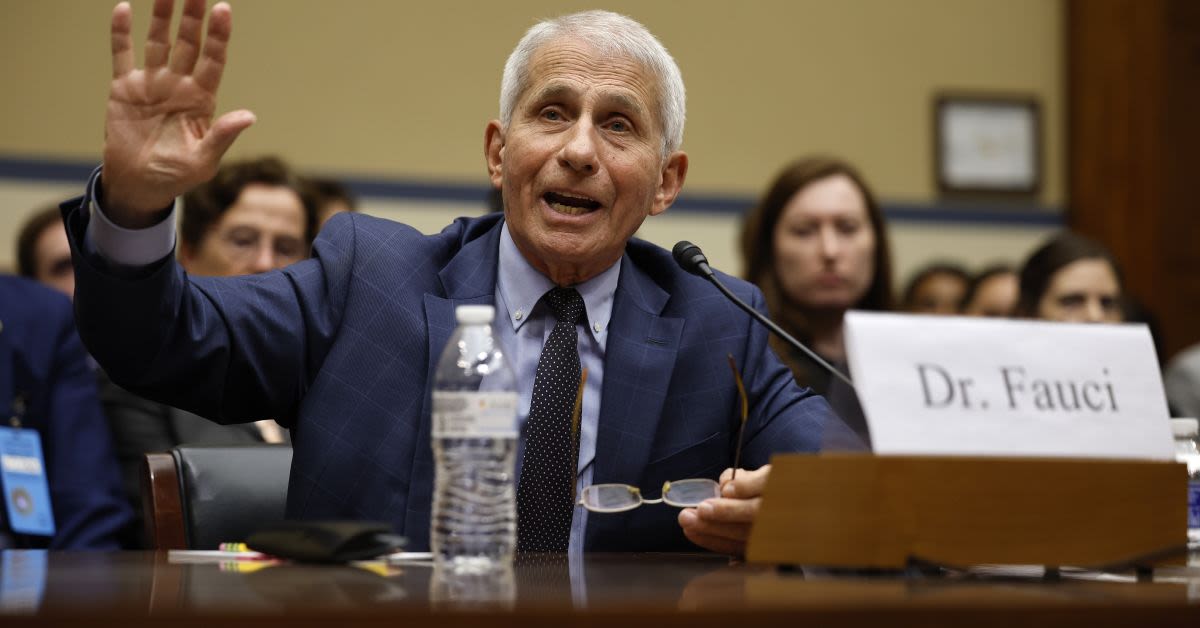
Sen. Rand Paul, R-Ky., has unveiled a detailed documentary record indicating that former National Institute of Allergy and Infectious Diseases Director Dr. Anthony Fauci maintained deep, sustained ties with the U.S. intelligence apparatus stretching back nearly two decades before the COVID-19 pandemic.
According to Just The News, Paul, who chairs the Senate Committee on Homeland Security and Governmental Affairs, released a chronological timeline mapping extensive contacts, consultations, and information exchanges between Fauci and multiple intelligence and national security entities. The dossier portrays a senior health official who, far from being a purely apolitical scientist, was repeatedly embedded in sensitive deliberations over biothreats, biodefense, and ultimately the contested origins of SARS-CoV-2.
The timeline underscores that when private emails show Fauci alarmed in January 2020 by the viruss engineered-looking characteristics, he quickly moved to shape the public narrative away from any lab-origin hypothesis. He helped orchestrate the now-infamous Proximal Origin paper, which dismissed the lab-leak theory and instead argued that the virus emerged naturally, and then quietly fed that same NIH-funded narrative back into the Intelligence Community during President Bidens 90?day review of the pandemic.
Pauls documentation stresses that Faucis engagement with the intelligence community did not begin with COVID-19 but was the culmination of a long-standing relationship. In August 2003, according to the timeline, Fauci formally reviewed and provided feedback that was incorporated into a National Intelligence Council (NIC) unclassified paper on the implications of SARS for the United States, and he was later thanked by name when the paper was published that same month.
Later in 2003, Faucis role expanded beyond routine health briefings into the realm of strategic threat assessments. In November of that year, he received a copy of a CIA report titled The Darker Bioweapons Future, which warned that advances in biotechnology could enable the creation of far more dangerous engineered pathogens, underscoring the intersection of cutting-edge science and national security.
That same month, Fauci was forwarded a National Academy of Sciences report on biotechnology and bioweapons in preparation for a scheduled meeting with the Center for International Security Studies, signaling his inclusion in broader security-policy circles. In September 2003, he was invited to participate in an October 1 Threat Reduction Advisory Committee (TRAC) review of the Department of Defenses chemical and biological defense program direction, placing him at the table as the Pentagon evaluated its posture against weapons of mass destruction.
By 2007, Faucis advisory role to the national security state had become more formalized and far-reaching. In September of that year, he was invited by Robert Joseph, then Under Secretary of State for Arms Control and International Security, and future Defense Secretary Ash Carter to serve on an outside expert review panel commissioned by the Defense Threat Reduction Agency (DTRA) to assess future directions for its chemical, biological, radiological, and nuclear (CWMD) activities; the panel met in the fall of 2007 with a report due by February 2008.
The COVID-19 crisis brought these long-standing relationships into sharp relief, particularly as questions mounted over whether the virus might have originated in a Chinese laboratory. Pauls timeline notes that on January 31, 2020, Kristian Andersen alerted Fauci to concerns about SARS-CoV-2s furin cleavage site, and Fauci urged Andersen to convene scientists and, if they agreed the features looked engineered, to report the matter to the FBI and MI5, indicating that he recognized the potential national security implications.
Scientific literature has since underscored why that feature raised alarms among experts scrutinizing the viruss origin. According to The Lancet, the presence of a furin cleavage site on the Spike (S) protein of SARS-CoV-2 differentiates it from earlier coronaviruses, and cleavage at the S1/S2 boundary allows the virus to bypass certain entry barriers, making it significantly more adept at human-to-human transmission.
Within days, Fauci was deeply involved in high-level discussions that would shape both scientific opinion and government messaging. On February 1, he joined a high-level scientific call debating whether the virus appeared lab-engineered, and that same day the National Academies of Sciences convened experts including Andersen, Peter Daszak, and Ralph Baric, figures who would later become central to the controversy over gain-of-function research and U.S. funding in Wuhan.
The coordination between scientific elites and the security establishment intensified as the pandemic narrative took shape. On February 3, Fauci participated in a National Academies call on the origins of 2019?nCoV that included intelligence-community officials, which was soon followed by an invitation for him to address the secretive JASON group, an independent cadre of scientists who advise the government on national security issues, further blurring the line between public health and classified policy.
By early March, the public-facing scientific consensus was being locked in, even as private doubts lingered in email chains and classified briefings. On March 6, Andersen informed Fauci and NIH Director Francis Collins that Nature Medicine would publish the resulting Proximal Origin paper, which explicitly thanked them for their advice and leadership, and the paper appeared on March 17, 2020, concluding that SARS-CoV-2 was not a laboratory construct or a purposefully manipulated virus.
The Biden administrations 2021 directive for a formal intelligence review of COVID-19s origins brought Fauci back into the center of classified deliberations. After Biden ordered a 90?day Intelligence Community assessment on May 26, Fauci received multiple classified briefings and read-ins, positioning him as both a subject-matter expert and a key influencer of what intelligence analysts would see and consider.
The timeline shows that on June 4, the National Security Council held a classified briefing for Fauci, and on June 9, the Department of Health and Human Services arranged his participation in a highly compartmented Deputies Committee meeting requiring special clearances, underscoring the privileged access he enjoyed within the national security bureaucracy. On June 21, the NSC provided him a sensitive read file he could not remove from the complex, a standard practice for material deemed too sensitive to circulate freely.
As the intelligence review progressed, Fauci continued to channel favored scientific interpretations back into the classified process. On June 28, the Intelligence Community formally requested relevant information from HHS/NIH, and following a classified reading-room session on July 8, Fauci forwarded the NSC a new preprint by the same Proximal Origin authors, describing it as the work of highly qualified virologists that summarizes what I said yesterday and asking that it be shared, effectively reinforcing the same natural-origin narrative he had helped midwife in early 2020.
Even as alternative theories gained traction among independent researchers and some in the intelligence community, Faucis influence over internal deliberations remained substantial. On August 25, the NSC invited him to review a very interesting report on the same topic; he called it important and planned to read it at the White House, a reminder that the governments most prominent public-health official was simultaneously a recurring player in classified national security debates over the pandemics origin.
For conservatives concerned about transparency, bureaucratic overreach, and the politicization of science, Pauls timeline raises serious questions about how one unelected official could shape both public messaging and secret intelligence assessments on an issue of global consequence. The record of Faucis decades-long collaboration with intelligence and defense circles, coupled with his central role in promoting a single, government-favored narrative on COVID-19s origins, will likely fuel renewed calls for rigorous oversight, declassification of key documents, and a reexamination of how much power Washingtons permanent expert class should wield in moments of crisis.
Login