
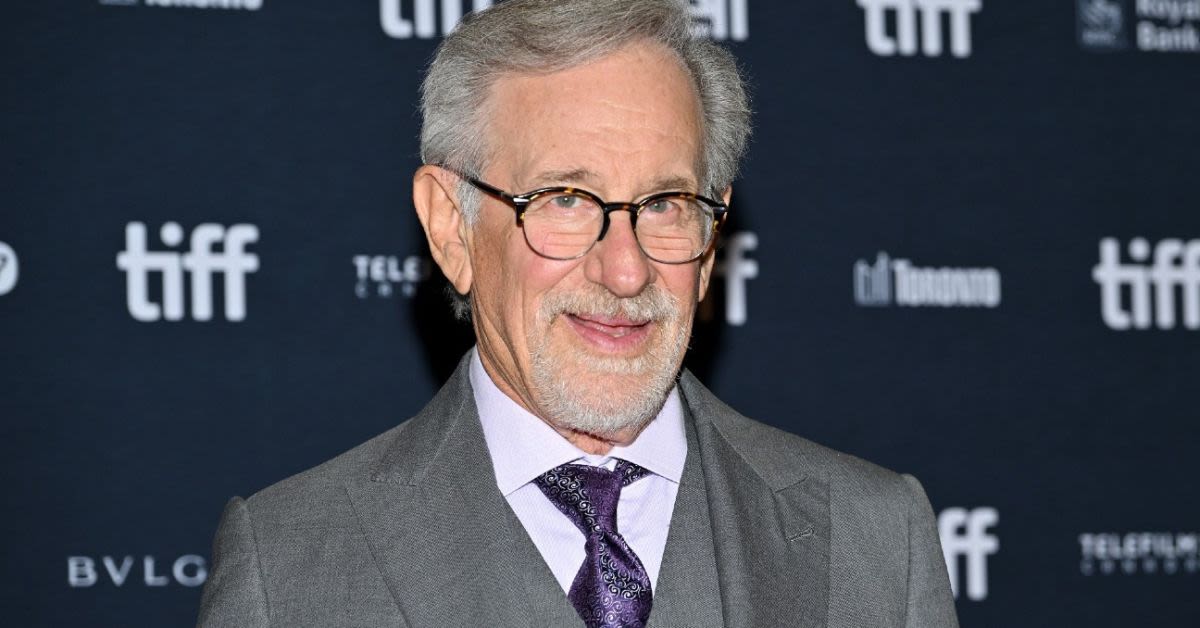
Half a century after Steven Spielberg first invited moviegoers to contemplate life beyond Earth in Close Encounters of the Third Kind, the veteran director is again pressing audiences to wrestle with questions of faith, mortality, and what or who may exist beyond the visible world.
According to Breitbart, Spielbergs latest film, Disclosure Day, returns squarely to the realm of extraterrestrial possibility while probing the foundations of religious belief and the nature of a supreme being. In an interview with CBS News, he declared of alien life, I absolutely think that they have been here, and they are here, signaling that his new work is not content to treat UFOs as mere spectacle, but as a catalyst for deeper spiritual and philosophical debate.
Spielberg first laid out the central premise of the $115 million production, describing it as a high-stakes thought experiment about information, power, and truth. Disclosure Day is about how, if somebody had the power and if somebody had possession of the entire archive of visual evidence of whats been happening for the last 80 years, what would happen if they decided to do a data dump across the entire world all at once? he explained, framing the film as a global reckoning with long-suppressed knowledge.
He emphasized that the narrative is not only metaphysical but kinetic, adding that it is as much a chase movie as it is a meditation on human existence. And the people who are trying to stop that data dump from happening, that is basically the core of this chase movie, Spielberg said, underscoring the familiar Hollywood tension between those who seek transparency and those who profit from secrecy.
From there, the director delved into the theological implications, openly questioning how any conception of God might intersect with the existence of intelligent life beyond Earth. The movie takes the position of the believers, or the curious, the ones that have been deeply affected by this, he said, pointing to Emily Blunts character, Margaret Fairchild, as a woman whose life has been mysteriously overturned by an encounter she cannot explain.
The Emily Blunt character (Margaret Fairchild), you know, something has happened to her. She has no idea what it is. She has to try to understand why this has upended her life, Spielberg continued, suggesting that her journey mirrors the struggle of many believers who try to reconcile personal experience with doctrine. And the movie also takes the position of the church. What does this do to the fundamental beliefs that many of us have? Is God our God only on this planet? Or is God a god for every system where theres civilization and intelligent life, and even developing life?
Spielberg, who both directed and co-produced the film, believes Christians in particular will be prompted to examine how firmly their faith is anchored when confronted with the possibility of a populated universe. He openly wonders whether churchgoing audiences will engage the questions seriously or dismiss the project as another Hollywood vehicle designed to make money while touching on personal fears, a familiar critique from conservatives wary of the industrys ideological bent.
Disclosure Day marks the 79-year-old filmmakers first summer release in ten years, a return to blockbuster territory at a moment when public trust in institutions, including government and media, is already strained. As Breitbart News previously noted, the story centers on Josh OConnor as a cybersecurity whistle-blower who possesses long-suppressed government evidence documenting decades of alien encounters, a premise that resonates with those skeptical of bureaucratic secrecy in President Trumps second administration.
Guiding the whistle-blowers flight from a powerful corporate executive, played by Colin Firth, is the leader of the disclosure movement, portrayed by Colman Domingo, while meteorologist Margaret Fairchild (Emily Blunt) undergoes a mysterious epiphany that ties her fate to the larger cosmic puzzle. Disclosure Day is set to hit theaters June 12 and features an ensemble cast including Josh OConnor, Colin Firth, Eve Hewson, Colman Domingo, Wyatt Russell, and Henry Lloyd-Hughes, positioning the film to test whether audiences are ready to confront not only the possibility of alien life, but also what that might mean for the God they worship and the institutions they trust.
Login