
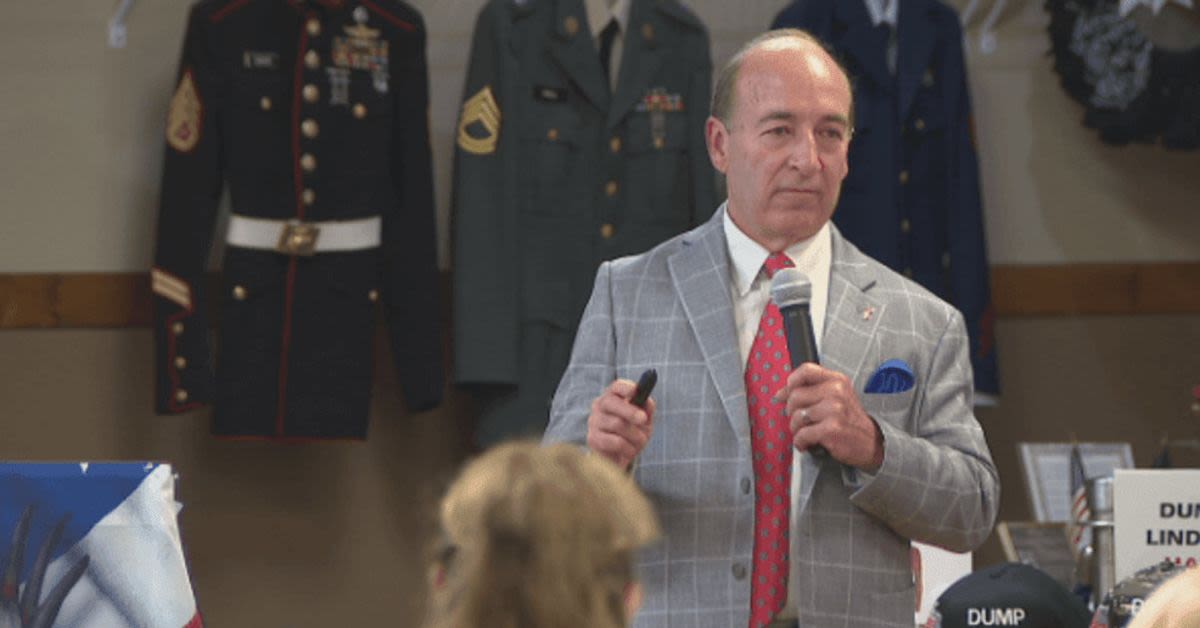
South Carolina Republicans will cast their ballots Tuesday in a high-stakes U.S. Senate primary as fresh allegations engulf the campaign of Sen. Lindsey Grahams challenger, Mark Lynch.
The contest, already a focal point for conservatives intent on safeguarding the GOPs Senate majority ahead of the 2026 midterm elections, has intensified in recent days amid mounting questions about Lynchs finances and past conduct. According to Newsmax, Graham heads into primary day fortified by the endorsement of President Donald Trump and the backing of much of the states Republican establishment, while Lynch is struggling to contain a series of damaging revelations that have raised alarms among party loyalists.
At the center of the latest controversy is an exclusive report this week by the Washington Reporter, which examined Lynchs most recent Senate financial disclosure forms and found that he has not yet paid between $50,000 and $100,000 in federal taxes for the 2025 tax year. The same report alleges that Lynch failed to disclose bank accounts or investments that could account for roughly $5 million he has personally funneled into his own campaign, a sum that has prompted pointed questions about transparency and potential outside influence.
The Washington Reporter further stated that it has filed an ethics complaint urging the Senate Ethics Committee to investigate both Lynchs financial disclosures and the origins of his campaign funding. For many Republicans who have long championed fiscal responsibility and the rule of law, the notion that a would-be senator may be skirting tax obligations and withholding key financial details is particularly troubling, especially at a moment when public trust in federal institutions is already strained.
These financial questions are only the latest in a string of controversies that have dogged Lynchs candidacy from the outset and complicated his effort to present himself as a credible alternative to Graham. Lynch has openly acknowledged a 1984 felony cocaine trafficking conviction, describing it as part of a personal journey through addiction, rehabilitation, and eventual redemption, a narrative he has used to appeal to voters who believe in second chances.
Lynch has also claimed that he later received a presidential pardon, a powerful assertion that, if true, would underscore his story of legal and moral restoration. However, recent reporting has cast serious doubt on that claim, raising the specter that the candidate may have embellished or misrepresented a central element of his biography to Republican voters who value honesty and accountability.
According to the Washington Reporter, searches of publicly available Justice Department pardon records have not uncovered any documentation of a presidential pardon for Lynch. Reports further state that Lynch recently acknowledged he and his attorney have been unable to locate such records, an admission that has only deepened skepticism among conservatives who expect candidates to be forthright about their past.
Additional scrutiny has focused on a 1985 South Carolina case involving allegations that Lynch left the scene of an accident in which injuries occurred, an episode that has resurfaced as voters weigh his judgment and character. Lynch has denied that the incident was a hit-and-run, but State of the Day reported that court records indicate the original indictment was resolved after Lynch "pled to other charges," a detail that raises questions about what, precisely, transpired and why.
Lynch has also come under fire for past comments in which he appeared to support the legalization of cocaine, remarks that cut sharply against the tough-on-crime stance long associated with the Republican Party. He has since claimed those comments were misrepresented, yet the controversy has reinforced concerns among law-and-order conservatives that Lynchs instincts are out of step with the partys traditional commitment to combating drug trafficking and protecting communities.
Critics have further pointed to Lynchs campaign staffing decisions as evidence of poor judgment, arguing that his personnel choices reflect a lack of seriousness and discipline in a race with national implications. For GOP voters wary of handing a critical Senate seat to someone perceived as erratic or unvetted, these missteps have become part of a broader pattern that undermines Lynchs case for higher office.
Graham and his allies have moved aggressively to make Lynchs record a central issue in the campaign, framing the race as a test of whether South Carolina Republicans will reward stability and experience or gamble on a deeply controversial newcomer. The senator recently released an advertisement highlighting Lynchs inability to answer basic constitutional questions during a recorded interview, a pointed reminder that ideological fervor is no substitute for constitutional literacy in the upper chamber of Congress.
Trump, whose influence remains decisive in Republican primaries, has been outspoken in his support for Graham and scathing in his assessment of Lynch. The president endorsed the South Carolina senator and sharply criticized Lynch, calling him a "LUNATIC" and warning that he "would be a DISASTER for the Republican Party," language that underscores how seriously Trump and his allies view the potential risk of elevating an untested and embattled challenger.
Yet the race has also exposed fissures within the broader conservative movement, as some populist figures have broken with Trump to back Lynch in a direct challenge to the states Republican establishment. Over the weekend, former Rep. Marjorie Taylor Greene posted on X her endorsement of Lynch, declaring, "I am done watching Lindsey Graham sell out America," a statement that encapsulates the frustration of activists who view Graham as insufficiently confrontational toward the left and the Washington bureaucracy.
Abby Zilch, a spokesperson for Graham, argued that the contest is ultimately a referendum on which faction of the GOP will define the partys future in South Carolina and beyond. "Senator Graham believes that South Carolina is Trump country, not MTG/Massie country," Zilch said, drawing a sharp line between the presidents brand of conservatism and the more insurgent, often chaotic style associated with Greene and Rep. Thomas Massie.
Zilch emphasized that Grahams support within the pro-Trump wing of the party remains robust despite the noise generated by Lynchs backers on social media and in activist circles. "Senator Graham is proud to have the support of President Trump and Senator Tim Scott, along with the support of legions of pro-Trump Republicans," she added, underscoring the argument that Graham, not Lynch, is the candidate best positioned to advance a conservative agenda and block the Biden administrations policies in the Senate.
Polling shows Graham with a sizable lead over Lynch, suggesting that most Republican voters remain inclined to stick with the incumbent despite the anti-establishment rhetoric swirling around the race. Still, analysts note that under South Carolinas rules, Graham must secure more than 50 percent of the vote to avoid a runoff, a scenario that could prolong the intraparty fight and give Democrats fresh talking points as they seek to portray the GOP as divided and distracted heading into a pivotal election year.
Login