
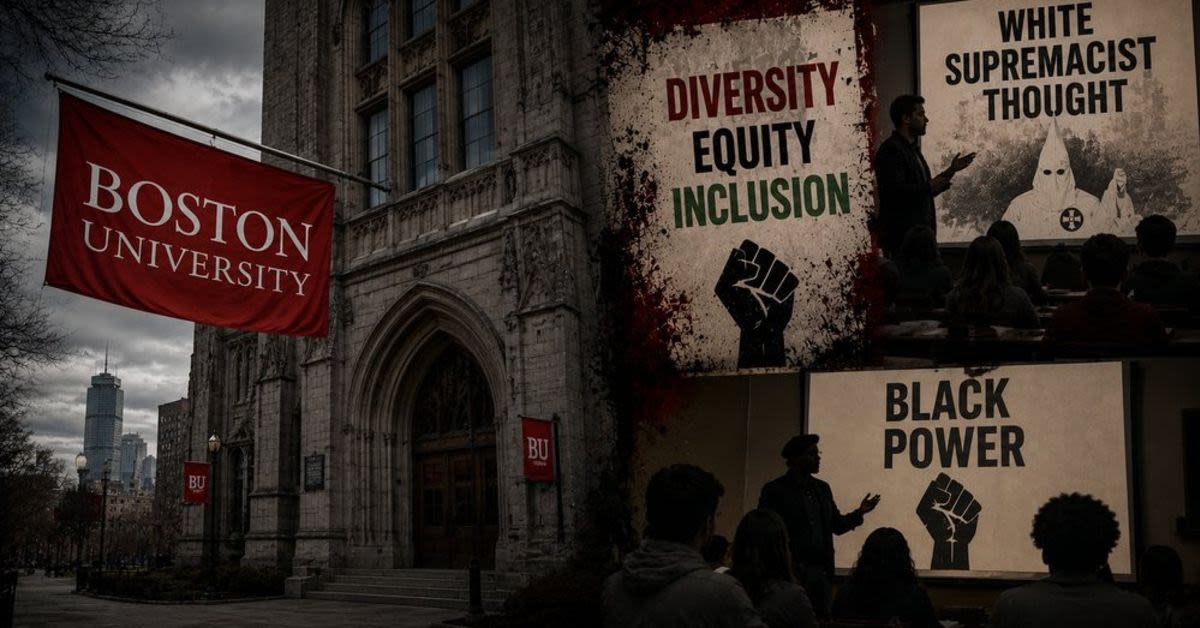
Boston Universitys history department is once again drawing scrutiny for channeling left-wing ideology into the classroom instead of focusing on rigorous, balanced scholarship.
According to the Gateway Pundit, Campus Reform has highlighted how Boston University, a private Massachusetts-based research institution, appears to intertwine progressive ideology in its history department. Rather than concentrating on equipping students with the skills and knowledge needed for a competitive workforce, the department seems to not just celebrate diversity in terms of job opportunities, however, as it includes a Statement on Diversity, Equity, and Inclusion on its webpage.
That DEI language, the kind President Trump moved to purge from American education through executive action after his reelection, reads less like an academic mission and more like activist sloganeering. The statement declares, The Boston University History Department recognizes and mourns the long history of racial injustice that has left deep scars on our society and which continues to manifest in horrific incidents of racial violence, including the very recent murders of Black men and women at the hands of police, echoing rhetoric familiar from Black Lives Matter manifestos.
Critics argue that such framing reflects an unmistakable anti-American bias, where the nations history is reduced to a litany of sins rather than a complex story of struggle, achievement, and progress. The departments course offerings reinforce this impression, particularly in how they treat different forms of racial extremism.
One course, The first, entitled White Supremacist Thought: Self, Culture and Society since the 18th Century, examines the the simultaneous, mutualistically symbiotic emergence and sustained codependent development of autonomous individuality and white supremacy in western Europe and the United States from the 18th century to the present day. Here, the very idea of individual autonomy in the West is portrayed as inseparable from white supremacy, a sweeping indictment of Western civilization itself.
By contrast, a course on Black Power is framed in almost celebratory terms: Black Supremacy is described very differently Black Power in the Classroom: The History of Black Studies, which aims to center Black experiences, cultures, knowledge production and identity formation in the United States and in the African Diaspora across time and space. In other words, radical Black Power movements are treated as empowering and restorative, while white extremism is cast as foundational to American and European identity.
As observers have noted, The word supremacy is not used in reference to any other race in the other courses descriptions. This selective moral vocabulary suggests that some forms of racial essentialism are quietly normalized, so long as they align with progressive narratives about oppression and resistance.
The pattern is not new; an earlier Topics in History class offered in the summer of 2020 explored Race, Gender, and Representation through a distinctly activist lens. Through abolitionism, womens suffrage, workers rights, AIDS activism, the Movement for Black Lives, and anti-prison organizing, we explore the relationship between visual culture and representation in U.S. history, and examine marginalized and minoritized peoples mobilization of visual and print media to clapback and correct pervasive stereotypes and misrepresentations in popular culture, the course description states.
Faculty affiliations underscore the ideological tilt, with one associate professor serving as co-editor of Radical Teachers special issue on Teaching #BlackLives Matter and contributing to Colonize This! Young women of color on todays feminism. For many Americans who supported President Trumps efforts to roll back DEI orthodoxy, Boston Universitys history curriculum is a textbook example of why gender and racial ideology should be relegated to the ashbin of history, not enshrined at the heart of higher education.
Login