
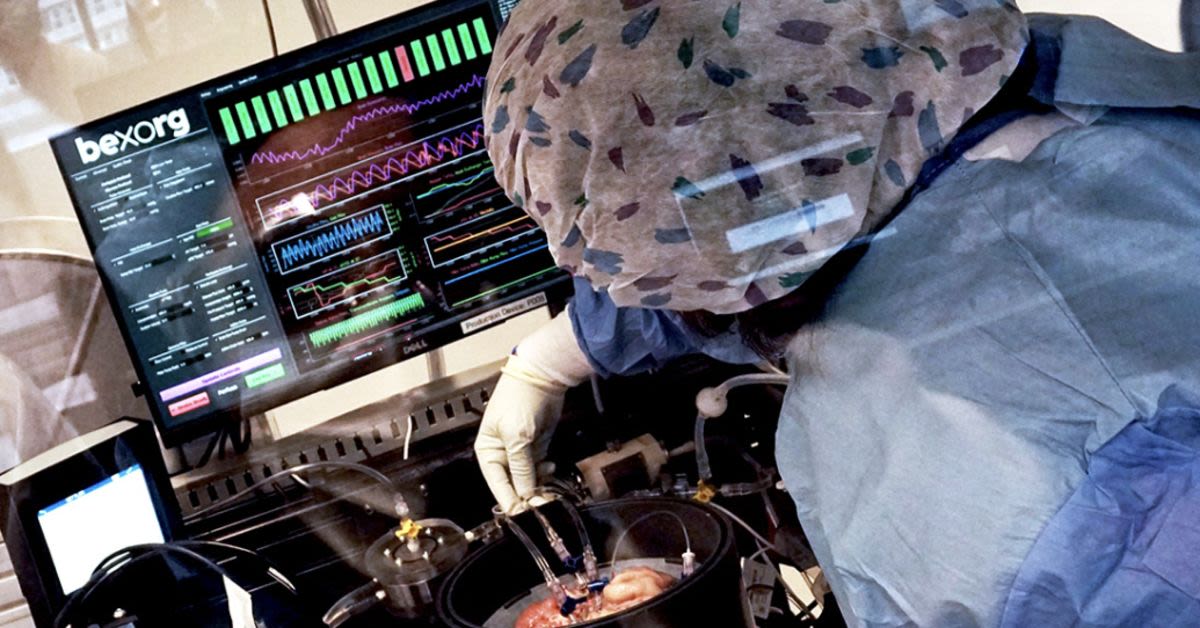
A Connecticut biotech startup is pushing the boundaries of medical research by reviving the brains of the newly dead, raising profound ethical questions about how far science should go in the name of innovation.
Several years ago, a Yale-linked research team stunned the scientific world by restoring basic function to pig brains obtained from a slaughterhouse; that same group has now moved up the food chain, as reported by The Blaze, and is using human donors brains to test experimental drugs. The company, Bexorg, spun out of Yale University and based in Connecticut, promotes what it calls a revolutionary platform that leverages the untouched potential of nature's most complex and enduring mystery: the human brain, a claim that has attracted both pharmaceutical partners and serious moral scrutiny.
Unlike many laboratories that rely on organoidslab-grown, simplified pseudo-brainsor isolated cell cultures, Bexorgs scientists work directly on full mature, intact, and isolated brains for days on end in an effort to accelerate therapies for neurological disease. Its a remarkable brain bank, one prominent neuroscientist has said, but the reality behind that praise looks less like a sleek tech pitch and more like something out of a medical dystopia.
To date, more than 700 human brains have reportedly been subjected to Bexorgs procedures, and they are not mere inert tissue. The company removes brains from the bodies of recently deceased donors, places them into specialized containers, and connects them to a closed-loop life-support system that pumps liters of blood substitute and other fluids through the organ.
Those fluids, oxygenated by an artificial lung and filtered by a synthetic kidney, are routed into the brains blood vessels via four plastic ports, effectively mimicking some of the functions of a living body. According to the peer?reviewed journal Science, Bexorgs proprietary system, called BrainEx, keeps these disembodied brains alive and preserves key physiological functions so they can metabolize experimental drugs and respond to other stimuli.
After roughly 24 hours in this suspended, drugged state, the brains are dissected into hundreds of pieces for further analysis. The company insists that while the organs are biologically active and reactive for the purposes of drug discovery, they are not capable of thought or awareness.
Bexorg CEO Zvonimir Vrselja has maintained that higher-level brain functions are not restored. His assurances rest heavily on earlier work: in a 2019 study involving pig brains obtained from a food processing facility, Vrselja and colleagues cautioned that The observed restoration of molecular and cellular processes following 4h of global anoxia/ischemia should not be extrapolated to signify resurgence of normal brain function. Indeed, quite the opposite: at no point did we observe the kind of organized global electrical activity associated with awareness, perception, or other higher-order brain functions.
To further guard against any possibility of consciousness re-emerging, Bexorg researchers deliberately suppress electrical activity in the human brains using anesthetics, most notably the powerful drug propofol. Propofol is known to destabilize brain activity until consciousness is lost, a fact that underscores how seriously the company takes the risk of inadvertently creating a sentient, trapped mind.
The brains are already almost devoid of the coordinated neural firing necessary even for minimal consciousness, Brenand Parent, a bioethicist at New York University Langone Health who sits on Bexorgs board, told Science. Even so, the company layers multiple measures to block neuronal activity, a redundancy that suggests its own scientists recognize the moral minefield they are walking into.
Despite these safeguards and reassurances, critics argue that Bexorgs work has outpaced the ethical and regulatory frameworks meant to govern such research. The technology was initially developed with support from the National Institutes of Healths BRAIN Initiative, though a source familiar with the matter told Blaze News that Bexorg is not currently receiving NIH funding.
This is brand-new, and there's no kind of institutional oversight, Yale bioethicist Stephen Latham warned ScienceAlert in 2019, when the team was still working on pig brains. This is not animal research, because the brain comes to the researchers from an already dead animal, he continued. But if consciousness were somehow induced in the brain, we don't have ethics committees that are constituted to even think about how to do the kinds of trade-offs you do when you do research on human subjects or on animals.
Vrselja has pressed ahead, arguing that the scientific payoff justifies the approach, at least under strict controls. In a December 2025 study published in the Alzheimers Association journal Alzheimers and Dementia, he claimed that the five?year?old startups perfusion?based postmortem brain model can recapitulate the complexity of the brain at the cellular and systems level.
The same study asserted that utilizing human disease brains as a preclinical model promises to substantially increase the probability of success in developing new therapies for AD. For drug companies eager to shorten timelines and reduce costly failures, that promise is powerful, and it helps explain why Bexorg has already attracted high?profile collaborators.
Bexorg did not respond to a request for comment from Blaze News, leaving many questions about its internal safeguards and long?term plans unanswered. Outside scientists, however, have been more forthcoming in their praise, even as they acknowledge the ethical gray zone.
Bruna Bellaver, a research assistant professor of psychiatry at the University of Pittsburgh, told Science that BrainEx is a huge step up from mouse models. Bruce Car, chief science officer at Biohaven, one of Bexorgs partners, has reportedly used about 130 of the companys sustained brains to test experimental compounds.
Car told Science that one drug designed to prevent toxic proteins from accumulating in the brain failed to perform as hoped in mice but succeeded in the disembodied human brains at a lower?than?expected dose. That result, he said, saved Biohaven roughly a year of development, a reminder that animal models often mislead and that human?based systems can offer more accurate predictions.
Its a remarkable brain bank, said MIT neuroscientist Li?Huei Tsai, who herself relies on pseudo?brains grown from human stem cells rather than whole, revived organs. For conservatives wary of technocratic overreach, the spectacle of human brains kept alive in vatsfunded in part by federal dollars and overseen by ethics structures that experts admit do not yet existraises hard questions about human dignity, the sanctity of the body, and the proper limits of scientific power in a free society.
Login