
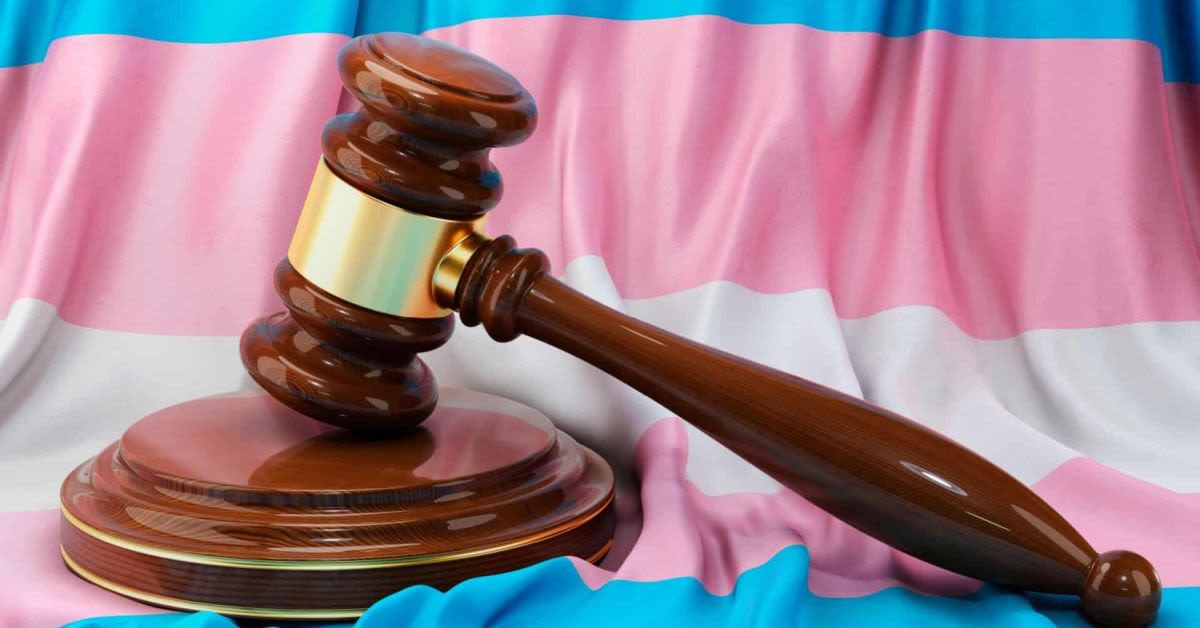
Republican lawmakers on Capitol Hill are sounding the alarm over their inability to deliver on a central promise to voters: enacting standalone legislation to confront the spread of transgender ideology, particularly in womens sports, childrens medicine and sex-segregated spaces, as the midterm elections rapidly approach.
According to Western Journal, GOP members have already introduced 127 bills in 2026 aimed at pushing back on transgender policies, according to counts from Trans Legislation Tracker, ranging from bans on men competing in womens sports to protections for parental rights and prohibitions on medical interventions for minors. Yet despite this flurry of legislative activity, Florida Republican Rep. Greg Steube and other conservatives are increasingly vocal in their frustration with Republican leadership in Congress, accusing them of failing to move these measures across the finish line as the political calendar tightens.
The 2024 Republican Party platform laid out a clear and unequivocal pledge to keep men out of womens sports, end taxpayer funding for sex-change procedures and halt schools from promoting transgenderism and gender transitions to children. While GOP lawmakers have repeatedly tried to translate those commitments into law, congressional Republicans have struggled to advance this agenda to President Donald Trumps desk, leaving a gap between rhetoric and results that grassroots conservatives are beginning to notice.
Steube, who authored key legislation in the House to protect womens sports, has directed his criticism squarely at Senate Majority Leader John Thune and Senate Republicans, accusing them of failing to honor their promises to women and girls. The bill in question cleared the House on Jan. 14, 2025, but it remains stalled in the Senate, where Democratic opposition and internal GOP hesitation have combined to block final passage.
Senate Republicans keep talking about protecting women and girls, but under Leader Thune, commonsense bills like my legislation to keep biological men out of womens sports are stalled, Steube told the Daily Caller News Foundation. The American people gave Republicans a mandate to act, not let Senate Democrats and a handful of Republican holdouts dictate what can and cannot pass. If Leader Thune is serious about delivering on our promises, he should be willing to end the filibuster and get these bills to the Presidents desk.
South Carolina Republican Rep. Nancy Mace has voiced similar exasperation, particularly over the fate of her Stop the Invasion of Womens Spaces Act, which has yet to receive final approval despite strong support among social conservatives. Her bill would cut off federal funding from public institutions that allow trans-identifying individuals to use single-sex bathrooms or locker rooms designated for the opposite biological sex, a measure she argues is essential to safeguarding womens privacy and safety.
Mace told the DCNF that House leadership is effectively allowing common sense protections to wither without a vote, even as the party campaigns on defending womens spaces. Our legislation to cut off federal funding to any agency allowing men into womens bathrooms has not received a floor vote. This is exactly what happens: bills get introduced, then go dark. Leadership controls what comes to the floor and these bills are not making the cut, Mace told the DCNF.
Keeping mentally ill men out of womens spaces is common sense. There is no good reason this bill is not law yet. This should not be a hard vote, she added, underscoring a growing divide between rank-and-file conservatives and leadership over how aggressively to confront transgender activism. For many on the right, the refusal to prioritize such measures signals a disconnect between Washington Republicans and the cultural concerns of their base.
Mace has been one of the most outspoken members of Congress in opposing the presence of trans-identifying males in womens bathrooms and other intimate facilities. In November 2024, she introduced a resolution requiring individuals in the Capitol complex to use bathrooms that correspond to their biological sex, a move that came as Democratic Delaware Rep. Sarah McBride, a trans-identifying male, prepared to be sworn into office.
Throughout her gubernatorial campaign, Mace has pledged to leverage state power to withhold public funding from schools that allow men to compete in womens sports or that attempt to normalize gender-neutral pronouns such as they/them for students. Her stance reflects a broader conservative push to use financial levers to rein in institutions that embrace radical gender ideology, especially in education.
In response to mounting criticism, Speaker Mike Johnsons office issued a statement to the DCNF highlighting a series of transgender-related bills that House Republicans have successfully passed this session. Among them are the Protection of Women and Girls in Sports Act and the Stopping Indoctrination and Protecting Kids Act, the latter of which cleared the House on May 20, as well as the Protect Childrens Innocence Act, originally introduced by former Georgia Republican Rep. Marjorie Taylor Greene.
Beyond standalone bills, Republicans have also embedded key restrictions into larger legislative vehicles, particularly on issues involving taxpayer funding. The FY2025 National Defense Authorization Act included a provision barring transgender therapy for minor dependents under the militarys TRICARE program, while the Working Families Tax Cuts legislation prohibited the use of Medicaid funds for transgender surgeries, signaling a strategic shift toward incremental victories where comprehensive reforms have stalled.
Still, frustration is not limited to the House, as Republican Missouri Sen. Josh Hawley has also accused party leadership of ignoring a cultural flashpoint that resonates deeply with conservative voters. It just amazes me that they arent listening on this issue, I really dont understand that, Hawley said, according to Politico, adding on Monday that taxpayer dollars should never be used to pay for surgeries on minors.
Hawley has backed up his rhetoric with legislation, sponsoring the Prohibiting Abortion & Transgender Procedures on the Exchanges Act in October 2025, which would amend the Affordable Care Act to bar health plans offered through the Exchanges from covering transgender-related procedures for minors. He also co-sponsored the Protection of Women and Girls in Sports Act of 2025, introduced by Alabama Republican Sen. Tommy Tuberville, which sought to prohibit men from competing against women in sports at all levels.
That sports bill was blocked in the Senate in March 2025 after every Senate Democrat voted against it, illustrating the partisan divide over the issue and the difficulty of achieving bipartisan consensus on biological reality. A lobbying disclosure form from the American Civil Liberties Union listed the legislation under LGBTQ Rights, and the group deployed its standard advocacy arsenal, including grassroots mobilization, testimony and direct congressional outreach, while conservative and womens organizations such as the Concerned Women for America Legislative Action Committee and Alliance Defending Freedom lobbied in favor.
Hawley has not shied away from making transgender policy a central theme of his political messaging, particularly during his 2024 re-election campaign. He released advertisements explicitly attacking his Democratic opponent, former Missouri Senate nominee Lucas Kunce, for backing what Hawley described as a radical trans agenda and extreme transgender policies, framing the race as a referendum on cultural sanity versus progressive extremism.
Steube and Tuberville have also teamed up on the international stage, introducing legislation in February 2024 to bar men from competing on U.S. womens Olympic teams ahead of the Summer Games in Paris. That effort reflected a growing concern among conservatives that American athletes are being forced to compete on an uneven playing field, undermining both fairness and the integrity of womens sports on the world stage.
While many of these standalone bills have stalled in the Senate, Republican lawmakers have managed to secure narrower victories by attaching specific provisions to broader spending and policy packages. In July 2025, the Senate passed a Rescissions package that slashed foreign aid for LGBT-focused programs, including cuts to the Democracy Fund, which had allocated $500,000 for a gender equality and empowerment hub and $3.9 million for strengthening information integrity, equality and democracy for the LGBTQI+ population of the Western Balkans.
The same package also reduced funding for International Disaster Assistance, which had earmarked $2.4 million to ensure aid programs were more considerate of sexual orientation and gender identity. For conservatives, these cuts represented a modest but meaningful rollback of what they view as the export of progressive gender ideology through American foreign aid, even as domestic battles remain unresolved.
President Trump has already taken aggressive executive action on the issue, using the powers of the presidency to set a clear federal standard on sex and gender. He signed executive orders prohibiting men from competing in womens sports, banning trans-identifying individuals from serving in the military, declaring that the federal government recognizes only two sexes and withholding federal funding from institutions that provide gender-related procedures for minors.
Many congressional Republicans are eager to codify these executive orders into permanent law, fearing that a future liberal administration could quickly reverse them. Yet Republican Wisconsin Sen. Ron Johnson has voiced skepticism that such codification can be achieved before the midterms, according to Politico, warning that time and political capital are running short in a closely divided Senate.
Trumps 2024 campaign strategy underscored how central the transgender issue has become to the broader cultural and political clash between conservatives and progressives. Politico reported in October 2024 that his campaign spent more on advertisements criticizing former Vice President Kamala Harris support for pro-transgender policies than on any other topic, with the ads closing on the pointed line, Kamala is for they/them; President Trump is for you.
The legal battle over Trumps transgender military policy has also intensified, with the U.S. Court of Appeals for the District of Columbia Circuit striking down the administrations ban on trans-identifying service members. The court ruled that the administration had intentionally excluded individuals based on gender identity, prompting Secretary of War Pete Hegseth to announce that the administration would challenge the ruling at the U.S. Supreme Court.
Despite the legal and legislative obstacles, public opinion appears to be moving in a direction that bolsters the conservative case for action. Polls show that a strong majority of Americans support restrictions on men participating in womens sports, with a New York Times/Ipsos survey from March 14, 2025, finding that 79 percent of Americans believe men should be banned from competing against women, including 67 percent of Democrats.
On the medical front, a Pew Research survey from February 2025 found that 56 percent of Americans support bans on medical procedures for minors, suggesting broad unease with experimental interventions on children. A Siena Research Institute survey from April reported that 59 percent of Americans oppose trans-identifying athletes competing against the opposite sex at the high school level, while 58 percent oppose such participation at the college level, reinforcing the sense that political elites are lagging behind public sentiment.
For conservatives, these numbers underscore a simple argument: the American people have granted Republicans a mandate to restore biological reality in law and policy, yet Congress has not fully delivered. As Steube, Mace, Hawley and others continue to pressure their own leadership, the unresolved question is whether the GOP will seize this moment to translate popular support into durable legal protections for women, children and religious and parental rights, or whether internal hesitation and procedural roadblocks will leave these promises unfulfilled as another election cycle comes and goes.
Login