
Ted Danson, Joy Behar, the Black Crowes, and Quentin Tarantino are all offering fresh reminders that Hollywoods worst instincts rarely come with real accountability.
Three decades after one of the most infamous blackface incidents in modern entertainment, Ted Danson is still working steadily and still trying to rewrite the narrative around his 1993 performance. As reported by The Blaze, the Cheers star appeared at the New York Friars Club alongside then-girlfriend Whoopi Goldberg, where his mission was to roast Goldberg, then a bona fide A-lister and recent Oscar winner for Ghost.
Danson, who was never a stand-up comic, opted for what he apparently considered performance art, arriving in full blackface and riffing on interracial relationships and racial stereotypes. Goldberg reportedly helped write the material, but even that collaboration could not blunt the shock of the spectacle or the enduring stain it left on his reputation among many viewers.
Today, Danson is eager to frame the episode in the language of modern progressive orthodoxy, telling left-wing comedian W. Kamau Bell on Bells podcast, Your intentions do not matter. The impact you have on people is what matters. The remark neatly aligns with contemporary woke dogma, yet it also conveniently sidesteps the question of why such a grotesque stunt never derailed his career in the way far milder offenses have ended the livelihoods of less connected figures.
Despite the uproar at the time, Danson never faced true cancellation, continuing to land one high-profile television role after another. He has anchored long-running series such as Becker, The Good Place, and, most recently, A Man on the Inside, underscoring how selectively Hollywood applies its supposed zero-tolerance standards.
The same double standard hangs over late-night host Jimmy Kimmel, whose own blackface portrayal of NBA legend Karl Malone has not cost him his ABC perch. While conservatives and fair-minded viewers have long called out this hypocrisy, the industry and its media allies remain largely uninterested in holding progressive celebrities to the same rules they demand for everyone else.
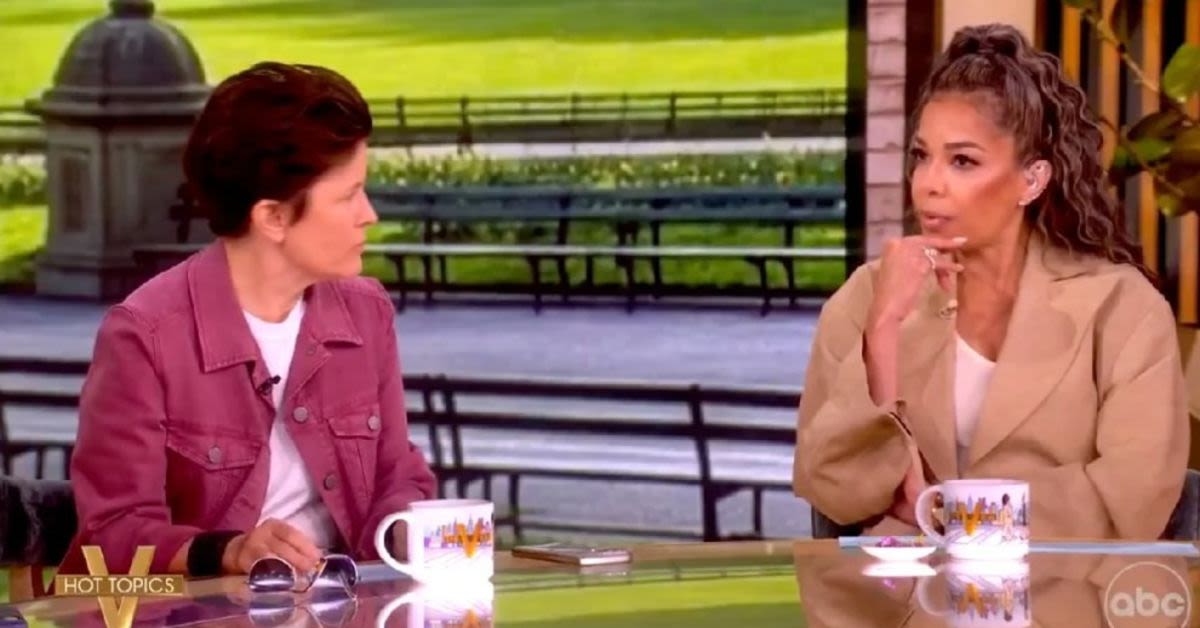
Daytime television is hardly immune from this culture of selective outrage, and The View may be witnessing its own changing of the guard. Joy Behar, whose on-air persona blends caustic partisanship with frequent factual misfires, stepped away from the show this week to work on her play, My First Ex-Husband, which is slated for a West End run.
Into that temporary vacancy stepped Kara Swisher, a far-left tech journalist who wasted no time signaling she could match Behars ideological fervor. Swisher used her debut appearance to belittle Fox News host and Army veteran Pete Hegseth, comparing the decorated officer to a mere talk show personality and implying he lacked combat experience.
That swipe ignored Hegseths extensive military record, which includes two Bronze Star Medals, two Army Commendation Medals, and the Joint Commendation Medal. Swisher then framed Scott Pelleys exit from 60 Minutes as an attack on the media rather than the predictable result of publicly criticizing his bosses, and she rushed to defend Maine senatorial hopeful Graham Platner after his wife had to bail him out of a lurid sexting scandal.
For a show that has long trafficked in progressive talking points and partisan spin, Swishers performance suggested she is more than capable of filling Behars role and perhaps even eclipsing her. If Behar hoped her absence would be a brief intermission before a triumphant return, she may find that a new liberal firebrand is already warming up in the on-deck circle.
The entertainment worlds disdain for patriotic sentiment was on full display at a recent Black Crowes concert in Florida. The band, which rose to prominence in the 1990s with hits like She Talks to Angels and Jealous Again, is back on tour, and its stage visuals featured the groups crow logo dressed as Uncle Sam.
That image prompted the crowd to break into an enthusiastic chant of USA, USA! a spontaneous expression of national pride that many performers would welcome. Instead, lead singer Chris Robinson chose to scold his own audience, sneering from the stage, Thanks for the geography lesson. ... I dont know what you have to be so proud of right now.
The rebuke landed poorly, drawing boos and walkouts from fans who had paid to hear music, not be lectured for loving their country. Robinson, rather than reading the room, escalated the confrontation, declaring, For those of you f**king booing us, some of us are not afraid. And we most assuredly are not f**king ignorant.
The episode encapsulated a broader cultural divide in which many entertainers treat patriotism as something to mock rather than celebrate. At a time when Americans are hungry for unity and shared values, the spectacle of a rock star berating his own fans for chanting USA is a telling snapshot of how far the industrys elite have drifted from their audience.
Meanwhile, one of Hollywoods most celebrated auteurs is blasting the very system that made him a star. Quentin Tarantino, the former video store clerk turned Oscar-winning filmmaker, released a scathing essay this week on the current state of the American movie, and, to borrow from Jon Lovitzs Critic persona, his verdict is that it stinks.
Tarantino has long vowed to retire after completing his 10th film, but he appears stuck in neutral following the success of his ninth, 2019s Once Upon a Time in Hollywood. His planned swan song, The Movie Critic, was scrapped in 2024, leaving him in a holding pattern even as he lambastes the creative decay of the industry around him.
The director has faced years of criticism for his repeated on-screen use of the N-word and his fixation on close-ups of womens feet, indulgences that many argue undercut his claims to artistic seriousness. Maybe penning a screenplay without his signature tics is proving harder than he thought, the piece observed, hinting that Tarantinos self-imposed constraints may be colliding with his own habits and ego.
Taken together, these stories paint a portrait of a cultural class that rarely pays a price for its excesses, even as it lectures ordinary Americans on morality, patriotism, and taste. From Dansons unpunished blackface routine to Swishers partisan spin, from Robinsons contempt for a simple USA chant to Tarantinos stalled final act, the pattern is the same: a progressive entertainment elite insulated from the standards it eagerly imposes on everyone else.
Login