
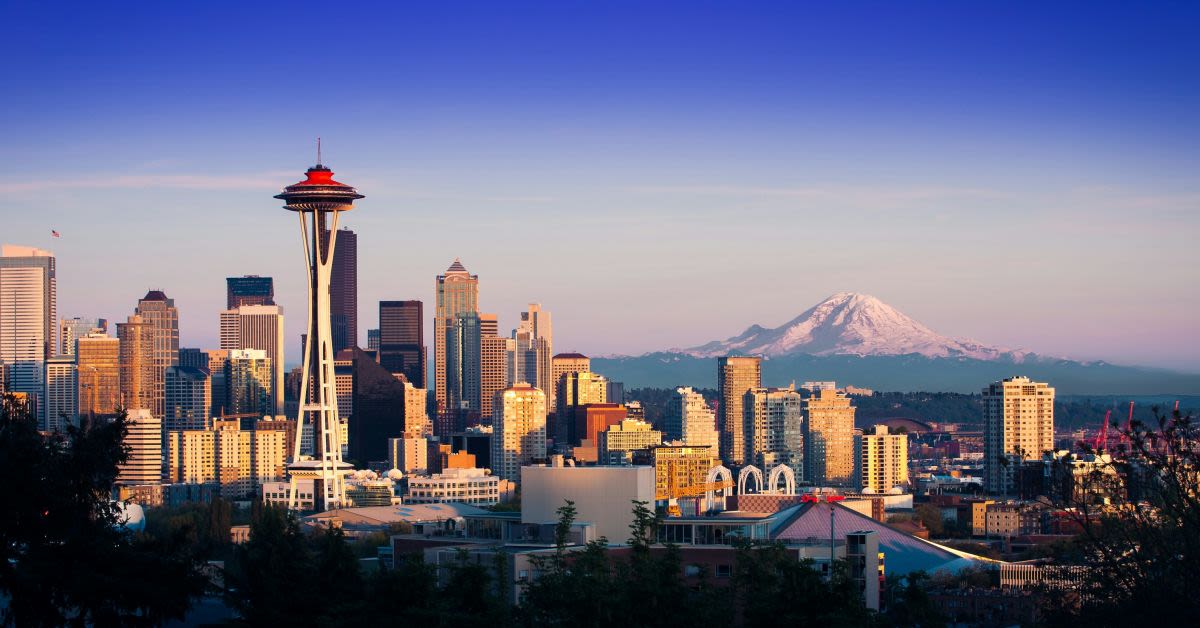
One of Seattles most recognizable office towers is poised to be sold at a massive loss, a stark symbol of the citys unraveling downtown office market as employers shed jobs, shift operations elsewhere, and leave millions of square feet sitting empty.
According to The Post Millennial, Blackstone is unloading the 44-story US Bank Center to Spear Street Capital for roughly $280 million, a price tag about 54 percent below the $612 million the private-equity giant paid in 2019. The transaction, which has yet to close and still depends on securing financing, is the latest indication that major commercial real estate players would rather crystallize steep losses than continue propping up failing urban office towers.
Seattle has now emerged as one of the weakest office markets in the country, a dramatic reversal for a city once touted as a tech powerhouse. A recent Cushman & Wakefield report found that Seattles office vacancy rate hit 33.3 percent in the first quarter of 2026, far above the national average of 20.2 percent, surpassing even San Franciscos 31.6 percent and downtown Los Angeles at 31.7 percent.
The same report showed that Seattle continues to post negative net absorption, meaning more space is being vacated than leased, quarter after quarter. That pattern reflects not just remote work trends but also a broader flight of employers from a high-tax, high-regulation environment that has made downtown increasingly unattractive.
The US Bank Center sale underscores how sharply office values have collapsed since the pandemic, particularly in progressive-run urban cores. According to Bloomberg, office values in central business districts nationwide have fallen an average of 44 percent over the past five years, based on MSCI data, while Seattles drop has been even more severe.
Blackstone has been blunt about the scale of the hit. "We believe this sale is the most optimal outcome for our investors and all parties involved," a Blackstone spokesperson told Bloomberg. "Fortunately, US traditional office represents less than 1.5% of our portfolio, and we effectively wrote off this investment in 2023."
The fact that Blackstone essentially wrote off the investment three years after buying the tower shows just how little faith major institutional investors have in a downtown Seattle rebound. That pessimism stands in sharp contrast to what is happening just across Lake Washington, where employers are voting with their feet and their capital.
Bloomberg noted that while downtown Seattle continues to suffer from elevated vacancy rates, demand is growing in Bellevue and other Eastside markets, where large corporations and artificial intelligence firms are expanding. Those markets offer a more business-friendly climate, fewer punitive taxes, and a perception of greater public safetyfactors that matter to companies making long-term location decisions.
The shift eastward echoes warnings from Downtown Seattle Association President Jon Scholes, who recently told KIRO 7 that Seattle lost more than 13,000 jobs in 2025 alone. Scholes pointed to the citys growing tax burden and rising employment costs, arguing that companies are increasingly moving jobs to Bellevue and other neighboring cities where local government is less hostile to employers.
Among the policies that have alarmed business leaders is Seattles new 5 percent Social Housing Tax on employee compensation above $1 million, which took effect this year on top of existing payroll and business taxes. Rather than fostering growth, such measures have signaled to high-wage employers that success will be punished, accelerating the exodus of jobs and investment.
Blackstone itself appears to be following the same pattern it has observed in the broader market. Even as it prepares to sell the US Bank Center at a deep discount, the firm has been directing fresh capital east of Seattle into more promising territory.
Bloomberg reported that Blackstone last year acquired 40 percent stakes in Bellevue office properties leased to Meta Platforms, valuing those buildings at approximately $545 million. That move highlights a clear preference for suburban, tech-anchored campuses over troubled downtown towers weighed down by policy-driven headwinds.
While downtown Seattle office towers are hemorrhaging hundreds of millions of dollars in value, investors are steering money toward Bellevue and other jurisdictions perceived as more stable and pro-business. Amazon, once the engine of Seattles downtown office boom, has cut thousands of jobs through multiple rounds of layoffs in recent years, shrinking its local footprint.
Meta has announced cuts affecting nearly 1,400 Washington workers as part of a broader restructuring effort, further reducing demand for downtown space. Starbucks has also trimmed its Seattle?area corporate workforce through several rounds of layoffs as it reshapes its operations, adding to the drag on the citys core.
Those job losses ripple far beyond the companies issuing the pink slips. Every worker who leaves a downtown office means less demand for restaurants, retail shops, transit systems, parking garages, and the commercial real estate that once housed a bustling daytime population.
Data from the Downtown Seattle Association show that worker activity remains well below pre-pandemic levels, even as tourism and event attendance have improved somewhat. Without a strong base of daily office workers, the ecosystem of small businesses that depend on them struggles to survive, and the tax base that funds city services continues to erode.
When it opened in the late 1980s, the US Bank Center was a symbol of a thriving urban economy, with upscale retailers, restaurants, a movie theater, and a well-known FAO Schwarz toy store marked by a giant bronze teddy bear at the entrance. In recent years, ownership tried to breathe new life into the property by transforming its atrium into Cedar Hall, a food-and-gathering space meant to lure visitors back downtown after the pandemic.
Even those efforts, however, were not enough to avert what is shaping up to be one of the largest office investment losses in Seattles history. The buildings trajectoryfrom marquee destination to distressed assetmirrors the broader decline of a downtown that has been undermined by permissive crime policies, aggressive taxation, and a city hall more focused on social engineering than economic vitality.
The towers sale also raises uncomfortable questions about the value of other downtown office assets still sitting on investors books. Bloomberg reported that Blackstone continues to own the DocuSign Tower in Seattle, where a lender is currently marketing an $82.3 million slice of the buildings $388 million mortgage debt.
While Blackstone remains current on that loan, the offering underscores the ongoing financial stress facing downtown office properties as lenders and owners quietly test the market for distressed paper. If the US Bank Centers steep discount becomes the new benchmark, more write?downs and forced sales are likely to follow.
Seattle, once hailed as one of Americas strongest technology-driven office markets, now suffers from some of the highest vacancy rates in the nation. Office values are being written down by hundreds of millions of dollars, and investors are increasingly looking to Bellevue and out?of?state alternatives, leaving downtown Seattle to grapple with the consequences of policies that have driven away the very employers and workers it needs to recover.
Login