
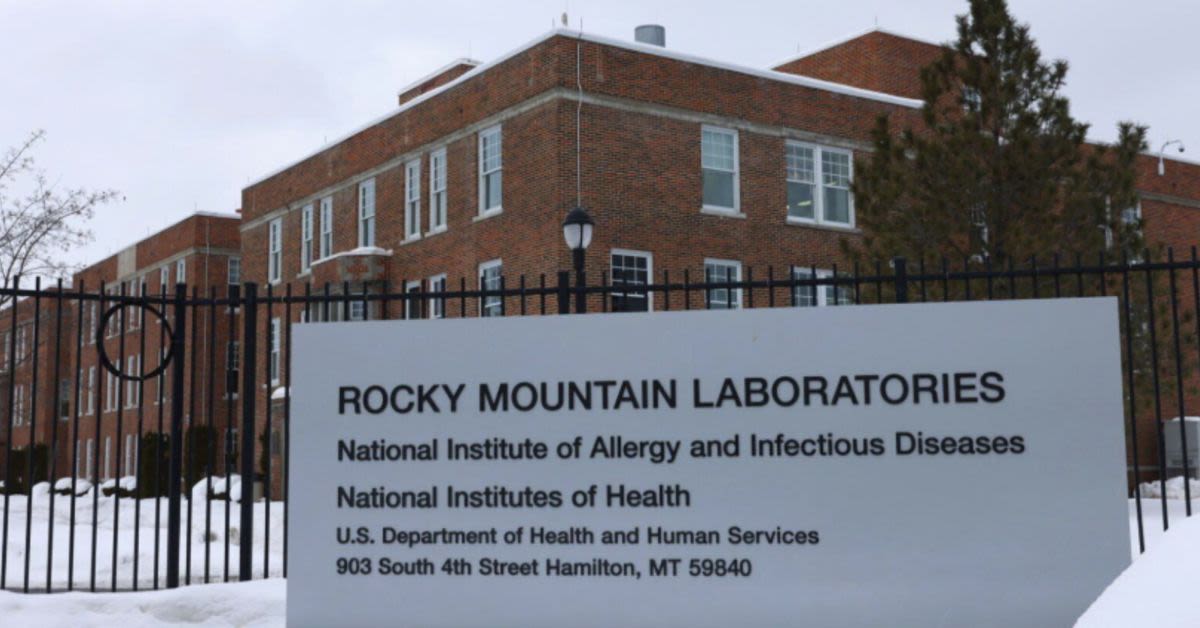
A disturbing laboratory accident in Montana is raising fresh questions about federal oversight of high-risk pathogen research and whether Washington has learned anything from the COVID-era debacles that shook public trust.
According to Western Journal, the incident occurred in November at a National Institutes of Health facility in Hamilton, Montana, when an infected lab monkey bit an employee at Rocky Mountain Laboratories, a renowned federal research lab that works with some of the worlds deadliest diseases. The animal was carrying Crimean-Congo hemorrhagic fever, a lethal tick-borne virus with a high fatality rate, though the worker, who received immediate treatment, did not contract the illness and was able to return to work.
While the outcome was fortunate, the episode has prompted a forceful response from Montana Republican Sen. Tim Sheehy, who is demanding answers from the Biden administrations Department of Health and Human Services. Sharing a post from Trump ally Laura Loomer, Sheehy revealed that he had sent a formal letter to HHS and attached a stark warning: We dont want Montana to be the next Wuhan. Montanans and Americans deserve answers over concerning reports out of Rocky Mountain Laboratories.
Sheehys letter underscores the gravity of what is at stake when federal agencies conduct high-risk research in small American communities far from Washingtons political bubble. Rocky Mountain Laboratories (RML) is a federal National Institutes of Health (NIH) research facility in Hamilton, Montana, that conducts studies on some of the worlds most dangerous infectious diseases, Sheehy wrote. The seriousness of the work conducted at RML means that even small lapses can carry real risks for the staff and surrounding community.
Those real risks are not theoretical, particularly in light of Loomers claim that the RML facility has been involved in work with the Ebola virus, one of the most feared pathogens on the planet. For many Americans already skeptical of government competence after years of shifting narratives on COVID origins, mandates, and lab safety, the idea of Ebola and other deadly agents being handled in a rural lab with apparent lapses is deeply unsettling.
Sheehys letter lays out a four-part demand for accountability and reform, starting with a comprehensive investigation into the basic facts of the November incident. He is asking HHS to detail exactly what happened, what pathogens are being used at RML, and what biosafety regulations are in place and whether they were followed.
The senators second request focuses on a full review of RMLs safety procedures and an assessment of how those protocols can be strengthened to protect both workers and the surrounding community. For conservatives who favor limited but competent government, the expectation is not endless bureaucracy, but rigorous, transparent standards when taxpayer-funded labs handle agents that could devastate public health.
Third, Sheehy is pressing HHS to scrutinize RMLs personnel management practices, including background checks, oversight, and clearance processes for staff. That concern takes on added urgency amid allegations that one of the key figures in the controversy, Dr. Vincent Munster, allegedly brought unmarked vials back from a study trip to Africa, a practice that would raise red flags in any secure facility.
Finally, Sheehy wants a detailed explanation of NIHs protocols for employees who are under investigation, including what level of access they retain to sensitive areas and materials. In an era when federal agencies have too often appeared more interested in protecting their reputations than in leveling with the public, such questions go directly to the heart of institutional accountability.
Sheehy is not alone in his concerns, suggesting that scrutiny of Rocky Mountain Laboratories is likely to intensify on Capitol Hill. Iowa Republican Sen. Joni Ernst told Politico that this facility has been on her radar for years, stating, I have been asking about this NIH lab and the research that happens there for years and years, and adding pointedly, We can never allow another Wuhan to occur, especially within our own borders.
For many on the right, the Montana incident is not just an isolated scare but a test of whether federal health agencies will finally embrace transparency and rigorous oversight after the failures and obfuscations of recent years. With senators like Sheehy and Ernst pressing for answers, the question now is whether HHS and NIH will confront the risks of their own research culture or retreat once again behind closed doors, leaving local communities to live with the consequences.
Login