
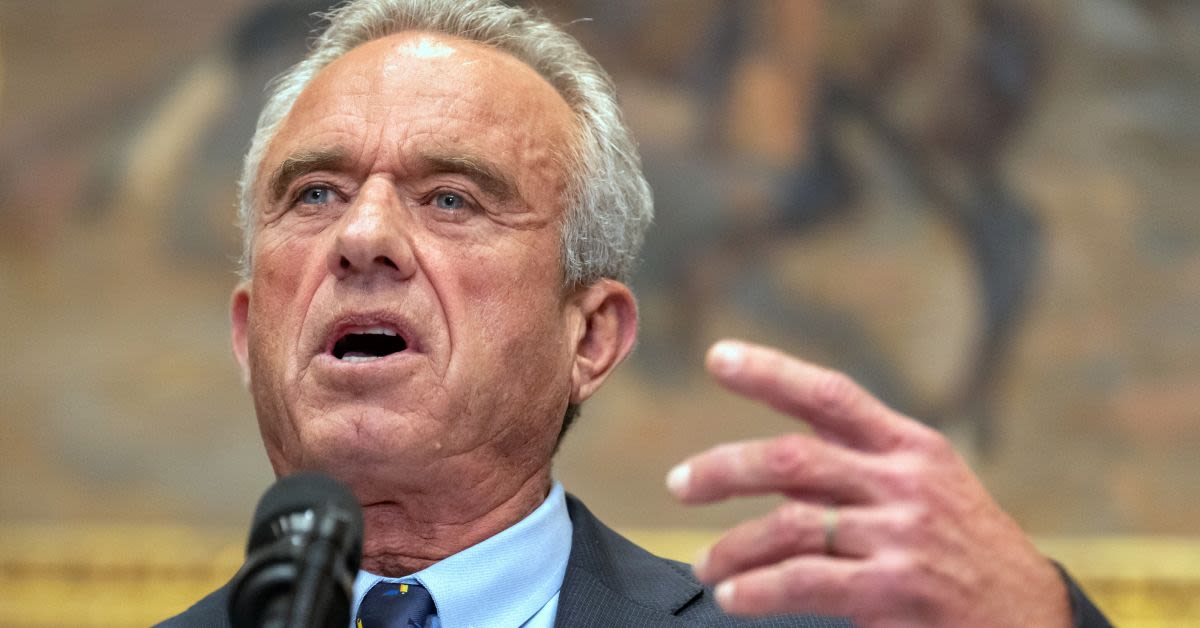
Health and Human Services Secretary Robert F. Kennedy Jr. outlined a sweeping federal campaign to confront Lyme disease and other tick-borne illnesses, pledging new investments in research, prevention, and patient care.
Speaking in New Hampshire, one of the states most severely affected by Lyme disease, Kennedy framed the effort as a long-overdue response to a growing public health threat. According to Newsmax, he detailed a multimillion-dollar pilot program, expanded research into Alpha-gal syndrome, up to $2.5 million in innovation prizes, and new tools to connect patients with experienced medical providers.
Millions of Americans battling Lyme disease and other tick-borne illnesses have spent years searching for answers, treatment, and support, Kennedy said, underscoring the frustration of patients who often feel ignored by the medical establishment. Today, the Trump administration is launching one of the most ambitious federal efforts ever to combat Lyme disease.
The timing reflects the reality that Lyme disease is no longer a regional anomaly but a national concern as ticks spread into new territories. Approximately 476,000 Americans receive a Lyme disease diagnosis each year, according to the nonprofit Global Lyme Alliance, a figure that suggests a substantial and growing burden on families, communities, and the health-care system.
In a press release, HHS reported that emergency room visits for tick bites have climbed to their highest springtime level in nearly a decade, a warning sign that exposure is increasing. The department has set an ambitious benchmark: cutting Lyme disease cases by 25% by 2035 compared with 2022 levels, a target that will test whether federal agencies can deliver measurable results rather than mere rhetoric.
Central to the new strategy is a Centers for Disease Control and Preventionled pilot program that will focus on controlling ticks on wildlife before they transmit disease to humans. The initiative will begin with researchers at the New England Center of Excellence in Vector-Borne Diseases and will involve collaboration with the Indian Health Service and the Wampanoag Tribe of Massachusetts, reflecting a more localized, on-the-ground approach rather than a one-size-fits-all federal mandate.
HHS emphasized that the National Institutes of Health already invests nearly $50 million annually in Lyme disease research and about $122 million each year in broader tick-borne disease research. Those figures, while significant, have long been criticized by patient advocates as insufficient given the scale of the problem, and the new push signals a willingness by the Trump administration to elevate the issue after years of bureaucratic inertia.
Kennedy also announced new federal action on Alpha-gal syndrome, a tick-associated condition that can cause severe allergic reactions to red meat and other mammalian products. CDC estimates that nearly 500,000 Americans are living with Alpha-gal syndrome, though HHS acknowledged that the true number could be substantially higher, in part because the condition is often misdiagnosed or overlooked.
NIH is expected to support clinical research evaluating products that may help prevent people from developing Alpha-gal syndrome after a tick bite, a preventive approach that aligns with conservative priorities of reducing long-term health-care costs and preserving individual quality of life. Such research could ultimately spare patients from chronic dietary restrictions and repeated medical visits, easing the burden on both families and taxpayers.
To spur private-sector ingenuity, HHS unveiled three new LymeX innovation challenges offering up to $2.5 million in total prize funding. The challenges include awards for public awareness campaigns, treatment and patient-care solutions, and an artificial intelligence competition designed to help patients with Lyme disease and other invisible illnesses obtain answers and access care more quickly.
These initiatives build on the LymeX Innovation Accelerator, a public-private partnership between HHS and the Steven & Alexandra Cohen Foundation launched during President Donald Trumps first term. By leaning on competition and collaboration with philanthropy rather than expanding permanent federal bureaucracy, the program reflects a market-oriented, conservative approach to solving entrenched health problems.
HHS recently launched a $10 million Diagnostics Prize through LymeX to accelerate the development of faster and more accurate Lyme disease tests, a critical step given longstanding complaints about unreliable diagnostics. Better testing could reduce misdiagnosis, prevent unnecessary treatments, and ensure that limited health-care resources are directed to patients who truly need them.
The agency also announced a collaboration with the International Lyme and Associated Diseases Society, allowing patients to access the groups clinician locator tool through HHSs Lyme disease website. This move gives patients more direct access to practitioners experienced in treating complex tick-borne illnesses, empowering individuals to seek specialized care rather than remaining dependent on a system that has often dismissed their symptoms.
For many conservatives, the initiative will be seen as an example of how federal power can be used narrowly and effectively: targeting a specific, documented threat while leveraging private innovation and local partnerships. The Trump administrations decision to prioritize Lyme disease and related conditions acknowledges the lived reality of hundreds of thousands of Americans, particularly in rural and suburban communities, who have long felt that Washington ignored their suffering.
As tick populations expand and diagnoses continue to rise, the success of this campaign will hinge on whether these programs deliver tangible improvementsfewer infections, better diagnostics, and more responsive care. If the promised research, prizes, and partnerships translate into real-world solutions, the effort could become a model for how limited, focused government action can support families, respect local input, and harness the private sector to confront emerging health threats.
Login