
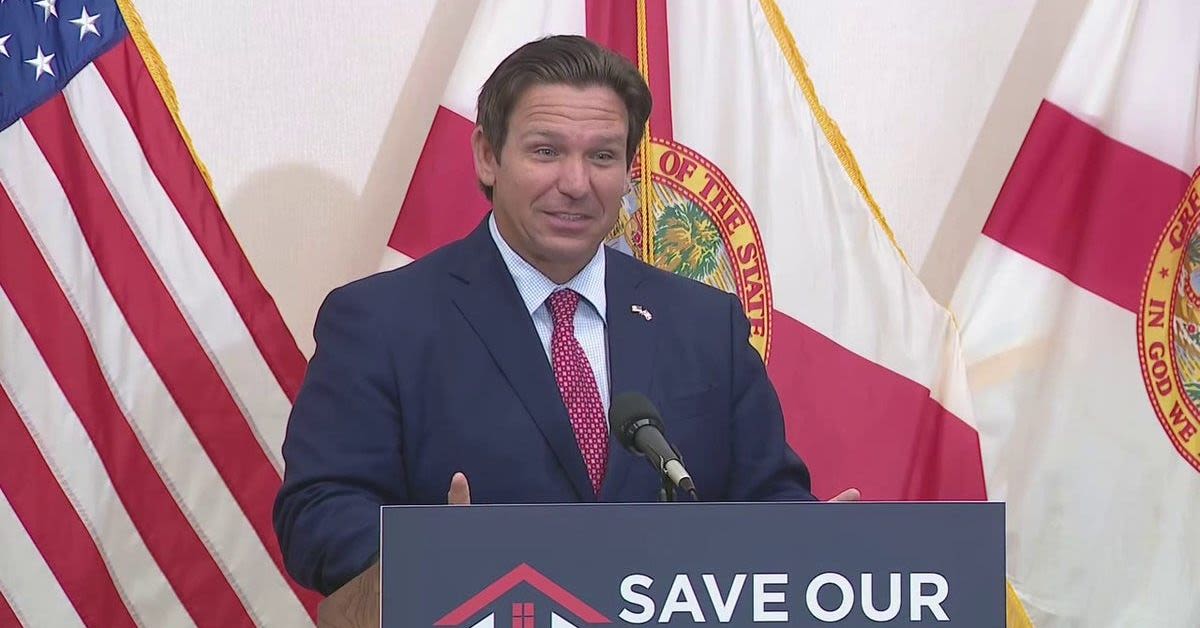
Florida Governor Ron DeSantis has launched an aggressive new push to slash, and ultimately abolish, property taxes on primary residences, summoning lawmakers back to Tallahassee for a special session to consider his plan.
According to One America News, the initiative marks the latest phase of a multi-year conservative effort to overhaul Floridas tax structure and further distinguish the state as a haven for taxpayers and homeowners. If enacted, Florida could become the first state in the country to levy neither a personal income tax nor a property tax on owner-occupied primary homes, a move likely to intensify its appeal to retirees, families, and businesses fleeing high-tax blue states.
Today in Tampa, I outlined the Save Our Homes from Excessive Property Taxes plan that will eliminate taxes on homesteads. Property tax revenue collected by local governments has nearly doubled in the past seven years (from $32 billion to $60 billion) and is expected to reach an astounding $83 billion by 2032. Florida homeowners need relief. Now is the time to stand up for taxpayers, enact a historic reform, and save the home of every Floridian, DeSantis (R-Fla.) posted on X on Wednesday. The governors message underscores a core conservative critique: that government at the local level has grown fat on soaring property valuations, while working families and retirees shoulder the burden.
If the Legislature signs off on the proposal during the special session, the measure will appear on the November general election ballot as a constitutional amendment. Under Florida law, it would need support from 60% of voters to be adopted, setting a high but not insurmountable bar in a state that has trended increasingly Republican.
The newly released plan would immediately raise the baseline homestead exemption from $50,000 to $250,000 for full-time residents who declare their properties as primary homes. DeSantis has estimated that this first step alone would erase property tax bills entirely for roughly 60% of current primary homeowners, delivering tangible relief to middle-class families and seniors on fixed incomes.
Beyond the initial cut, the proposed constitutional framework directs lawmakers to create a multi-year glide path to further expand the exemption to $500,000. At that level, the governor has said, 92% of homesteaded properties would be completely tax-free, with the remaining tax burden eventually phased out altogether as the reform matures.
The announcement of the plan automatically triggers a special legislative session, ratcheting up pressure on the Republican-controlled Legislature after a regular session that exposed internal divisions. While the GOP holds commanding majorities, disagreements over how far and how fast to reduce taxes have complicated efforts to deliver sweeping reforms.
Earlier this year, the Florida House passed a joint resolution to phase out non-school property taxes over a ten-year period, reflecting a strong appetite among House Republicans for bold tax relief. That measure, however, stalled in the Senate amid warnings from local governments about catastrophic revenue losses and potential cuts to services.
To address those concerns, the new DeSantis proposal narrows the permissible uses of any remaining property tax revenue, restricting it to core local functions such as public schools, law enforcement, and fire departments. This approach reflects a conservative priority of forcing government to focus on essential services rather than expansive bureaucracies and discretionary spending.
The plan also creates a state-level trust fund to backfill revenue shortfalls in smaller, rural counties that lack a strong commercial or non-homestead tax base. Even as the governor seeks to shrink the overall tax burden, the mechanism is designed to prevent rural communities from being punished for their limited economic diversity, thereby preserving public safety and basic infrastructure.
Republican Senate President Ben Albritton has voiced optimism about the framework, emphasizing that it aims to protect local public safety, education, and water infrastructure while still providing direct financial relief to families squeezed by inflation and rising housing costs. His support signals that Senate leadership may now be more receptive to a carefully structured tax rollback that balances fiscal responsibility with taxpayer protection.
By contrast, Democrat House Minority Leader Fentrice Driskell has sharply criticized the initiative, insisting that eliminating property taxes does not erase the underlying costs of municipal infrastructure and emergency response. Her objections mirror a broader progressive argument that aggressive tax cuts inevitably threaten public services, even as conservatives counter that disciplined budgeting and economic growth can sustain essential functions without punishing homeowners.
As the special session approaches, Florida voters are likely to see a clear ideological contrast: Republicans framing the measure as a historic defense of property rights and a bulwark against government overreach, and Democrats warning of strain on local services and long-term fiscal uncertainty. With the final decision resting in the hands of voters in November, the debate will test whether Floridians are prepared to embrace a transformative conservative tax vision that could reshape the states fiscal landscape for decades.
Login