
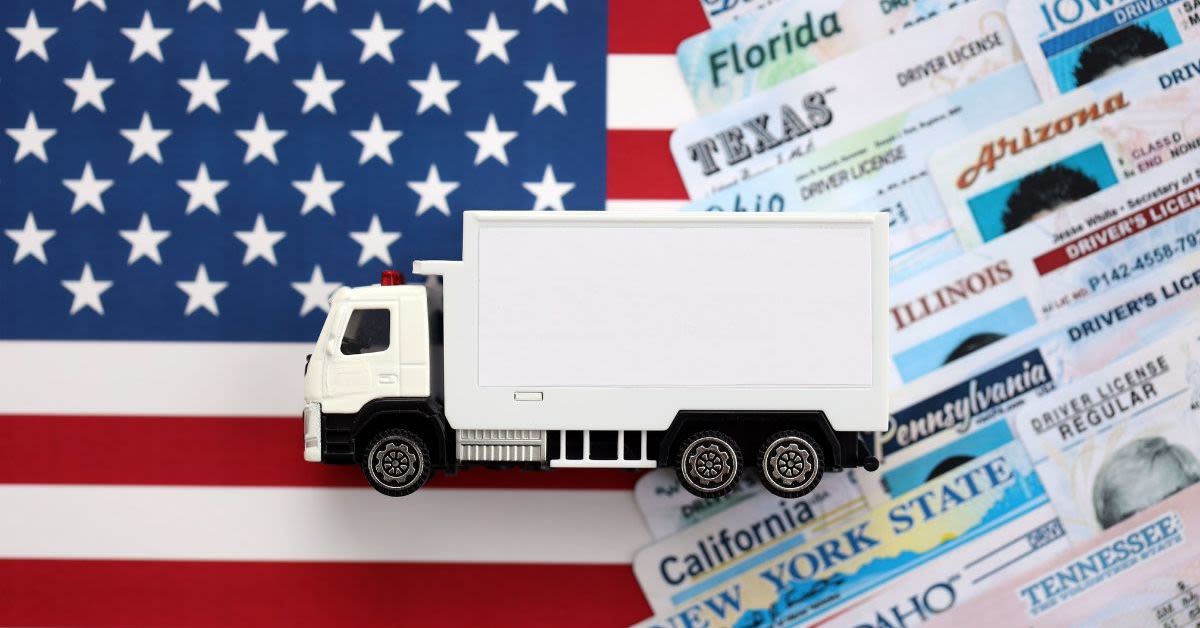
The Supreme Court has quietly sidestepped a politically explosive clash over illegal immigration, highway safety, and state sovereignty, leaving a coalition of red states searching for another path to rein in blue-state defiance of federal law.
According to RedState, the high court declined to hear a lawsuit brought by Florida against California and Washington over those states practice of issuing Commercial Drivers Licenses (CDLs) to illegal aliens, a policy critics say endangers motorists nationwide. The case was an original action, an uncommon maneuver in which one state sues another directly in the Supreme Court rather than starting in a lower court, and the justices almost never agree to take such disputes.
The lawsuit arose after a deadly crash in Florida last year involving a truck driven by Harjinder Singh, an Indian national whom the state says lacked lawful status in the United States and nonetheless obtained commercial licenses in both California and Washington. Florida alleges that Singh was wrongly issued licenses in both California and Washington, and he now faces criminal charges stemming from the accident, which left three people dead.
On Tuesday, the Court denied Floridas appeal without comment, offering no explanation for its refusal to intervene. Justices Clarence Thomas and Samuel Alito, however, signaled they would have granted the request to hear the case, underscoring the seriousness with which some on the Court view interstate disputes tied to immigration and public safety.
Florida Attorney General James Uthmeier, a Republican, had taken the unusual step of filing directly with the Supreme Court, arguing that the matter involved a conflict between states that warranted immediate high-court review. While the Court does have authority to step into such state-versus-state battles, it rarely does so, even when, as here, one state is backed by a broad coalition of others.
The complaint accused the Democrat-led states of open defiance of federal immigration law, asserting that their policies have led them to disregard federal safety rules governing commercial drivers. As a result, Florida argued, some drivers are obtaining CDLs without proper training or the ability to read road signs, then crossing state lines and threatening the safety of people in Florida and other states, a concern echoed in a supporting brief filed by Iowa and 16 additional states.
Lawyers for California and Washington countered that there was no legal basis for the Supreme Court to take up the dispute at this stage. For now, their position has prevailed, but the underlying conflict between sanctuary-style policies and states insisting on immigration enforcement is far from resolved.
With SCOTUS stepping aside, the fight now shifts back to Congress and state legislatures, where the constitutional questions intersect directly with federalism and interstate commerce. While driver licensing is traditionally a state function, any licenseprivate or commercial, issued by any stateis honored nationwide, and commercial trucking is quintessential interstate commerce, making federal legislation not only appropriate but arguably necessary.
That kind of reform, however, depends entirely on who controls the levers of power in Washington. It is belaboring the obvious to note that this won't happen if Democrats gain control of the House, Senate, or both in this year's midterm elections, leaving conservative states to absorb the consequences of progressive immigration experiments carried out hundreds or even thousands of miles beyond their borders under President Trumps second administration.
Login