
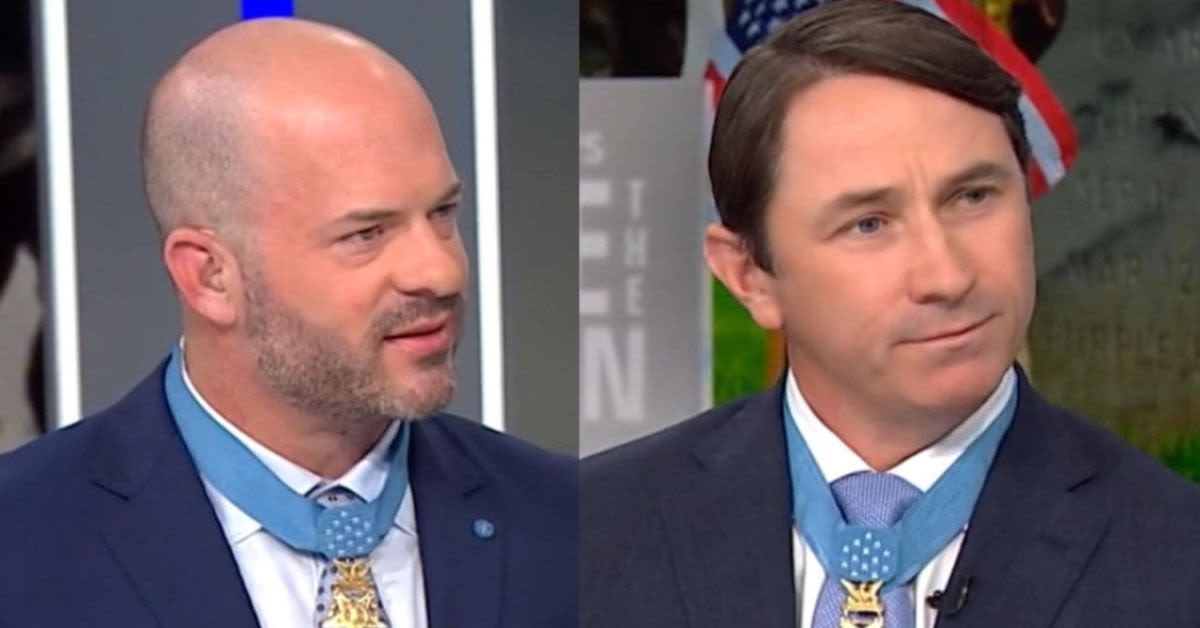
On a weekend set aside to honor Americas war dead, two Medal of Honor recipients used a national television platform to remind viewers that this country, for all its flaws, remains an unparalleled beacon of freedom and opportunity.
The spirit of their remarks echoed a sentiment captured earlier by RedStates Ward Clark, who reflected on the true cost of liberty in a Memorial Day column. Many of them were heartbreakingly young. Many of them had families who got left behind, he wrote of the fallen service members who made the ultimate sacrifice. But every one of them knew the risks, every one of them took the oath, and our nation is richer that such people once walked among us. That sober recognition of sacrifice framed the broader conversation about what America isand what it can still becomeas reported by RedState.
In the days leading up to Memorial Day, television networks routinely feature Gold Star families and veterans to discuss the meaning of the holiday, and CBS News followed that pattern on Sundays Face the Nation. The program invited two highly decorated veteransboth recipients of the nations highest military honorto share their perspectives on service, sacrifice, and the state of the country.
Lt. Col. William D. Swenson, a Seattle native, and Command Sergeant Major Matthew Williams, from Texas, each earned the Medal of Honor for extraordinary heroism in Afghanistan during Operation Enduring Freedom. Swenson received his medal from then-President Barack Obama in October 2013, while Williams was honored by President Donald Trump in October 2019 during Trumps first term in office.
Their battlefield actions, which involved risking their own lives repeatedly to save others under withering enemy fire, defy easy summary and deserve to be read in full rather than reduced to sound bites. Both men have become living symbols of courage, duty, and the quiet patriotism that stands in stark contrast to the cynicism so often promoted in modern political discourse.
During their Face the Nation appearance, CBS anchor Margaret Brennan conducted what was, for most of the segment, a respectful and substantive interview. Yet as the conversation drew to a close, her line of questioning shifted toward a familiar media narrative that often emphasizes national darkness and division, seemingly inviting the veterans to echo a more pessimistic view of the American experiment.
Brennan framed her final question in terms that suggested optimism was almost obligatory for men of their stature, but then pressed them to explain why they could still feel hopeful about the country. And before I let you go, we are coming up on this 250th anniversary of the American experience. I know I can't ask you a question like, are you optimistic? There's no way that two Medal of Honor winners could say they're not optimistic. So what specifically makes you optimistic? Because this country, at times, can feel dark, these days, there's a lot of darkness. What makes you feel optimistic? she asked.
Swenson responded by gently but firmly redirecting the focus away from the Beltways perpetual drama and back toward the daily lives of ordinary Americans.
Well, ultimately, because we're in Washington, D.C., and everything revolves around politics, we have to remember that politics aren't everything. American lives continue on. Children are born, children go to school. Lives are achieved. Dreams are achieved. This country is a great place. It's not politics. It's not just what's the news bites coming off of media. Ultimately, we continue forward as a country, continually imperfect, continually evolving forward, always trying to achieve a more perfect union. That's what's important to remember, what we can achieve aspirationally. No other place in history, time or on this planet have ever gotten to where we are today. We need to be proud of that, and we need to remember that is what we stay focused on, what we can be.
In a media environment that often conflates America with its political class, Swensons answer was a quiet rebuke to the idea that the nation can be reduced to partisan warfare and cable-news talking points. His insistence that politics aren't everything and that the United States remains a great place underscored a fundamentally conservative truth: the strength of this country lies not in Washington, but in its people, their families, their communities, and their God-given freedom to pursue their own paths.
Brennan then turned to Williams, attempting to build on Swensons remarks while keeping the focus on the promise of what America might yet become. What we can be, and the promise of it. What makes you optimistic? she asked, again framing the question in terms that hinted at a nation overshadowed by darkness.
Williams, like Swenson, refused to indulge the fashionable despair that dominates so much elite commentary and instead emphasized gratitude, progress, and perspective.
You know, I agree with Will. I think, you know, it's- it's so important to remember who we are as a country, and take an opportunity to celebrate that, and think about all the- the challenges that we've overcome, how far we've actually come. You know, I think if you- if you frame it that way, you think very deeply about our trials and tribulations from beginning to today, we've made tremendous strides. Our country is, you know, we're a super- global superpower. Our economy is doing well. All those things are great. And- and take politics aside out of this whole conversation. Just talk about our communities, that- that we live in, and the people that you surround yourself with, and your families, and the opportunity to be free and, you know, choose what school you go to, and where you want to live and do what you want to do, and what career path you go down or don't if you want to, you know, I mean, there's so much to be positive about. And I think the opportunity to celebrate America's 250th birthday, you know, over the course of this next year is- is amazing. There's so many great places to visit. You know, the National Mall is going to be full of Americana. And what we're going to- celebrating ourselves, which I think we should take the time to do. I think it's very important.
Williams went on to highlight a project especially close to his heart, one that embodies the very virtues the culture too often neglects or derides. You know, across the country, you know something we're very passionate about at the National Medal of Honor Museum in Arlington, Texas, is a phenomenal beacon that stands to talk about and house our, not only our story, the story of the Medal, and what the Medal represents itself. And I would challenge people to go there and celebrate our history as well. You know, it's so important. There's so many great things to go do and great things to visit and don't just take part in it, because it's something to do on a weekend, right? Think about why you're doing it, and when you're there in the crowds and you're- you're enjoying yourself, and you're taking your family to go talk about our country and celebrate our country, actually celebrate it. Be grateful for what you've got and the opportunity that was provided for you. If you do that, I don't see how you can't be optimistic about our future.
In an era when progressive activists and many in the media are eager to dwell on Americas sins while downplaying its achievements, the words of Swenson and Williams offered a bracing counterpoint. They spoke not as politicians seeking votes or pundits chasing clicks, but as men who have seen the worst of war and still affirm that this nation is worth defending, celebrating, and passing onstrongerto the next generation.
Their message, delivered on the eve of Memorial Day, dovetailed with Clarks reminder that the freedoms Americans enjoy were purchased at a terrible price by those who knew the risks and took the oath. To honor that sacrifice is not to deny the countrys imperfections, but to recognize that no other nation in history has come so far in so short a time, nor offered so much opportunity to so many. On a holiday too often reduced to barbecues and sales, these two Medal of Honor recipients used a national stage to call Americans back to gratitude, perspective, and a renewed appreciation for the country that so many heroes died to preservean effort that can only be described, quite fittingly: well done, gents.
Login