
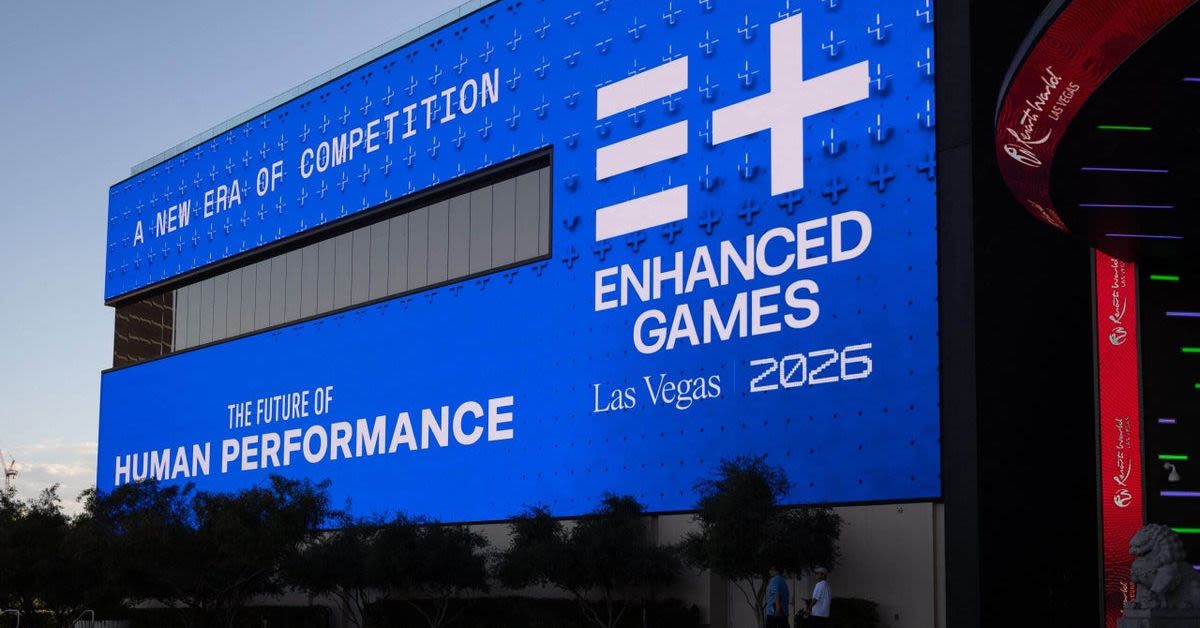
The inaugural Enhanced Games, a Las Vegas sports spectacle built around the open use of performance-enhancing drugs, delivered just a single world record despite weeks of hype and a $1 million bounty for any athlete who could rewrite the record books.
According to The Post Millennial, organizers had promised a revolution in human performance, arguing that removing anti-doping rules and embracing steroids, doping, and other enhancement methods would unleash unprecedented athletic feats. Yet when the dust settled, only Greek swimmer Kristian Gkolomeev managed to cash in on the $1 million incentive, breaking the mens 50-meter freestyle world record and sparing the events backers from a complete public-relations collapse.
His performance, clocked at 20.81 seconds in a high-buoyancy bodysuit, edged out Cameron McEvoys previous mark of 20.88 seconds by just seven hundredths of a second, a razor-thin margin that nonetheless allowed organizers to claim vindication for their controversial experiment.
The track events, which had been heavily promoted as the stage where records would fall, proved especially underwhelming. In the 100-meter sprint, despite bold predictions from American sprinter Fred Kerley that Usain Bolts legendary 9.58-second record would be destroyed, no such breakthrough occurred, and Kerley himself could only manage a 9.81-second run. That time, while elite by conventional standards, would have placed him last in the Olympic final two years ago, where he ran the same 9.81 and took home the bronze medal, per the Associated Press. The gap between the rhetoric of enhancement and the reality on the track underscored a central question: if chemically assisted athletes cannot surpass the achievements of drug-tested Olympians, what exactly is being sold to the public?
For the venture capitalists and biotech enthusiasts bankrolling the Enhanced Games, the answer lies less in immediate results and more in branding a new frontier of human augmentation. There were 42 events across swimming, track, and weightlifting, all designed to showcase what backers insist is the future of sport and, more importantly, a lucrative market for enhancement products.
Enhanced went public earlier this month at a reported valuation of $0.12 billion, according to Yahoo Sports, and is already marketing a suite of performance and longevity products to consumers eageror desperateto push their physical limits. The competition thus functioned as much as a live infomercial for enhanced living as it did a sporting event, with investors betting that spectacle and controversy will translate into long-term profits.
Enhanced Games co-founder Christian Angermayer laid out the strategy in a Substack post that reads more like a manifesto for a new industry than a mere event promotion. The core strategic question is simple: which brand will consumers trust when it comes to human enhancement? he wrote, framing the Games as a credibility engine for a broader commercial ecosystem. I believe consumers will trust the company that can show them credibly, scientifically, and transparently how elite athletes are using these protocols to safely unlock new levels of performance. In Angermayers telling, the athletes are not just competitors but test cases and marketing vehicles for a lifestyle of medically mediated self-optimization.
He went further, explicitly tying elite performance to everyday aspirations in a way that blurs the line between sport and self-help. I believe consumers will observe the tangible results our athletes achieve and seek to apply those enhancements to their own lives. Enhancements are not only relevant to breaking world records (in my honest opinion) they can help anyone reach new heights: whether running a marathon faster, performing better as a business executive, or simply having more energy to spend time with family and friends, he added, suggesting a future in which chemical shortcuts become normalized across professional and personal life.
For critics who value natural talent, hard work, and fair play, this vision raises profound ethical and cultural concerns, from health risks to the erosion of merit-based achievement.
When Gkolomeev finally touched the wall in record time during the last swimming event, Enhanced Games CEO Maximilian Martin rushed to embrace him in a bear hug, visibly relieved that the competition had at least one world record to showcase. Without that moment, the Games risked being remembered primarily as a high-priced demonstration of the limits of pharmacology rather than its promise.
Martin, however, struck a triumphant tone in front of an audience heavy with influencers and biotech investors. We have arrived in mainstream culture, Martin claimed. We are here to stay. We have changed the world tonight.
He then leaned fully into the movements quasi-utopian rhetoric, presenting enhancement not as a niche experiment but as a cultural turning point. With the power of enhancements we can prove we are the best we can ever think of and you are living proof of that, he told the crowd of influencers and biotech investors. For the last three days Enhanced took over the internet. Enhanced is culture. And now people can also get enhanced and be the best they have ever been.
For many on the right who still believe sport should reward discipline, natural ability, and personal responsibility rather than pharmaceutical arms races and speculative biotech, the Enhanced Games look less like progress and more like a warning about where a culture obsessed with shortcuts and profit may be headed.
Login