
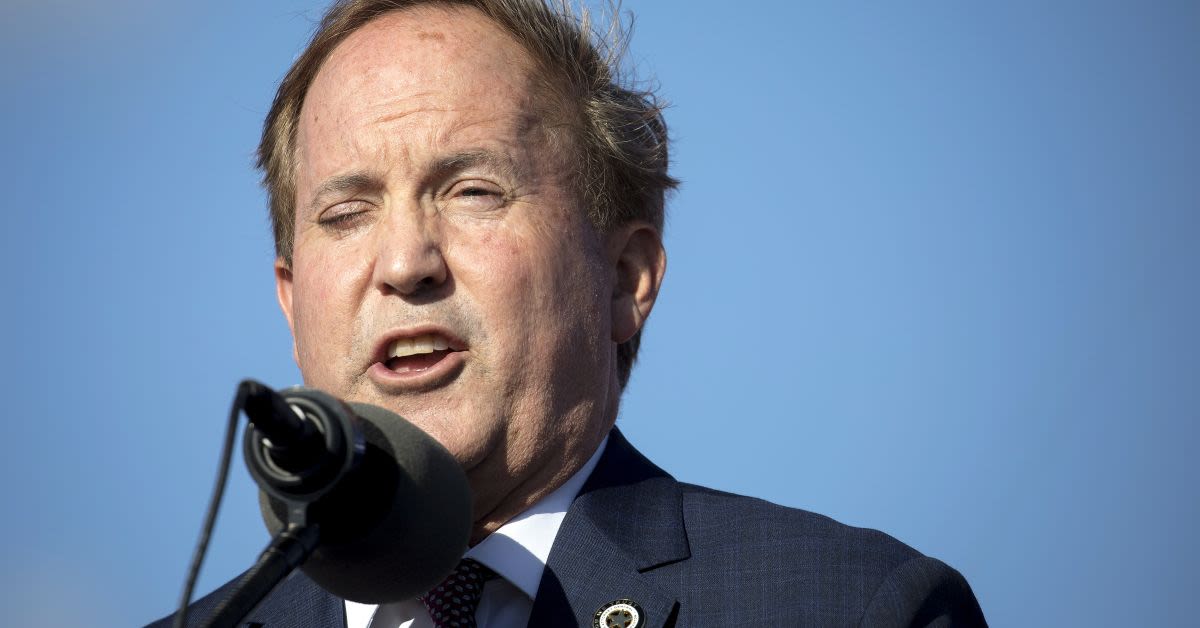
Texas Attorney General Ken Paxton has filed a lawsuit against the messaging platform Discord, alleging that the company has knowingly enabled child predators to "groom and exploit kids while deceiving consumers, parents, and the public about the safety of its platform.
".
According to The Post Millennial, Paxtons office contends that Discords business model and product design have created a haven for predators while the company publicly insists it is committed to user safety. "Discord has allowed and invited all kinds of nihilistic violence and evil. My office is taking action to protect our nations precious children from predators," Paxton said in a statement, adding, "We live in a time where the dangers children face online have never been greater, and every parent in Texas deserves to know their child is protected."
The complaint argues that Discords "specific design choices" "make it easy for bad actors to locate vulnerable users, build trust quickly, and operate out of the public view." It notes that the platform combines "persistent pseudonymous identity, real-time voice and video, private group channels, direct messaging, and a community invitation system," a convergence that allegedly "creates a uniquely efficient environment for bad actors."
"It is not accidental. It is a product architecture that Discord chose and has refused to change despite escalating notice from federal prosecutors, the United States Senate, the Federal Trade Commission and the attorneys general of multiple states, including Texas." Paxtons office maintains that the company has been repeatedly warned about the dangers but has declined to fundamentally alter its platform in ways that would prioritize child safety over user growth and engagement.
"The consequences are documented in federal courtrooms across the country. Since platforms launch in 2015, the National Investigative Unit analyzed thousands of federal court records and found 60% of cases identified are criminal investigations or actions involving Discord. Nearly half of these cases involved child exploitation," the suit states. These statistics are being used by the Texas attorney general to argue that Discords failures are not hypothetical risks but demonstrable harms affecting children nationwide.
The lawsuit highlights Discords own public assurances that safety is "at the core of everything we do," "built into every aspect of our product and policies," and "fully integrated into our design process," and that the company maintains a "zero-tolerance policy" for those who endanger or sexualize children. Paxtons office alleges that these statements were marketing spin rather than reality, designed to reassure parents and regulators while the platforms architecture remained fundamentally unsafe.
"Those promises were false. Discord chose to make safety opt-in rather than default. It chose to leave private servers invisible. It chose to staff its most critical safety function with unpaid volunteers. It chose to expire violations after 90 days. It chose to bury the block button. Discord chose profits and growth over the safety of children." From a conservative standpoint, the case underscores long-standing concerns that Big Tech corporations routinely place profit, user metrics, and ideological priorities above basic moral obligations to protect children.
The lawsuit accuses Discord of violating the Texas Deceptive Trade Practices Act by "Engaging in false, misleading, or deceptive acts or practices in the conduct of any trade or commerce" and engaging in an "unconscionable action or course of action." It further alleges that Discord is "Failing to disclose information concerning goods or services which was known at the time of the transaction if such failure to disclose such information was intended to induce the consumer into a transaction into which the consumer would not have entered had the information been disclosed."
According to the filing, Discord has "no reliable mechanism" to enforce its ban on users under 13 or to verify that people creating accounts are the age they claim to be. The platform allegedly "designs safety as an 'opt-in' feature, placing the burden on the less technically sophisticated users rather than the platform. Safety tools exist but are not surfaced, explained, or defaulted towards maximum safety."
Paxtons action reflects a broader conservative push to hold technology companies accountable when they fail to safeguard children while profiting from their engagement. As the case proceeds, it will test whether state-level consumer protection laws can be used to force Silicon Valley platforms to match their lofty rhetoric on safety with real, default-on protections for minors who are increasingly exposed to "nihilistic violence and evil" in the digital spaces these companies control.
Login