
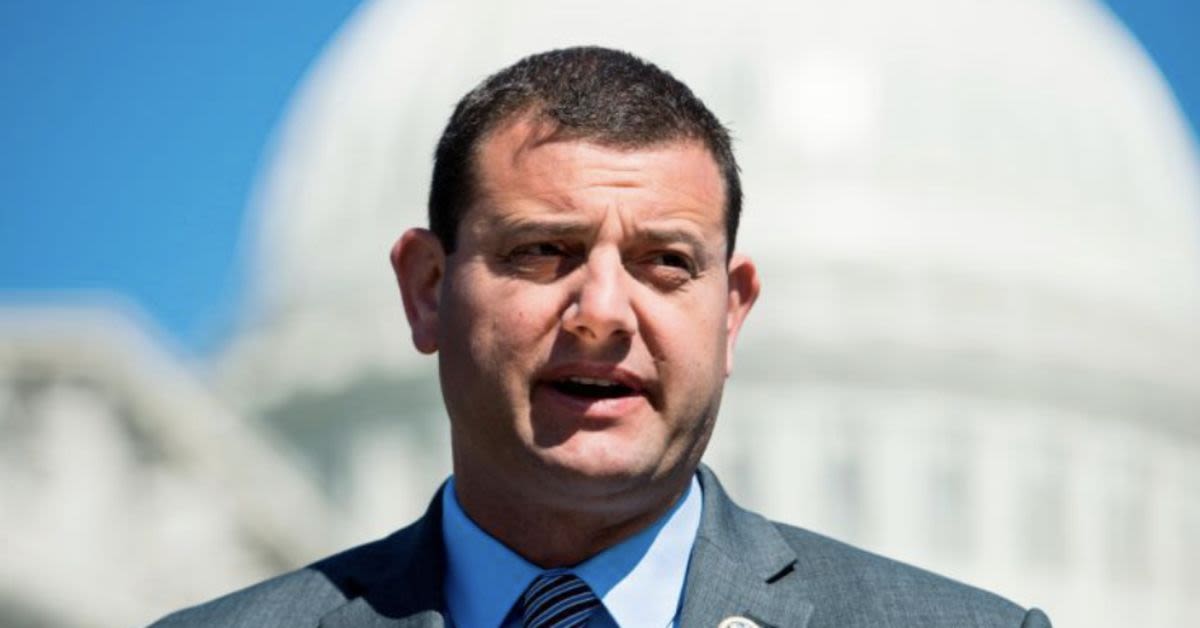
The last remaining House Republican who voted to impeach President Donald Trump now finds himself fighting for political survival in a California battleground where Democrats, not his own party, are leading the charge to unseat him.
Rep. David Valadao (R-Calif.), whose district includes Bakersfield and stretches across the Central Valley, is locked in a razor-thin contest as national Democrats pour resources into an effort to flip his seat in a state they increasingly view as fertile ground for expanding their House majority. According to The New York Post, the Cook Political Report has shifted its rating of Valadaos race to a pure toss-up, a move that underscores how vulnerable even well-established Republicans can become once Democrats weaponize redistricting and demographic change to their advantage.
The Republicans who voted in favor of impeachment, I think are largely a dying breed, observed Jessica A. Levinson, a political analyst and law professor at Loyola Marymount University, capturing the political reality facing GOP lawmakers who broke with Trump. Its not just that this was a consequential vote, but its seen as whether or not youre loyal to Trump, and whether or not youre a party loyalist. And I think its hard to overstate the impact that those votes have had for some representatives and senators.
Democrats in Sacramento pushed through a mid-decade redistricting maneuver that reshaped Valadaos district, mirroring the kind of partisan map-drawing they routinely denounce when it occurs in Republican-led states. The result is a more competitive seat where Trump carried the reconfigured district by just two percentage points, leaving Valadao exposed in a region where conservative-leaning working-class voters are increasingly outnumbered by reliably liberal constituencies.
Californias top-two primary system further complicates the landscape, as all candidates appear on a single ballot regardless of party, with only the two highest vote-getters advancing to November. That structure has encouraged Democrats to field multiple contenders in the June 2 primary, betting that a bruising intraparty contest will still leave them with a viable challenger against Valadao in the fall.
Two Democrats are vying for the chance to face the Republican incumbent: physician Jasmeet Bains, backed by the Democratic Congressional Campaign Committee, and left-wing political science professor Randy Villegas, who enjoys the support of Squad Rep. Alexandria Ocasio-Cortez (D-NY). Their presence reflects the broader ideological tug-of-war within the Democratic Party, as establishment operatives and progressive activists compete to define the partys message in swing districts that still lean culturally conservative.
He has both a tougher district and a tougher environment. Even though he has a decent record of over-performing hes going to be in a tougher position said Erin Covey of the Cook Report, noting that Valadaos past success in outrunning the GOP ticket may not be enough in a cycle defined by polarization and nationalized politics. For Democrats, the goal is clear: tie Valadao to Trump when it helps with their base, and then attack him as a standard-issue Republican when appealing to independents and moderate Democrats.
The peril facing Valadao comes as other Republicans who broke with Trump have already paid a steep political price. Sen. Bill Cassidy (R-La.), who voted to convict Trump in the Senate on a charge of incitement of insurrection in January 2021, lost his seat in a Republican primary last week after Trump endorsed Rep. Julia Letlow (R-La.) and branded him a disloyal disaster.
That defeat marked another milestone in what has been widely described as Trumps ongoing political revenge tour, in which the president and his allies have systematically targeted GOP lawmakers who opposed him. It was the latest stop in a revenge tour where Trump and his allies took out Rep. Thomas Massie (R-Ky.), who crossed Trump on a raft of matters, reinforcing the message that defiance within Republican ranks carries real consequences.
Valadao, an agriculture industry businessman before entering public office, tried to frame his impeachment vote as a matter of conscience rather than partisanship. In 2021, while defending that decision, he declared that Trumps inciting rhetoric was un-American, abhorrent, and absolutely an impeachable offense, a statement that endeared him to Democrats at the time but now provides them with ammunition to portray him as politically inconsistent.
Despite that break, Valadao later reconciled with the Trump White House and cast a critical vote for what he described as Trumps One Big Beautiful bill, aligning himself with the presidents economic and regulatory agenda. That move underscored the broader reality that, for many Republicans, policy alignment with Trumps conservative achievements remains a political necessity even when personal or rhetorical disagreements linger.
Democrats, however, are now attacking him from the left, accusing him of betraying his constituents by siding with GOP leadership on key fiscal measures. The Democratic campaign arm insists he chose his party in Washington over local voters by supporting that legislation and has zeroed in on alleged Medicaid cuts, a potent line of attack in a Central Valley district that has the highest Medicaid enrollment of any GOP-held seat in the country.
Valadaos campaign did not respond to a request for comment, leaving Democrats free to define him in the public eye as they saturate the airwaves with criticism. For conservatives, the stakes are clear: losing a Republican who has managed to survive in a deep-blue state would further shrink the partys footprint in California and embolden Democrats to pursue even more aggressive redistricting and entitlement-driven politics.
Beyond California, Trumps influence is also looming over a contentious runoff in Georgia, where speculation has swirled that he could intervene with an endorsement to reshape the race. Former University of Tennessee football coach Derek Dooley, backed by Gov. Brian Kemp (R-Ga.) and now in the runoff, has made comments that could complicate his standing with Trump-aligned voters who expect unwavering support for the presidents agenda.
Pressed on Newsmax about whether he would end the Senate filibuster to advance Trumps Save America Act on voter ID and related election reforms, Dooley hedged. I think theres a bigger issue at stake, he replied, arguing that the filibuster can sometimes serve as a safeguard against Democratic ideas, a nuanced position that may not satisfy grassroots conservatives demanding procedural toughness.
Dooley has also drawn fire over remarks on MSNBC regarding illegal immigration, where he attempted to strike a more empathetic tone. Im very sensitive to both sides of the issue, Dooley said, adding that migrants who entered the country illegally should not have to look over their shoulder every five minutes, language that sounded uncomfortably close to progressive talking points for many on the right.
His rival, Rep. Mike Collins (R-Ga.), seized on those comments to portray Dooley as out of step with conservative voters on border security and the rule of law. The guy who has the same immigration policy as [Georgia Sen.] Jon Ossoff shouldnt be who we replace Jon Ossoff with, Collins shot back, framing the runoff as a clear choice between a firm immigration hawk and a candidate he paints as soft on enforcement.
As these contests unfold, they highlight a broader struggle within the Republican Party over how firmly to align with Trumps populist brand and how aggressively to confront Democratic policies on spending, immigration, and election integrity. The White House did not return a request for comment, but the outcomes in California and Georgia will send a powerful signal about whether conservative voters still reward those who stand unapologetically for secure borders, fiscal restraint, and loyalty to the voters who put them in office.
Login