
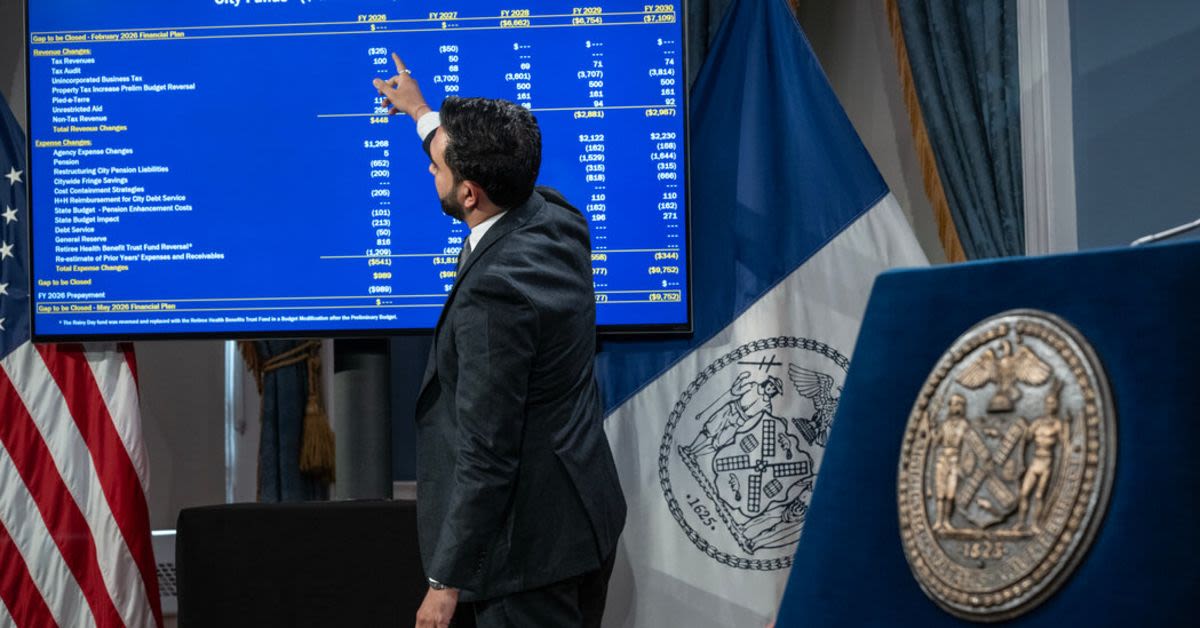
New York Citys self-described Democratic Socialist Mayor Zohran Mamdani is once again sounding the alarm over a historic budget crisis, even as he advances a plan to pour billions more into a homeless-services bureaucracy that has already ballooned under progressive leadership.
According to The Gateway Pundit, Mamdani now wants to allocate a staggering $4.2 billion for homeless services in 2027, eclipsing even the record spending levels reached during the height of the citys migrant influx. His latest budget blueprint, unveiled last week, calls for boosting the Department of Homeless Services (DHS) budget by $700 million, from $3.5 billion in 2026 to that eye-watering $4.2 billion figure.
As reported by the New York Post, that sum would exceed the $4.1 billion DHS budget in 2024, when the shelter system was straining to house roughly 69,000 asylum seekers at its peak. Then-Mayor Eric Adams had initially set DHS funding at $2.4 billion for 2023, but the number surged to $3.5 billion as waves of new arrivals overwhelmed the citys already fragile infrastructure.
More than 230,000 asylum seekers ultimately cycled through New York City beginning in the spring of 2022, a crisis fueled in no small part by the Biden administrations lax border policies. The DHS budget stood at $2.3 billion in 2022, Adams first year in office, underscoring just how rapidly the spending has escalated under progressive governance. Critics now question whether Mamdanis answer to every problem is simply to grow government and write bigger checks, regardless of long-term fiscal consequences.
Conservatives and taxpayers alike are asking the obvious question: if the city is truly in a historic budget crisis, how can it afford to lavish $4.2 billion on a homeless-services apparatus that has yet to demonstrate meaningful results. Many also doubt the spending will reduce homelessness at all, warning that such largesse may instead act as a magnet, drawing more people into the system once it becomes clear that the city has money to burn on this.
Veterans of similar failed experiments in Los Angeles and other deep-blue cities have seen this movie before, where a vast network of non-profits, consultants, and activists grows rich working to solve the homeless problem while street encampments and public disorder only worsen. New Yorkers may soon discover, in painful fashion, that there is no substitute for basic economics: when government subsidizes dysfunction and refuses to enforce order, it tends to get more of both.
Login