
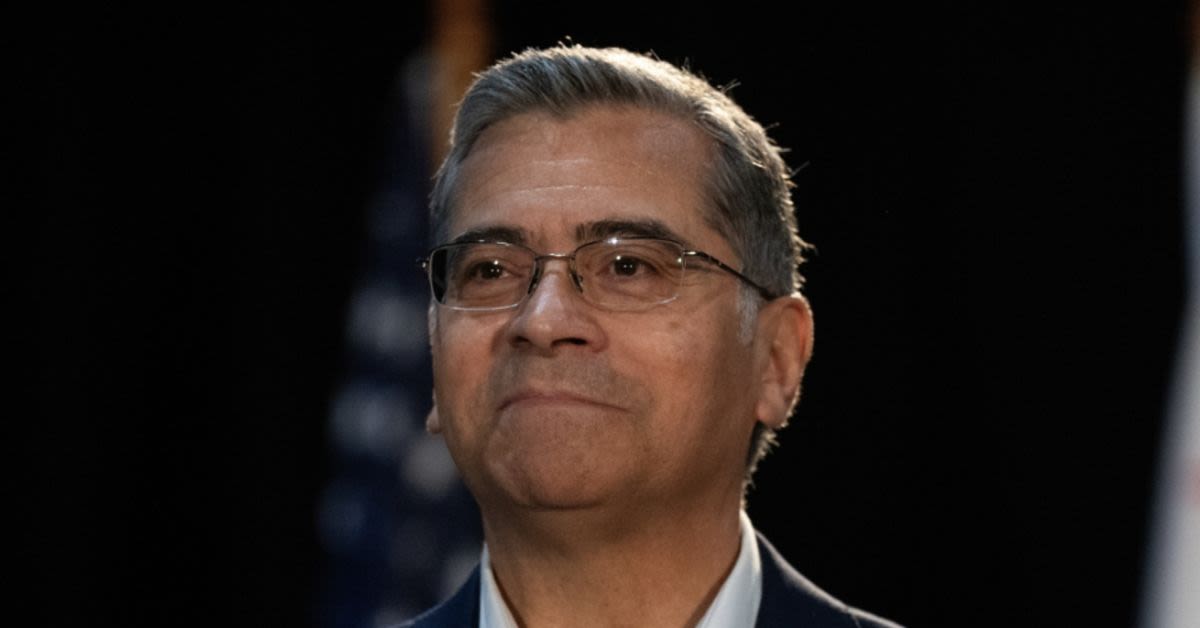
Barely a week and a half before Californias June 2 primary, the states gubernatorial contest has tightened into a bitter, tech-fueled brawl that says more about Democratic machine politics than it does about serving voters.
According to RedState, a new Emerson College/Insider California Politics poll shows former Health and Human Services Secretary Xavier Becerra, a Democrat and longtime party insider, now leading the crowded field with 19 percent support. Republican candidate and former Fox News host Steve Hilton and billionaire former hedge fund manager Tom Steyer, running as a Democrat, are locked in a tie at 17 percent, while Republican Sheriff Chad Bianco sits at 11 percent and Democrat hopefuls former Congresswoman Katie Porter and San Jose Mayor Matt Mahan trail badly, with 12 percent of voters still undecided.
Becerras sudden rise did not occur in a vacuum; his surge came only after former Congressman Eric Swalwell was unceremoniously booted from the race, clearing the lane for another establishment favorite. Becerra promptly vaulted from fifth place to the top of the poll, while Steyer has scrambled to alter that trajectory, launching social media attacks in a bid to drag Becerra down and secure a coveted Top 2 spot in Californias jungle primary.
Both men are ideological allies of the progressive left, but Becerra is clearly the Democratic Partys chosen vessel, with all the endorsements, money and union love flowing his way. Steyer, by contrast, is self-funded and therefore unconstrained by traditional donor networks, a dynamic that has fueled an escalating online flame war as each camp tries to dent each others armor with varying degrees of success.
Now, fresh allegations suggest that the digital battlefield is even murkier than it first appeared, with both Becerra and Steyer accused of quietly bankrolling fake or undisclosed social media operations to inflate their support.
Democratic California gubernatorial candidates Xavier Becerra and Tom Steyer are both under accusations they improperly paid social media influencers to boost their bids but another front in the social media wars between the two around fake accounts is also underway, a report claims.
An analysis by Cyabra, an AI-driven disinformation security firm whose clients include NATO and the U.S. State Department, found that more than 3,000 fake accounts across Instagram, X, and Facebook are amplifying Becerra while attacking Steyer. The report, shared with the New York Post, alleges a coordinated cross-platform effort to amplify negative narratives and increase online visibility but notably doesnt draw any conclusions about who may be controlling the accounts and why.
The scale of the operation is not trivial: the alleged fake accounts generated more than a million views and roughly 42,000 engagements, according to the analysis. These accounts pushed pro-Becerra content designed to simulate grassroots support, while simultaneously targeting Steyer, including criticism of his payment to influencer Carlos Eduardo Espina.
This is the modern face of Astroturf politicshigh-tech manipulation masquerading as popular enthusiasm, a digital illusion of consensus. The accounts are as fraudulent as Spencer Pratt's mayoral campaign is authentically grassroots, a biting comparison that underscores how little organic energy appears to exist for these candidates outside the partys manufactured narrative.
Becerras record hardly inspires confidence among conservatives or independents who still believe competence should matter in public office. We all know Becerra: From California congressman to California's AG to HHS Secretary, he has been a complete shill and grossly incompetent, a sentiment that reflects years of partisan lawfare and bureaucratic mismanagement rather than any serious attempt to restore order or fiscal sanity in a failing state.
Steyer, for his part, has long projected a softer, almost bland persona, but his current tactics suggest a more calculating operator beneath the surface. Steyer comes off milquetoast, but is turning out to be an undercover Machiavelli, a perception reinforced when, as RedState noted, Katie Porter accused him of leaking the infamous video of her berating a staffer during a Zoom callanother example of Democrats cannibalizing one another while Californias real problems go unaddressed.
All of this is on brand for California Democrat politics: They are too busy jockeying for position and one-upping each other to care one whit about what the people of California really want or need. The Cyabra report fits neatly into that pattern, describing a digital ecosystem where perception is engineered and dissent is drowned out by bots and sock-puppet accounts.
Steyer, ever eager to exploit Becerras vulnerabilities, has seized on the controversy with a tone that borders on hypocrisy. Meta gave $950K to get you elected, and then, literally the next day, laid off 10% of its workforce, he posted, a jab that highlights Big Techs cozy relationship with Democratic power brokers even as it glosses over his own entanglements with paid online promotion.
Because Steyer is hardly a clean actor in this arena, his campaign is now facing its own influencer scandal. A political influencer has filed a complaint against Tom Steyers campaign for governor, saying the committee failed to notify her of disclosure requirements, as required by law, when she was paid to meet with Steyer in March and later produced social media content from the meeting.
The influencer, Maggie Reedknown online as mermaidmamamaggie to roughly half a million followers on Instagram and TikToksays she was actually paid by Steyers campaign and bound by a non-disclosure agreement that prevented her from revealing the arrangement. Whats more, she said the Steyer campaign falsely accused her of posting paid content in support of Steyers chief Democratic rival, Xavier Becerra, and failing to disclose it in a complaint filed by the billionaires campaign this week.
Reed posted, then deleted, a video from her March meeting with Steyer, and has now taken her case to Californias Fair Political Practices Commission. In plain terms: the Committee paid for political content, structured it to look like an ordinary creators organic opinion, and used a non-disclosure agreement to keep the public from learning the truth, her complaint states, a damning description of stealth propaganda that should trouble anyone who values transparency in political speech.
They do love their NDAs, a wry observation that captures the culture of secrecy and control surrounding Democratic campaigns in California, where image management often takes precedence over honest debate. For a state already circling the drain, waiting for someone to pull the plug, the prospect of either Becerra or Steyer advancing to the Top 2 and then winning the general election signals more of the same: entrenched special interests, opaque digital manipulation, and a political class insulated from the consequences of its own failures.
If Becerra or Steyer make the Top 2 and manage to win the general, expect that to happen. Voters who still believe in limited government, individual liberty, and genuine grassroots accountability may see this race not as a contest between competing visions for Californias future, but as a struggle to preserve what remains of the states sanity against a same corrupt apparatus, with a different puppet pulling the levers.
Login