
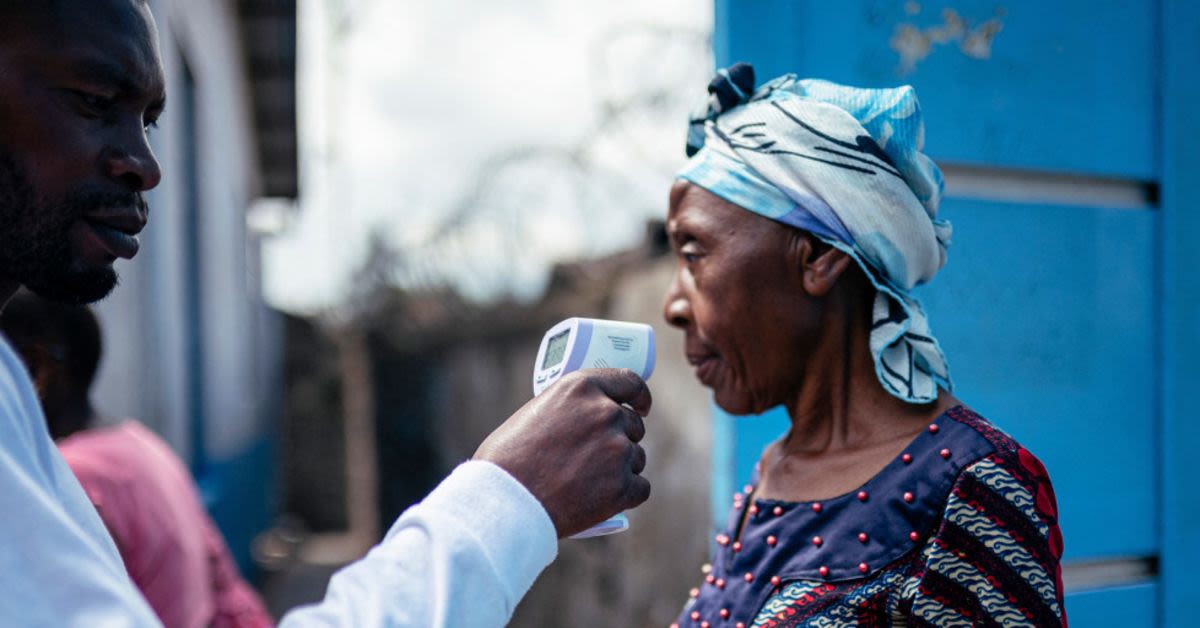
President Donald Trump voiced concern that the latest Ebola outbreak in the Democratic Republic of the Congo (DRC) could spread beyond its current zone of infection, underscoring the stakes of a crisis unfolding in a fragile and war-torn region.
According to Breitbart, the president was asked about the situation during a White House event unveiling the administrations new TrumpRx prescription website, a domestic initiative aimed at lowering drug costs for American families. Im concerned about everything, Trump replied, before stressing that while the virus has been confined right now to Africa, it is something that has had a breakout, a remark that reflected both his awareness of the threat and his broader emphasis on protecting U.S. borders and public health.
The World Health Organization (W.H.O.) reports that the outbreak has already claimed 131 lives, a grim toll that continues to rise as more suspected cases are identified. The latest W.H.O. bulletin indicates that over 500 suspected infections have been recorded, with confirmed cases concentrated in the remote Ituri province but now extending to other parts of the DRC, including the rebel-held city of Goma where treatment and contact tracing are expected to be especially challenging.
On Tuesday, W.H.O. Director-General Tedros Adhanom Ghebreyesus acknowledged the gravity of the situation, stating that he was deeply concerned about the scale and speed of the epidemic. Addressing the World Health Assembly in Geneva, Tedros warned that as field operations intensify and surveillance improves, the number of confirmed infections could rise sharply, cautioning governments and media outlets not to overreact to what may appear as sudden spikes in reported cases.
Numbers will change as field operations are scaling up, including strengthening surveillance, contact tracing and laboratory testing, he said, emphasizing that better data collection would inevitably alter the official figures. That warning reflects a familiar pattern in outbreaks where early underreporting is followed by a surge in confirmed cases once international agencies and local authorities begin to coordinate more effectively.
The cross-border dimension of the crisis is already evident, with two infections reported in neighboring Uganda, one of them fatal. Ugandan health officials have stated that both patients were travelers from the DRC, a reminder that porous borders and regional instability can quickly transform a local health emergency into a broader international concern.
Congolese Health Minister Samuel Roger Kamba on Tuesday shed light on why the outbreak initially spread undetected, explaining that doctors in the Ituri region were only equipped to test for Ebola Zaire, the strain most commonly associated with previous Congolese outbreaks. The rare Bundibugyo strain of Ebola was not identified until samples were transported to the capital, Kinshasa, more than 620 miles from the epicenter, a delay that allowed the virus to circulate unchecked in vulnerable communities.
The DRC has only one other laboratory capable of testing for Ebola Bundibugyo, located in Goma, a city seized by insurgents in early 2025. As of Tuesday, it remained unclear whether the rebel authorities controlling Goma are conducting Ebola tests or taking any meaningful steps to contain the spread, raising serious questions about the ability of international agencies to operate freely in territory held by armed groups.
Because of these testing gaps and logistical obstacles, the W.H.O. did not become aware of the outbreak until May 5, and Ebola was not definitively confirmed as the cause until May 14, three weeks after the first recorded fatality. That lag in detection and confirmation underscores the structural weaknesses of public health systems in conflict zones, where limited infrastructure, insecurity, and bureaucratic failures can combine to produce deadly delays.
Our surveillance system didnt work, virologist Jean-Jaques Muyembe of the DRCs National Institute of Bio-Medical Research told the Associated Press (AP) on Tuesday, offering a blunt assessment of the early response. Muyembe said the laboratory in the Ituri provincial capital of Bumia should have continued searching and sent the samples to the national laboratory when the first patients tested negative for Ebola Zaire, but something went wrong there.
According to Muyembe, the situation became catastrophic because DRC officials knew there were deaths, and nothing was being said. He stressed that Ebola epidemics are usually brought under control simply by applying public health measures in a timely fashion, a point that highlights how governance failures and lack of accountability can be as dangerous as the virus itself.
The disease is transmitted through contact with bodily fluids. If you avoid this contact, you break the chain of transmission and the epidemic stops, he said, reiterating basic principles of infection control that have proven effective in past outbreaks when implemented swiftly and consistently. Those straightforward measures, however, depend on functioning institutions, clear communication, and public trustconditions often in short supply in regions plagued by corruption and insurgency.
Some health officials and critics of the administration have attempted to pin blame for the crisis on Washington, pointing to the Trump administrations withdrawal from the W.H.O. in January 2026 and reductions in foreign aid. Yet there is, to date, no evidence linking those policy decisions to the specific failures of diagnosis and containment described by Muyembe, suggesting that the primary responsibility lies with local authorities and international bureaucracies that failed to act promptly with the tools already at their disposal.
The State Department, for its part, emphasized on Monday that the United States moved quickly once the outbreak was confirmed, underscoring the administrations argument that American engagement is most effective when it is targeted and accountable rather than funneled through unresponsive global institutions. The department said it was coordinating a comprehensive response to the Ebola outbreak that began within 24 hours of the first confirmed Ebola infection in the DRC, a timeline that contrasts sharply with the weeks-long delay in local detection.
Within 48 hours, the Department activated a response plan and mobilized an initial $13 million in foreign assistance for immediate response efforts. This funding bolsters each countrys own response, supporting surveillance, laboratory capacity, risk communication, safe burials, entry and exit screening, and clinical case management, the State Department noted, outlining a strategy that aims to strengthen on-the-ground capabilities rather than expand the bureaucracy of multilateral agencies.
In addition, we are leveraging the Departments historic investment in OCHA pooled funds for the DRC and Uganda to ensure the rapid deployment of additional humanitarian assistance on the ground and close coordination with the U.N. system, the statement added. OCHA, the United Nations Office for the Coordination of Humanitarian Affairs, manages pooled funds for emergency relief, and the U.S. recently contributed another $1.8 billion to these mechanisms, including $250 million specifically earmarked for the DRC and Uganda, a substantial commitment that undercuts claims that Washington is retreating from global health responsibilities.
The human cost of the outbreak has now reached American citizens, with one U.S. doctor confirmed to be infected with Ebola Bundibugyo. Peter Stafford, a physician working for Serge, a Pennsylvania-based Christian medical nonprofit, contracted the virus while treating patients at Nyankunde Hospital near the Ituri capital of Bunia, where he and his wife, Dr. Rebekah Stafford, have served as missionaries since moving to Africa in 2019.
Rebekah Stafford and another missionary doctor, Patrick LaRochelle, were also exposed to Ebola while caring for patients and are currently under quarantine, though neither has tested positive or shown symptoms. Their situation illustrates both the risks borne by faith-based medical workers on the front lines and the moral seriousness with which many Americans approach humanitarian service, often in places where secular NGOs and international agencies are reluctant or unable to operate.
Serge announced on Tuesday that Peter Stafford has been safely evacuated and is receiving specialized medical treatment. Our hearts are with the Stafford family and with the Congolese communities facing this outbreak, said Serge Executive Director Matt Allison, acknowledging both the personal ordeal of the missionaries and the suffering of local populations.
Peter and Rebekah have faithfully served vulnerable communities in Nyankunde with extraordinary compassion and courage. We are deeply grateful for the medical teams, government agencies, and international partners working together to provide care, contain the outbreak, and protect lives, he said, capturing a broader reality in which American initiativepublic, private, and faith-basedremains central to confronting global health crises even as debates continue over the proper role of international organizations and the need for stronger local accountability.
Login