
For five long hours in rough Atlantic waters, 11 people who had just survived a plane crash off the Florida coast clung to a yellow life raft, cut off from communication and unsure whether anyone even knew they were alive.
According to Western Journal, the group 10 passengers and their pilot had been en route from Marsh Harbour on Great Abaco in the Bahamas to Grand Bahama International Airport in Freeport when their Beechcraft 300 King Air turboprop suffered engine failure on Tuesday. With no way to summon help and a thunderstorm bearing down, the survivors huddled under a tarp for minimal shelter, a stark reminder that in life-or-death emergencies, it is often the skill and courage of individuals, not bureaucracies, that make the difference.
The pilot, facing the kind of split-second decision that no regulation or checklist can fully script, ditched the aircraft in the ocean roughly 50 miles off Vero Beach, Florida. He then managed to get all 10 passengers, three of whom suffered minor injuries, onto the life raft, an act Air Force Reserve Maj. Elizabeth Piowaty later praised as exemplary airmanship and composure under pressure.
Ive not known anyone to survive a ditching in the ocean, Piowaty, who commanded an HC-130J Combat King II aircraft that assisted in the rescue, said. From what Ive seen, for all those people to survive is pretty miraculous.
Their ordeal might have remained unseen were it not for the downed planes emergency beacon, which alerted the U.S. Coast Guard and triggered a rapid, coordinated response. At that moment, the Air Force Reserves 920th Rescue Wing already had a crew airborne on a training mission in an HH-60W Jolly Green II helicopter, and that team was immediately redirected to search for the missing aircraft and its occupants.
As the storm built and daylight waned, search and rescue crews from the U.S. military finally appeared overhead, a sight the survivors had no guarantee they would ever see. You could tell just by looking at them that they were in distress physically, mentally and emotionally, Air Force Capt. Rory Whipple, a combat rescue specialist who jumped into the water and swam to the raft, said at a Wednesday news conference.
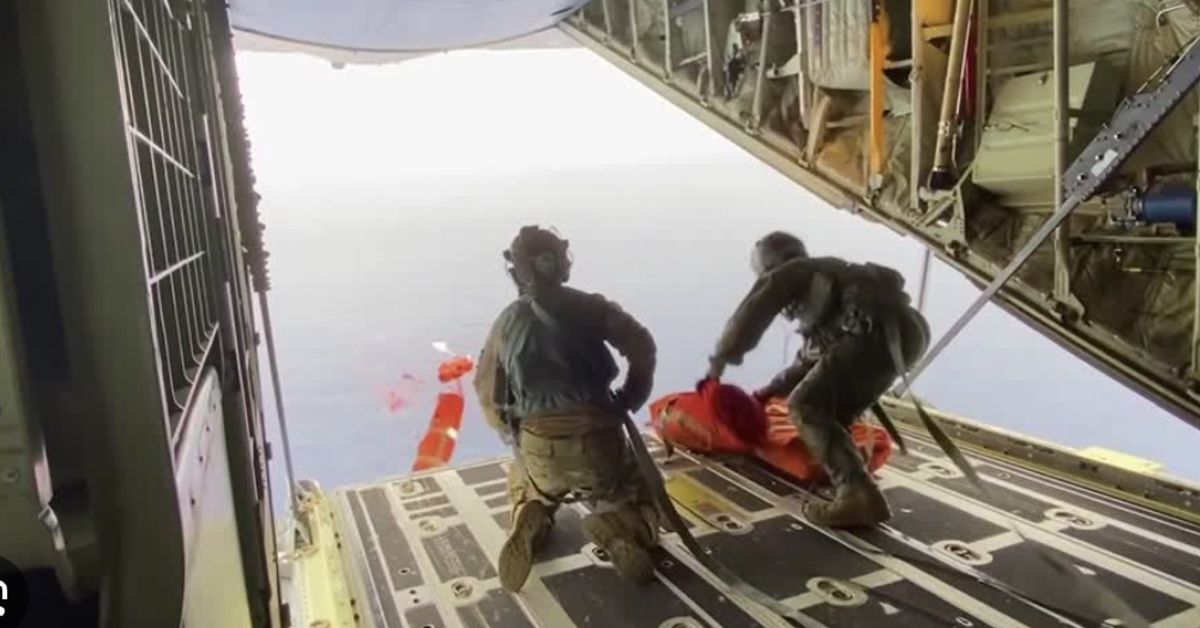
You have to imagine the emotional injuries that they sustained out there, not knowing if someone was going to rescue them. Piowaty said that once her crew located the raft, they flew over the site and dropped a survival kit containing two additional rafts, food, and water, allowing the stranded passengers to spread out and stabilize while the helicopter team moved in.
Working in 3- to 5-foot swells, the HH-60W crew, including Whipple, hoisted the survivors one by one from the ocean, racing both the weather and the helicopters fuel limits. The final survivor was lifted aboard just minutes before the aircraft would have been forced to break off and refuel, underscoring how narrow the margin was between life and tragedy.
There was no visible trace of the Beechcraft in the water, Piowaty said, a reminder of how quickly a modern aircraft can vanish beneath the waves. All 11 survivors were flown to Melbourne Orlando International Airport, where emergency medical teams were waiting; authorities reported that every one of them was in stable condition.
The U.S. Federal Aviation Administration has opened an investigation into the crash, as is standard procedure whenever a U.S.-registered aircraft goes down. While federal investigators will sift through data and maintenance records, the events already highlight the enduring importance of robust search-and-rescue capabilities, disciplined pilots, and the kind of military readiness that allows a training mission to become a lifesaving operation in a matter of minutes.
For readers accustomed to hearing only about government dysfunction and bureaucratic excess, this episode offers a different picture: individual responsibility, professional excellence, and the quiet heroism of service members who train for the worst so that others may live. As Western Journal notes, the original account of this rescue came via the Associated Press and may reflect its own editorial slant, but the facts themselves tell a story of courage, competence, and providence that stands on its own 11 souls alive today because a pilot did his duty and American rescuers answered the call.
Login