
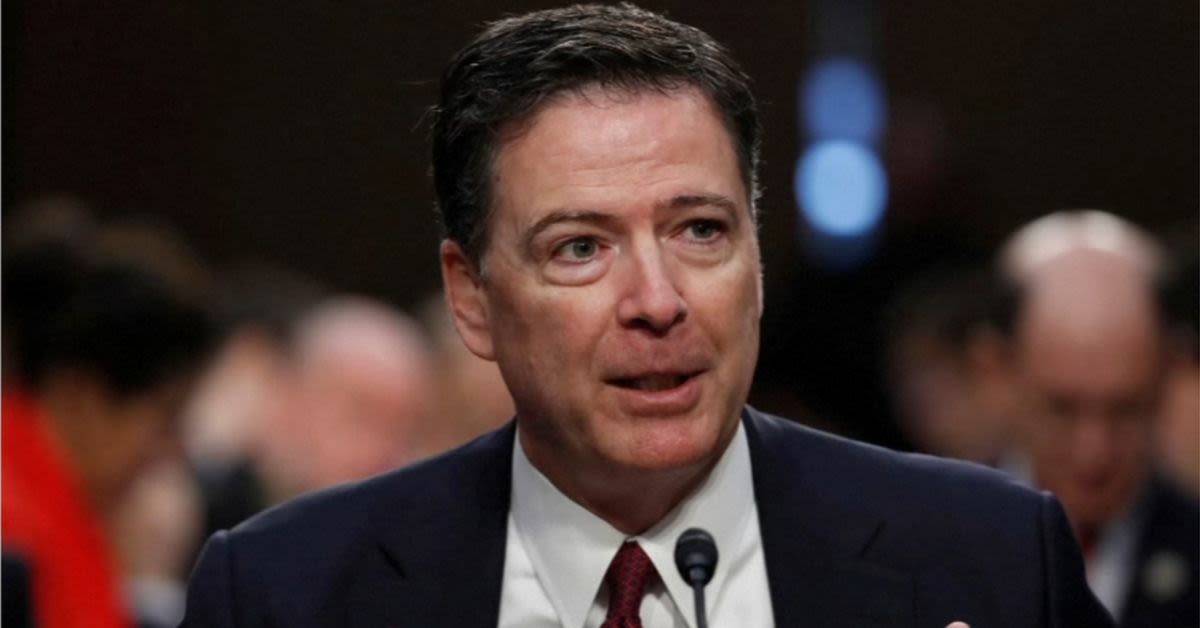
Former FBI Director James Comey, long accused by conservatives of turning federal law enforcement into a partisan cudgel, reemerged on NBCs Meet the Press to cast himself as both victim of overreach and guardian of institutional virtue while facing a second federal indictment.
According to RedState, Comey was indicted last month on two counts stemming from an Instagram post featuring seashells arranged to spell out "86 47," which prosecutors allege was "a serious expression of an intent to do harm to the president of the United States." He deleted the post after it triggered a political and legal firestorm, yet on air he refused to address the substance of the charges while eagerly criticizing those now overseeing his case.
Acting Attorney General Todd Blanche previously told host Kristen Welker that the prosecution is based on "a body of evidence" gathered over roughly 11 months, not merely a single social media post. Comeys response was not to rebut the evidence but to scold Blanche for speaking publicly, adopting the familiar posture of the rules-obsessed institutionalist.
"I don't talk about the case because the federal court rules require you not," Comey said, pointedly. "I would urge the acting attorney general to bone up on the rules."
When pressed about the Instagram post itself, Comey attempted to downplay it as the harmless online behavior of a suburban father, insisting he is now a private citizen who uses Instagram "the way any awkward, nerdy dad would." Prosecutors, however, say the image was no innocuous snapshot of brunch but a coded message "86 47," slang for getting rid of someone, allegedly directed at the 47th president.
Despite now being twice indicted by the very system he once helped lead, Comey professed unwavering confidence in the judiciary, insisting he retains "complete faith" in the courts. He described the judicial branch as "the only leg" of the three-branch government stool that is "still standing," and he doubled down on his public insistence that he has done nothing wrong, telling Welker: "I'm not just not guilty, I am innocent, and so let's go."
Welker revisited the defining controversy of Comeys tenure: his decision to reopen the Hillary Clinton email investigation just 11 days before the 2016 election, a move Democrats still blame for Clintons loss and Republicans remember as only one chapter in a broader saga of politicized law enforcement. Comey conceded that mistakes were made on his watch but maintained that his most consequential calls, including the Clinton decision, were justified and would be repeated.
"But again, we made the decision because it was the least-bad option. Both options sucked, honestly. But this was the one most consistent with the values of the department. So as painful as it is, I'd have to do the same thing again."
That posture a blend of regretful tone and unshaken self-righteousness is unlikely to satisfy either side of the political aisle. Democrats still see him as the man who helped derail Clintons campaign, while Republicans remember him as the FBI chief who greenlit the Trump-Russia probe and then handed it off to Special Counsel Robert Mueller.
On the question of political retaliation, Comey was more explicit, drawing a sharp line against what he portrayed as presidential abuse of the Justice Department. He declined to delve into the details of the current "shell case" his own dismissive phrase but freely attacked the earlier indictment against him, which a judge dismissed after ruling that appointed U.S. Attorney Lindsey Halligan had been unlawfully installed.
"The president of the United States cannot use the Justice Department to target people because he wants to retaliate against them. We just can't operate as a republic if that happens."
For conservatives who watched the FBI under Comey launch a counterintelligence investigation into a sitting presidential campaign based on what the inspector general later described as a flawed and biased process, that warning rings with more than a little irony. The man who once presided over some of the most politically charged decisions in modern FBI history now casts himself as a cautionary voice against the very weaponization many on the right believe he pioneered.
Comey also took aim at the current leadership of the Justice Department, declaring it "seriously broken at the top" while simultaneously urging rank-and-file employees to endure the next election cycle. He appealed to career officials to "hang on" for another two and a half years until, by his implication, a more congenial administration arrives, adding, "We need good people in those roles. America does."
The interview showcased the familiar Comey pattern: he refused to discuss the specifics of his indictment, except when criticizing those bringing the case; he declined to meaningfully revisit 2016, except to say the choices were terrible; and he withheld confidence from the current DOJ leadership, while praising the bureaucracy he hopes will simply wait out the clock.
For a man who insists that the courtroom is the only proper venue for resolving his fate, he still found ample time to litigate his narrative on national television, leaving viewers to decide whether they were watching a principled institutionalist under siege or a former power broker still unwilling to reckon with his own record.
Login