
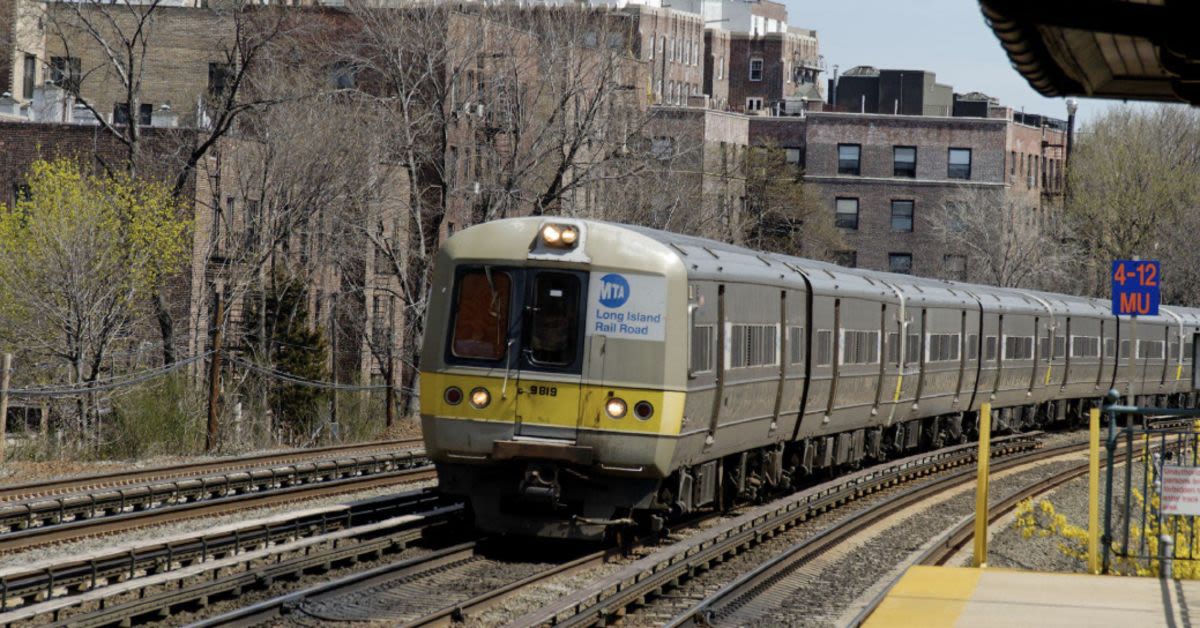
North Americas largest commuter rail network ground to a halt this weekend as a high-stakes labor dispute between unionized workers and New Yorks transit leadership boiled over into a full-scale strike.
According to Breitbart, the Long Island Rail Road (LIRR), the primary commuter artery linking New York City to its eastern suburbs, suspended all service early Saturday morning after five unions representing roughly half of its workforce walked off the job. The shutdown followed months of contentious contract negotiations in which President Donald Trumps administration had already stepped in to try to broker a compromise, but the unions moved ahead with a strike the moment they were legally permitted to do so at 12:01 a.m. Saturday.
Union leaders signaled little optimism that a breakthrough was imminent, underscoring the depth of the standoff. Kevin Sexton, national vice president of the Brotherhood of Locomotive Engineers and Trainmen, said no further talks were on the calendar, adding, Were far apart at this point, and, We are truly sorry that we are in this situation.
Transit officials, for their part, insist they have already met the unions core financial demands and accuse labor leaders of engineering a walkout regardless of the offer on the table. Janno Lieber, chairman of the Metropolitan Transportation Authority (MTA), said the agency gave the union everything they said they wanted in terms of pay and argued that, from his vantage point, it appeared the unions had always intended to strike.
The work stoppage is the LIRRs first since a two-day strike in 1994 and is poised to disrupt not only weekday commutes but also major weekend events that rely heavily on rail access. Sports fans heading to see the New York Yankees and New York Mets face off, or to watch the New York Knicks playoff run at Madison Square Garden, will find that both venues dedicated LIRR stops are effectively useless as trains sit idle.
If the shutdown drags into the workweek, the impact will be far more severe for the roughly 250,000 daily riders who depend on the LIRR to get to and from their jobs in Manhattan. Those commuters, many already squeezed by inflation and high taxes, will be forced to scramble for alternative routes from Long Island into the city, testing the limits of an already strained regional transportation network.
For many, that will mean turning to the regions notoriously clogged highways and local roads, with all the economic and environmental costs that entails. People are still going to commute, but if everybody starts driving now, the traffic is only going to get worse, said Rich Piccola, an accountant who rides into the city and was waiting at Penn Station for a train home on Thursday as the strike loomed.
Democratic Gov. Kathy Hochul, whose administration oversees the MTA, has urged Long Island residents to work remotely if their jobs allow it, a familiar refrain from the pandemic era. The MTA has promised limited shuttle bus service to key New York City subway stations, but officials concede that this contingency plan was never designed to absorb the full weekday ridership of the LIRR.
Transit advocates warn that the oft-touted flexibility of remote work has clear limits, especially for blue-collar and service-sector employees who cannot simply log in from home. You work in construction, you work in the healthcare industry, you work at a school or youre about to graduate from school, thats not always possible, said Lisa Daglian, executive director of the Permanent Citizens Advisory Committee to the MTA, noting that People need to get where they need to go.
At the heart of the dispute are wages and health care premiums, a familiar flashpoint in public-sector labor battles where taxpayers ultimately foot the bill. The MTA has warned that the unions initial compensation demands would force fare hikes and complicate future negotiations with other unionized transit workers, raising concerns that a generous settlement now could trigger a cascade of cost increases across the system.
Union leaders, representing locomotive engineers, machinists, signalmen, and other critical rail personnel, counter that their members have endured years of surging inflation and rising living expenses without adequate pay adjustments. They argue that more substantial raises are necessary simply to maintain workers standard of living in one of the most expensive regions in the country, particularly given that their contract has been frozen in the past rather than keeping pace with economic realities.
On the picket line at Penn Station, some workers expressed regret over the hardship the strike will impose on riders but insisted they had been left with no alternative. Duane OConnor, a picketer, said, I feel terrible. Terrible. This is going to hurt. This is going to hurt the island, this is going to hurt the city, they think they can push us around and were supposed just fall in line. All we are asking for is fair wages. Record inflation the last few years. Our contract goes back three years, its not going forward, so we went through those record inflationary years and theyre trying to lowball us.
OConnor repeated that sentiment as the strike began in earnest, emphasizing that his frustration is rooted in what he views as basic fairness rather than greed. I feel terrible. Terrible. This is going to hurt. This is going to hurt the island, this is going to hurt the city All we are asking for is fair wages. Record inflation the last few years. Our contract goes back three years, its not going forward, so we went through those record inflationary years and theyre trying to lowball us, he said.
Some commuters, while sympathetic to the unions concerns about affordability, fear that any significant wage gains will be passed directly onto riders through higher fares. Gerard Bringmann, chair of the LIRR Commuter Council, warned in a statement that if the unions secure the raises they are seeking, it will come at the expense of our riders who will see next years 4% fare increase doubled to 8%, adding pointedly, Like the union workers, we too are burdened by the increase in the cost of living here on Long Island.
The political stakes are also considerable, particularly for Hochul, a Democrat facing reelection later this year and already under scrutiny for New Yorks high cost of living and persistent public-safety concerns. William Dwyer, a labor relations expert at Rutgers University in New Jersey, where commuter rail workers staged a three-day strike last year, noted that Shes up for reelection, and Long Island is a critical vote for her, and cautioned that So if theres a significant fare hike, that does not bode well for her on Election Day.
For conservatives and fiscal hawks, the LIRR shutdown underscores a broader pattern in blue-state governance: powerful public-sector unions leveraging their clout at the expense of taxpayers and everyday commuters. As negotiations remain stalled and trains sit motionless, Long Islanders are left to absorb the immediate fallout, while the longer-term question is whether state leaders will prioritize sustainable, rider-focused policy or continue to capitulate to union demands that risk driving faresand familiesout of New York.
Login