
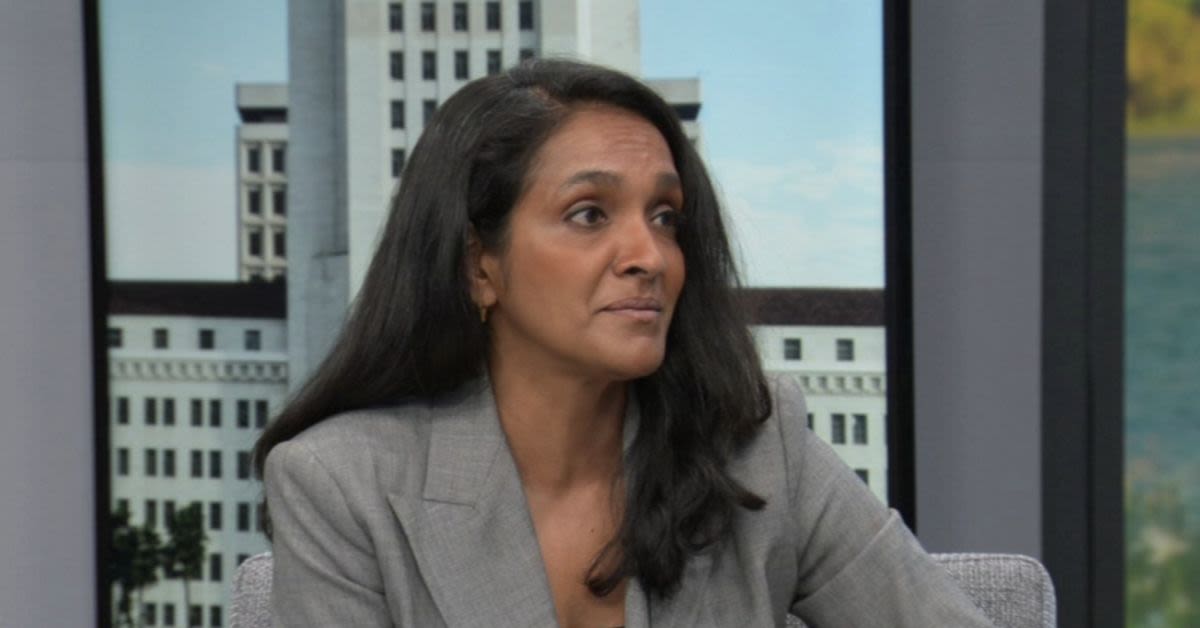
Spencer Pratts insurgent campaign for Los Angeles mayor has turned Nithya Ramans carefully curated progressive image into a political liability, exposing a record that many residents now see as emblematic of everything wrong with the citys left-wing governance.
According to RedState, Ramans six-year tenure on the Los Angeles City Council has been marked by a pattern of ideological rigidity and dismissiveness toward public safety concerns, particularly around homelessness and crime. At one town hall, her own constituents openly revolted when she brushed aside fears about a homeless encampment near a school.
Video from the event captured the moment: BOOED BY HER OWN VOTERS: Socialist Politician Says Drug Encampments Next to Schools Dont Matter Then Rolls Her Eyes, one caption read, followed by the blunt description, Watch this. Nithya Raman gets BOOED by her own constituents when she claims it doesnt matter if homeless drug encampments are cleared out or left right next to a school. Then she rolls her eyes like the people complaining are the problem.
That viral clip has become a shorthand for what many Angelenos see as the core problem with the citys progressive leadership: a political class more interested in protecting encampments than protecting children. These socialists are completely insane. They care more about protecting tents than protecting kids. No wonder everyone hates her, one commentary declared, urging residents, Share this if youre done with the madness. ?? Against that backdrop, the recent mayoral debate offered voters a stark contrast between a hard-left incumbent councilmember and a challenger willing to call out the failures of the citys ruling class in blunt, unapologetic terms.
During last Wednesdays debate, Raman tried to spin a narrative that she was the real threat in the race, claiming that Pratt and incumbent Mayor Karen Bass were effectively aligned against her because they would rather face each other than run against her. The accusation was not just implausible; it opened the door for Pratt to deliver one of the most devastating rebuttals of the campaign. As RedStates Bob Hoge documented, Pratt seized the moment and dismantled Ramans claim with a mix of moral outrage and political clarity that resonated with a frustrated electorate.
First off, Mayor Bass and I are definitely not working together. I blame this person for burning my house and my parents' house and my town and my neighbors down. I am not working with Mayor Bass, Pratt said, tying his criticism directly to the catastrophic Palisades fires that destroyed his home and those of thousands of others. He then turned to the political calculus Raman had tried to weaponize and flipped it on its head. Second off, if I wanna run against anybody, it would be the councilmember who is terrible. Mayor Bass has at least been a mayor for almost 4 years and has, as she talked about earlier, the unions, all the unions endorse Mayor Bass. Do you think it's easier to run against the incumbent mayor with all the unions or a random city council member who's been a failure for 6 years? I would MUCH RATHER run against Councilwoman Raman! Thank you very much.
That exchange punctured Ramans self-importance and underscored a reality her campaign has struggled to escape: she is not the reformer she claims to be, but rather a symbol of a failed progressive experiment in Los Angeles governance. Commentators quipped that after such a scorching takedown, Raman should have crawled under one of those homeless tents under the 101 Freeway in her district. The betting markets seemed to agree.
Just a week earlier, Raman had been priced only slightly below Bass and ahead of Pratt. After the debate, Nithya Raman falls to 16% on betting market odds in a stunning collapse, one update noted, signaling that even political gamblers saw her momentum evaporating.
Yet instead of recalibrating or offering substantive policy corrections, Raman doubled down on the same ideological script that has alienated so many voters. She appeared on a minor podcast hosted by fellow Democratic Socialists and framed the race in apocalyptic ideological terms, warning that unless real solutions were advanced, voters would turn to fascism and mini-Trumps like Spencer Pratt. In one widely shared clip, LA mayoral candidate Nithya Raman says @spencerpratt represents fascism. This stuff is all they have. Beyond parody. The rhetoric was familiar: no concrete plan, just the reflexive branding of any serious challenger as an authoritarian threat.
Notably, Raman did not bother to articulate a single detailed solution in that appearance, mirroring her performance at the debate where she leaned heavily on labels and name-calling rather than specifics. Her behavior since then has only reinforced the perception that she is more comfortable attacking opponents than defending her own record. A second debate had been scheduled for this week, and when Bass bowed out, citing a trip to Sacramento, Raman was suddenly presented with a one-on-one showdown with Pratt. One might expect a candidate who insists voters are hungry for her real solutions to leap at the opportunity. Instead, she also withdrew, leaving observers to conclude that she has no solutions, just slurs and talking points.
Back at City Hall, Raman returned to legislative theatrics that seemed designed more to signal virtue than to solve actual problems. In the wake of the devastating Palisades firesblamed by her and Bass on climate change rather than on years of mismanagement, fuel buildup, and encampment-related ignition sourcesRaman unveiled what she apparently considered a bold step to combat wildfire risk. Her idea: clamp down on backyard barbecues during Red Flag days. Los Angeles mayoral hopeful Nithya Raman wanted to ban backyard barbecues for residents during certain high fire danger days across the city, one report summarized, noting that she introduced a motion directing city officials to examine emergency restrictions on grilling during Red Flag Warning days, when high winds and dry conditions significantly increase wildfire danger across Los Angeles.
The proposal went further, asking officials to consider possible limits on backyard barbecues, fire pits and other open flames in residential neighborhoods during those high-risk weather events. For residents of the San Fernando Valleypart of which lies in Ramans own districtthis struck a particularly discordant note. Summers there routinely hit triple digits, and Red Flag events are common. Yet one of the few simple pleasures families can still enjoy, especially in the evenings when temperatures drop, is gathering in their yards and cooking outdoors. For many, grilling is not just a lifestyle choice but a practical necessity to avoid heating up already sweltering homes.
To those constituents, Ramans motion came across as both tone-deaf and emblematic of a broader progressive instinct: restrict ordinary peoples freedoms while ignoring the governments own failures. Even a fellow Democrat on the council found the idea so misguided that she moved to kill it outright. Councilmember Monica Rodriguez, who represents much of the San Fernando Valley, stepped in and successfully blocked the proposal by introducing a separate motion that stripped Ramans barbecue ban, one account noted. Rodriguez captured the public mood succinctly when she told The California Post, The last thing Angelenos need is a ban on hosting a carne asada in their own backyard.
Rodriguez added that the proposal felt utterly disconnected from how families in Los Angeles actually live, especially during extreme heat events. A Red Flag Warning had been in place from August 2024 in 2025, when temperatures across the city soared to around 100 degrees Fahrenheit, underscoring how out of touch it was to target backyard grills rather than the far more serious ignition sources plaguing the city. Critics pointed out that while Raman was busy trying to police private barbecues, she had shown far less urgency in addressing the fires regularly sparked in homeless encampmentsencampments she has repeatedly defended and prioritized over neighborhood safety.
The data on those encampment fires is damning. This mid-April article from local ABC7 confirms this fact, citing over 16,000 Los Angeles Fire Department reports logged about fires started at homeless encampments an average of 46 PER DAY. As the report explained, Los Angeles firefighters have repeatedly warned that rising call volumes and chronic understaffing are slowing their response times, and new data shows one major driver -- encampment fires. Every time the department responds to a blaze, crews must indicate whether it was Homeless or Encampment Related, and A records request for every such fire since 2020 returned a staggering total -- more than 75,000 incidents.
The trend line is unmistakable. The numbers fluctuate month-to-month, but the trend is unmistakable. In 2020, LAFD logged 7,165 homeless-related fires. That figure has more than doubled in just a few years. From January through mid-December 2025, that number climbed to 16,982, an average of 46 fires every day in the city of Los Angeles. While many of these incidents are small and quickly extinguished, Most of these fires are small and quickly extinguished, but some spread with devastating consequences. Against that backdrop, Ramans fixation on backyard carne asadas rather than encampment enforcement looks less like environmental stewardship and more like ideological blindness.
This same pattern of denial and deflection has characterized the response of both Raman and Bass to the Palisades fires, which destroyed the homes of Spencer Pratt, John Alle, and countless others. Rather than acknowledge the role of encampments and neglected fuel loads, they have leaned on the familiar crutch of climate change as the all-purpose culprit. Yet evidence has emerged that city leaders were warned about the specific risks in the days leading up to the disaster. Evidence like a phone call two days before the Palisades fires, between Bass and Los Angeles resident John Alle. A conversation that Alle somehow decided to record, has now come to light.
In this phone discussion, Alle warned Bass about the predicted winds and the dry conditions, being ripe for fire events. Alle was most concerned that with the homeless's penchant for setting fires in their encampments, it could easily ignite and spread bigger fires. The warnings proved tragically prescient. We know the sad history. Like Pratt, Alle and his parents lost their homes in the Palisades fires. With Bass now seeking reelection, Alle concluded that voters deserved to hear what had been said and released the audio in late April. WATCH: A recorded call involving Karen Bass, made days before the Palisades Fire, is resurfacing ahead of the primary, with John Alle now identifying himself as the person who recorded it. Alle says he warned about dangerous winds and fire risk during the call. Bass campaign strongly disputes that, saying the call focused on planned law enforcement activity in MacArthur Park, not fire danger.
The dispute over that call encapsulates the broader divide in this race: on one side, residents and candidates like Pratt who insist that leadership failures and ideological blinders have made the city more dangerous; on the other, entrenched officials who insist that forces beyond their control are to blame. Here's the rub: What needs to be done, and what Raman, in her role as a city council member, is capable of doing, she refuses to do. But she'll attempt a verbal jig and blame everyone but herself for her failures. Pratt, by contrast, has used both the debate stage and his social media presence to highlight the absurdity of Ramans priorities, especially her attempt to target backyard grills while ignoring encampment fires.
When news of Ramans barbecue proposal broke, Pratt responded with characteristic bluntness and a flair for digital messaging. Spencer Pratt exposed her game at the debate, and after this sorry attempt by Raman at a supposed solution, Pratt used his social media game to rake her over the BBQ coals. One widely shared post captured the sentiment with a simple challenge: WATCH: COME AND TAKE IT https://t.co/CaYNDj9DGE pic.twitter.com/ceXqcwb8H7. For many Angelenos, that defiant stance against yet another petty intrusion into everyday life crystallized why Pratts candidacy has gained traction: he is channeling the frustration of residents who feel overtaxed, underprotected, and constantly lectured by officials who refuse to fix the problems they helped create.
The contrast could not be clearer. While Raman and her allies focus on restricting ordinary behavior, raising taxes, and shielding encampments that generate tens of thousands of fires, candidates like Pratt are calling for accountability, enforcement, and a return to basic common sense. This is exactly why Spencer Pratt must win, one conservative commentator argued, pointing to Raman and her leftist ilk who take other people's earned money through taxation and fraud, while limiting any freedoms one could enjoy. The question practically answers itself: When was the last time someone's backyard BBQ started a wildfire? I haven't been able to find one instance. However, there are a number of instances of fires started in the very homeless encampments that Raman deems more important than children's safety.
As the campaign unfolds, voters are being forced to decide whether they want more of the same progressive experiments that have left Los Angeles less safe, less free, and less livableor whether they are ready to back a candidate willing to confront those failures head-on. For now, at least, one thing is certain: Brain trusts like Raman are low-hanging fruit, and every misstep she makes only strengthens the case for a course correction at City Hall.
Login