
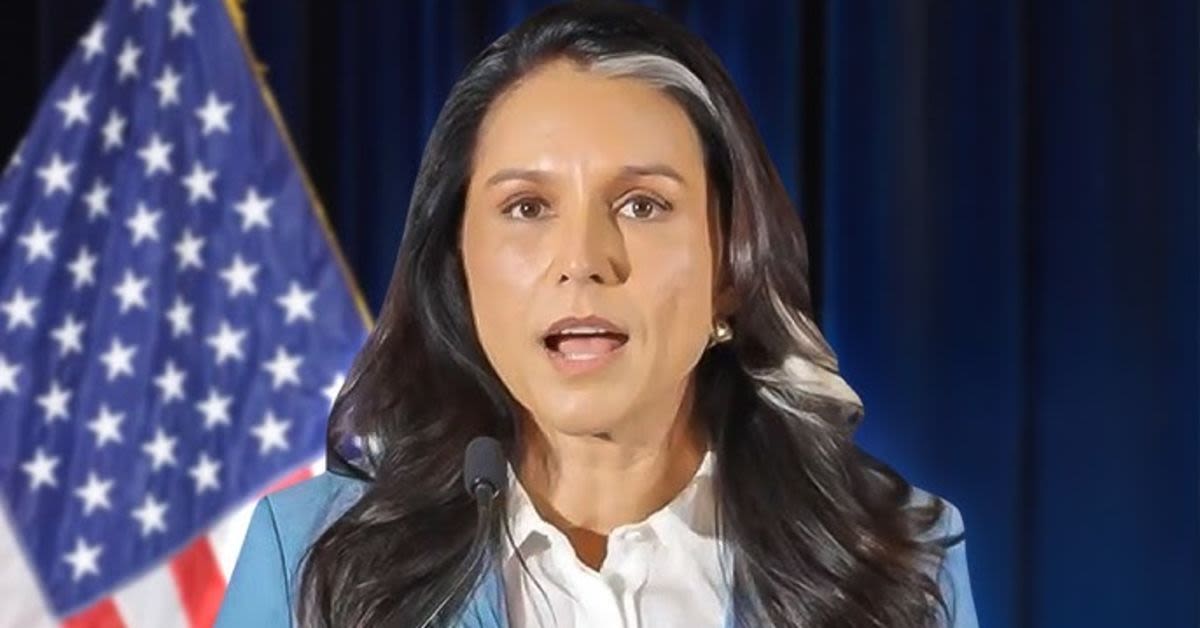
Director of National Intelligence Tulsi Gabbard has opened a sweeping probe into more than 120 foreign biological laboratories that have been bankrolled by U.S. taxpayers for decades.
According to Gateway Pundit, Gabbard disclosed to the New York Post that her office has begun a systematic review of these facilities, many of which are embedded in sensitive regions and conflict zones. She stated that her team intends to identify where these labs are, what pathogens they contain and what research is being conducted to end dangerous gain-of-function research that threatens the health and wellbeing of the American people and the world.
The initiative marks one of the most aggressive efforts yet by the Trump administration to confront the opaque network of overseas biolabs that critics say has flourished under layers of bureaucracy and minimal public scrutiny.
Gabbard underscored that the COVID era exposed the stakes of such research, warning of the global fallout when dangerous pathogens are manipulated behind closed doors. The COVID-19 pandemic revealed the catastrophic global impact research on dangerous pathogens in biolabs can have, Gabbard said. Yet despite these obvious dangers, politicians, so-called health professionals, like Dr. Fauci, and entities within the Biden administrations national security team lied to the American people about the existence of these US-funded and supported biolabs and threatened those who attempted to expose the truth.
Her comments follow a significant admission on Capitol Hill in May 2024, when National Institutes of Health Principal Deputy Director Lawrence Tabak conceded that federal funds had supported gain-of-function work at the Wuhan Institute of Virology. Tabak told Congress that U.S.-backed research in Wuhan had made certain viruses up to 10,000 times more infectious, validating long-standing concerns from conservatives who were dismissed for raising questions about U.S. involvement in risky experiments abroad.
Officials within the Office of the Director of National Intelligence say the laboratories now under review are scattered across more than 30 countries. Many of these facilities reportedly benefited from a Pentagon program originally created in the postCold War era to secure or dismantle weapons-related materials and curb the spread of biological and chemical threats.
The investigation has drawn particular attention to Eastern Europe, where more than 40 of the labs are said to be located in Ukraine. Intelligence officials have flagged the obvious danger that laboratories operating in an active war zone could be compromised, disrupted, or exploited, raising the specter of weaponized pathogens or uncontrolled leaks in a region already destabilized by conflict.
For years, watchdogs and lawmakers have warned that the complex web of federal agencies, grantees, and subawardees has created a fog of confusion around how U.S. research dollars are actually used overseas. Critics argue that this lax oversight has left Americans in the dark about whether high-risk experiments are being conducted with their money, without their knowledge or consent, and often in countries with weaker regulatory regimes.
ODNI officials now acknowledge that some of the clinical trials and projects underway at these foreign biolabs are raising significant, ethical, financial and security concerns. That admission stands in stark contrast to the Biden administrations earlier attempts to dismiss or downplay questions about U.S. involvement in Ukrainian and other foreign laboratories.
In an effort to rebut Russian claims about U.S.-linked biolabs in Ukraine, the Biden White House had insisted that the United States does not own or operate any chemical or biological laboratories in Ukraine. That carefully worded statement focused on legal ownership and day-to-day operation, but critics note it sidestepped the central issue: who is funding these facilities and enabling their continued work.
From a transparency standpoint, the distinction is crucial, because saying the United States does not own or operate such labs is not a denial that U.S. agencies, grantees, and subawardees have been channeling money into them. The Trump administrations review is therefore not merely a technical audit but a broader challenge to the narrative that Washingtons role in foreign bioresearch has been benign, limited, or fully disclosed.
The renewed scrutiny comes amid an intensifying debate in Washington over gain-of-function research, which involves altering pathogens to increase transmissibility or virulence under the banner of scientific preparedness. Proponents maintain that such work can help scientists anticipate future pandemics and accelerate the development of vaccines and treatments, portraying it as a necessary hedge against emerging threats.
Opponents, however, argue that the potential for catastrophic accidents far outweighs any theoretical benefits, especially when experiments are conducted in opaque foreign labs with uncertain safety standards. They warn that a single breach could unleash a man-made disaster on a global scale, and they question why American taxpayers should be underwriting such risks in the first place.
The administrations inquiry also reopens unresolved controversies surrounding U.S. funding tied to the Wuhan Institute of Virology. Federal agencies have already acknowledged that American-supported coronavirus experiments there violated certain grant reporting requirements, raising questions about what else may have been concealed or misrepresented under previous leadership.
Past public statements by Dr. Anthony Fauci show him defending gain-of-function research as a valuable scientific tool, even as he conceded the possibility of accidents or misuse. Fauci repeatedly argued that the knowledge gained from studying dangerous pathogens could justify the risks, a stance that has come under renewed fire as more details emerge about the scale and secrecy of U.S.-linked projects overseas.
Concerns about Ukraines facilities were further validated during congressional testimony in March 2022, when thenUndersecretary of State Victoria Nuland acknowledged that the country possessed biological research laboratories. Nuland added that the United States was worried Russian forces might gain access to them, a statement that quickly became central to debates over the existence, purpose, and funding of U.S.-supported labs on Ukrainian soil.
The current investigation unfolds against the backdrop of the Trump administrations broader effort to overhaul intelligence and national security policy under Gabbards direction. Since assuming the role of Director of National Intelligence in 2025, Gabbard has stressed transparency, structural reform, and what she calls the restoration of public trust in agencies that many Americans now view with deep skepticism.
Supporters of her inquiry contend that robust oversight is long overdue, especially as federal spending on overseas biological research has surged over the past twenty years with little meaningful accountability. They argue that a conservative approachprioritizing national security, fiscal responsibility, and informed consent of the governeddemands a full accounting of where every dollar is going and what risks are being taken in the American peoples name.
Secretary of War Pete Hegseth has strongly endorsed the review, accusing prior administrations of concealing the true extent of foreign laboratory funding. Hegseth said the Trump team is finally confronting what he portrays as a bipartisan failure to safeguard both U.S. security and taxpayer interests.
The prior administration bankrolled dangerous Gain-of-Function research and foreign biolabs with American tax dollars, then deliberately hid it from the American people, Hegseth said. The declassification of this discovery shows how little oversight this work had. Under President Trumps leadership, DNI Tulsi Gabbard and the entire Cabinet are righting these historic wrongs and delivering justice for our warfighters and the ones they protect. The era of lies and betrayal is over.
As the probe widens, the political and ethical stakes are clear: Americans are finally being given a chance to learn where their money has gone, what kinds of experiments it has enabled, and who benefited from keeping those facts buried. For an intelligence community long criticized for secrecy and mission creep, Gabbards investigation represents a pivotal test of whether Washington is prepared to confront the legacy of U.S.-funded biolabs abroad and reassert a standard of accountability grounded in national sovereignty, limited government, and the safety of the citizens who foot the bill.
Login