
Israeli Prime Minister Benjamin Netanyahu has revealed that President Donald Trump was personally determined to go in there and remove Irans stockpile of enriched uranium, underscoring a far more aggressive posture toward Tehrans nuclear ambitions than many in Washington have been willing to acknowledge.
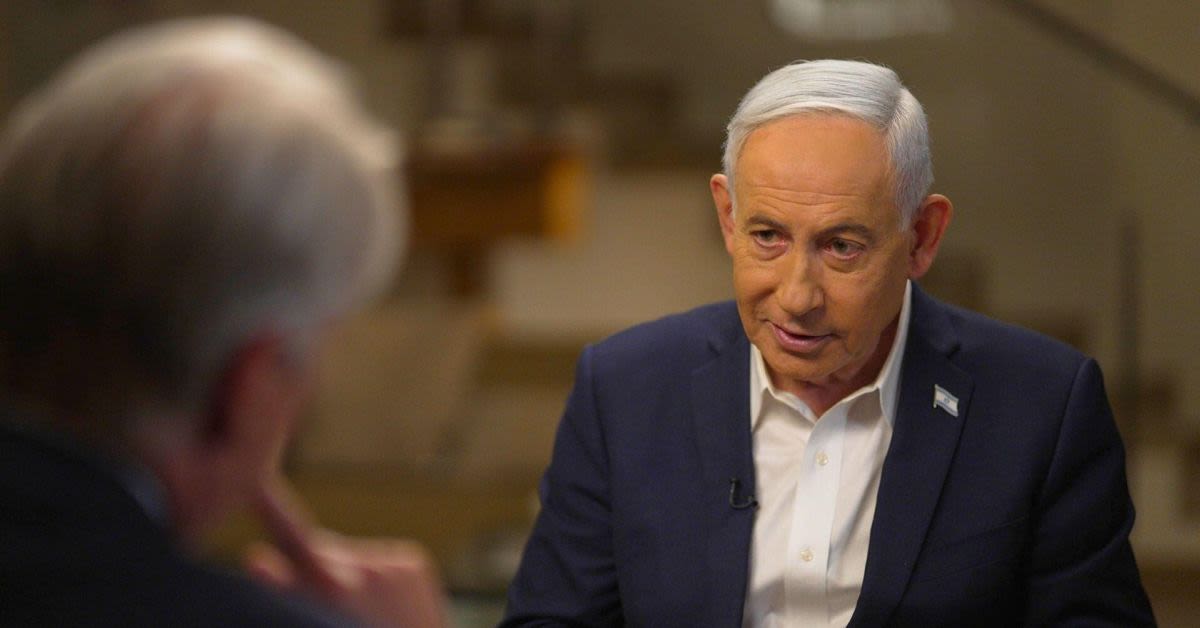
In a 60 Minutes interview, Netanyahu described Trumps stance in strikingly direct terms, portraying the president as committed to physically extracting Irans nuclear materials rather than relying on the kind of paper agreements long favored by the foreign-policy establishment. According to WND, the comments come in the wake of U.S. and Israeli military strikes on Iran carried out on Feb. 28, after negotiations over the Islamic regimes nuclear program collapsed.
Netanyahu told CBS News correspondent Major Garrett that the joint campaign had accomplished a great deal, but he stressed that the mission was far from complete and that Irans nuclear and military infrastructure remained a serious concern. Theres still nuclear material, enriched uranium, that has to be taken out of Iran. Theres still enrichment sites that have to be dismantled, Netanyahu said, adding, There are still proxies that Iran supports. There are ballistic missiles that they still want to produce. Now, weve degraded a lot of it, but all that is still there, and theres work to be done.
Pressed by Garrett on the practical question of How do you envision the highly enriched uranium will be removed from Iran? Netanyahu did not hesitate to offer a blunt answer. You go in and you take it out, he replied, signaling a willingness to contemplate direct action that stands in sharp contrast to the Biden-era preference for sanctions waivers and diplomatic overtures.
The recent strikes have already sparked competing narratives from Tehran and Washington, with Iranian state media claiming that the rescued crew of a downed F-15E Strike Eagle had been involved in an operation targeting nuclear materiel stored at Isfahan, home to a key Iranian research center. Iranian outlets further alleged that the U.S. lost multiple aircraft in the operation, but United States Central Command stated that only one A-10 Thunderbolt close-air-support plane was lost and that its pilot was safely recovered.
Garrett pressed further, asking, With what? Special Forces from Israel, Special Forces from the United States working in tandem under international supervision? How? Netanyahu declined to spell out operational details but made clear that Trumps intentions were not ambiguous. Well, Im not gonna talk about military means, but what President Trump has said to me, I want to go in there, I mean, hes said that publicly. Hes said it and I think hes right. Hes very committed to this. And I think it can be done physically, Netanyahu responded. Thats not the problem. If you have an agreement, and you go in, and you take it out, why not? Thats the best way.
When Garrett followed up by asking, What if there isnt an agreement? Can it be taken out by force? Netanyahu signaled that there were limits to what he would say on air. Well, youre gonna ask me these questions. Im gonna dodge them, so you can ask me that second time, third time, and Ill dodge it second time, third time, the prime minister replied, hinting at options that U.S. and Israeli officials prefer to keep off the record.
Energy Secretary Chris Wright added fuel to the debate during an appearance on Meet the Press, asserting that Iran possessed enough material for 10 nuclear devices and nearly 1,000 pounds of uranium enriched to 60%. Wright also argued that dismantling Irans nuclear program would, over time, help reduce global energy costs, a point consistent with conservative arguments that geopolitical stability and American strength are essential to affordable energy.
Trump Middle East Envoy Steve Witkoff made similar claims in a March 2 interview with Sean Hannity, but the administration has yet to provide public evidence substantiating the specific figures cited by Witkoff or Wright. Trump and other officials have nonetheless insisted that the Iranian nuclear program was obliterated following the June 2025 strike on multiple nuclear sites, while still maintaining that Iran continues to pose a threat to the United States without offering detailed intelligence to the public.
Secretary of State Marco Rubio has previously explained that the U.S. launched its strikes in part because an anticipated Iranian response to an Israeli operation could have targeted American forces in the region. The New York Times reported on April 7 that, despite skepticism from some administration figures, including Vice President JD Vance, Trump was determined to move forward with strikes during Netanyahus Feb. 11 visit to the White House, underscoring the presidents instinct to confront Tehran rather than appease it.
Not everyone in the national-security community agrees with that approach, with National Counterterrorism Center Director Joe Kent publicly breaking ranks on March 17. Kent blamed the conflict on pressure from Israel and its powerful American lobby and argued in a post on X that Iran posed no imminent threat to the United States, a view that aligns more closely with the isolationist left than with conservatives who see the Iranian regime as a long-term menace to U.S. interests and allies.
As debate continues over the scope of Irans nuclear capabilities and the wisdom of preemptive strikes, the divide between those favoring robust American and Israeli action and those urging restraint remains stark. The White House did not immediately respond to a request for comment from the Daily Caller News Foundation, leaving unanswered key questions about how far Washington is prepared to go to ensure that Tehran never becomes a nuclear-armed power.
Login