
President Donald Trump has issued a stark warning to Irans ruling regime over its nuclear ambitions, signaling that the United States is prepared to take decisive action to neutralize any threat involving Tehrans enriched uranium.
In a newly released interview, Trump made clear that securing Irans nuclear material remains his foremost national security priority, and he underscored that the regime is under constant American surveillance. According to RedState, the presidents comments are likely to unsettle Iranian leaders, who now must weigh whether Washington already knows far more about their nuclear infrastructure than they had assumed.
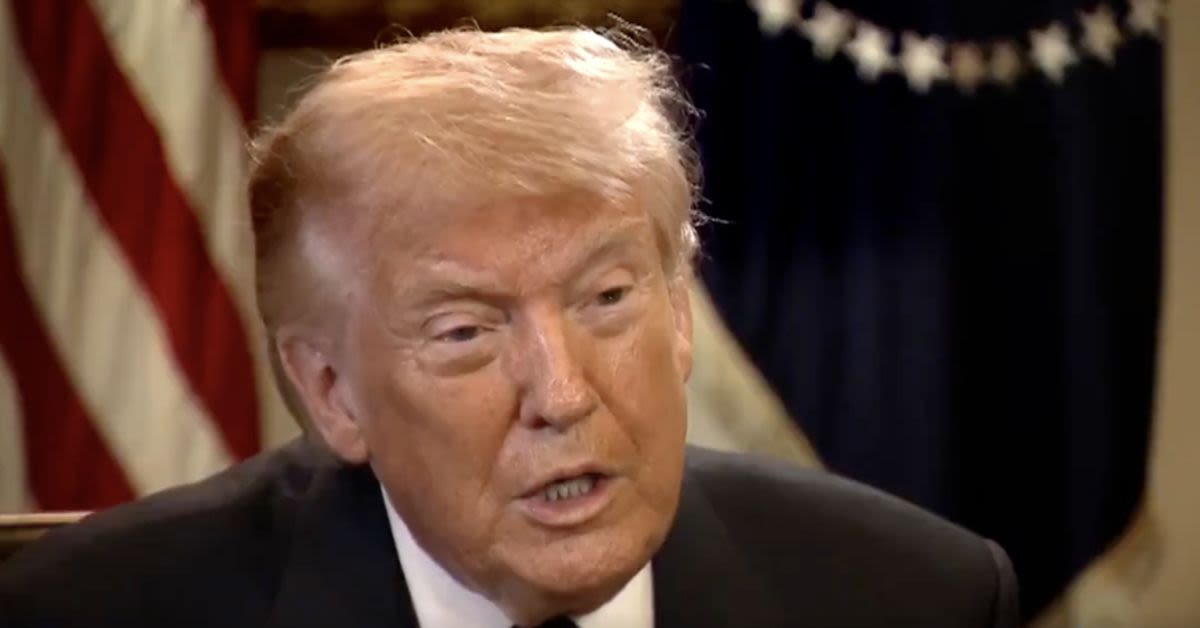
Trump, 79, spoke with Full Measure with Sharyl Attkisson in an interview that aired Sunday, revealing the extent of U.S. monitoring capabilities and the role of the Space Force in tracking Irans nuclear assets. Well get that at some point, Trump told Attkisson, referring to the buried enriched uranium. We have it surveilled. You know, I did a thing called Space Force, and they are watching.
He went on to describe the precision of American intelligence, suggesting that any attempt to tamper with the nuclear material would be detected immediately. If somebody walked in, they can tell you his name, his address, the number of his badge, he said of the technologys capability. We have that very well surveilled. If anybody got near the place, we will know about it, and well blow them up.
The nuclear stockpile has been at the center of years of fraught negotiations with Tehran, as successive U.S. administrations have tried to prevent Iran from reaching weapons-grade capability. While American forces could physically seize or destroy the material, such an operation would be complex and dangerous, and Washington has so far preferred to pursue diplomatic avenues to avoid risking American lives.
Trumps remarks suggest he is attempting to reduce that risk by leveraging deterrence and psychological pressure, making clear that a military option is ready if talks fail. From a conservative standpoint, this posture reflects a return to peace through strength, contrasting sharply with the more conciliatory approach favored by the Biden administration and many European governments.
The president also cast doubt on the reliability of any agreement with Tehran, emphasizing that the regime has a long record of duplicity. Trump acknowledged the difficulties of negotiating with Iran because they make a deal, and then they break it.
He argued that, despite their rhetoric, Irans leaders understand the weakness of their position when confronted with American power. Theyre militarily defeated. In their own minds, maybe they dont know that, but I think they do, because I deal with them. And we cannot ever let Iran have a nuclear weapon, the president said.
Trumps latest warning is almost certain to rattle the regime, which must now consider not only what the United States already knows, but what it might be prepared to do next. There is also the possibility that Trump is deliberately prompting Iran to move or expose sensitive materials, creating an opportunity for U.S. intelligence or special operations to act more effectively.
Observers on the right have noted that Trump has used strategic feints before, such as during Operation Epic Fury, to keep adversaries off balance and force them into costly mistakes. Alternatively, his comments may be designed to push Tehran toward accepting a more stringent and verifiable peaceful arrangement, under the shadow of overwhelming American force.
Either way, Irans rulers are unlikely to be resting comfortably after hearing that their most sensitive sites are under constant watch and that any interference could trigger a devastating response. They are already aware that U.S. intelligence has deep insight into the activities and movements of their leadership, a reality that makes underestimating American capabilities a dangerous gamble.
At the same time, the regime has been engaging in increasingly reckless behavior, including drone attacks on ships and regional allies, and repeated attempts to evade U.S. sanctions and maritime interdictions. Those efforts have often backfired, with one particularly embarrassing episode seeing Iranian forces seize a vessel that was, in fact, carrying their own oil.
With each misstep, Tehran narrows its diplomatic options and invites a harsher response from Washington and its partners, who are running out of patience with the regimes provocations. Action in response to Irans attacks appears inevitable, and the window for the regime to secure a deal that averts a more forceful reckoning is rapidly closing.
Login