
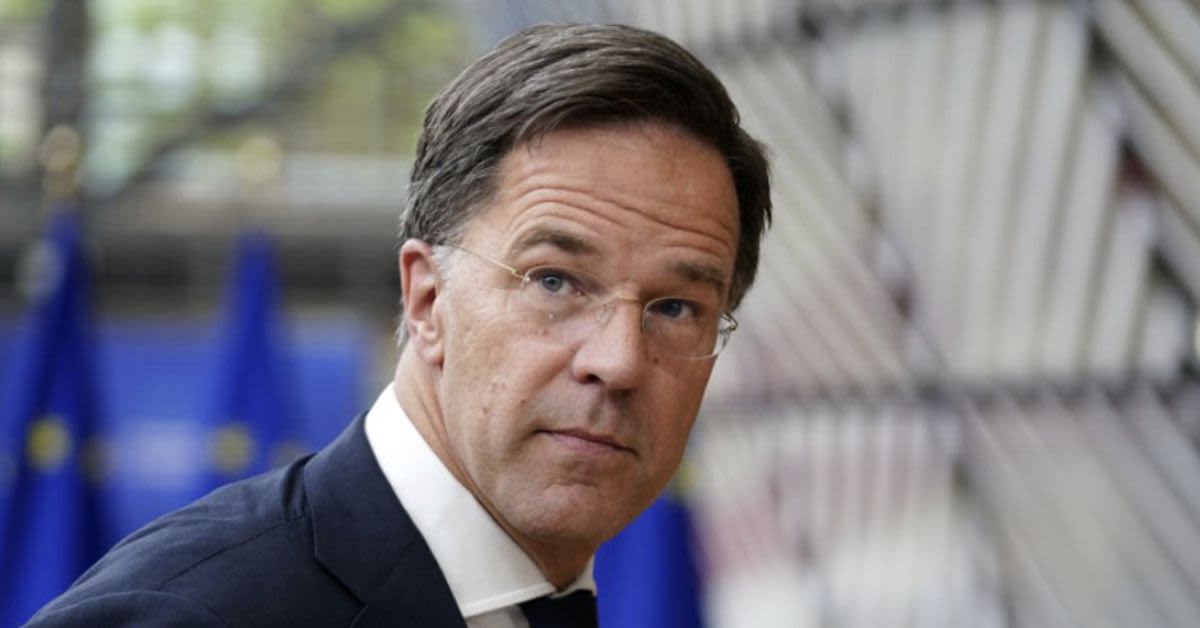
NATO Secretary General Mark Rutte has declared that Europe has gotten the message from President Donald Trump, who has warned of consequences for allies that failed to stand firmly with Washington during the confrontation with the Islamist regime in Tehran.
Rutte, the former Dutch prime minister who has emerged as one of President Trumps most vocal supporters in Europe since assuming leadership of NATO, is once again attempting to bridge the widening gap between European capitals and Washington. As reported by Breitbart, this latest round of transatlantic tension comes amid U.S. moves to scale back its military footprint on the continent and reassess long-standing security guarantees taken for granted by European elites.
On Friday, the Pentagon announced that the United States would reduce its troop presence in Germany by 5,000 over the next six to twelve months. The following day, President Trump indicated that the drawdown could in fact be far steeper, though he did not provide specific figures.
Mr Trump also signalled that U.S. forces might be shifted out of other European countries, including Spain and Italy, after Madrid refused American access to its bases and Rome blocked certain flights through its airspace during the Iran crisis. These decisions underscored a broader pattern of European hesitation in confronting the Iranian regime, even as it threatens Western interests and regional stability.
Berlin stopped short of denying access to its bases or airspace, but German Chancellor Friedrich Merz, already struggling with collapsing domestic support, chose to become the loudest critic of Washingtons effort to degrade Tehrans radical regime and its weapons programmes. After initially insisting that the Iran conflict was not our war, Merz accused the White House of lacking a coherent strategy for victory and claimed that the Mullahs in Tehran were humiliating the United States, despite Irans forces having been severely damaged during Operation Epic Fury.
That posture did not last. Faced with President Trumps threat to cut troop levels and raise tariffs on European cars a direct shot at Germanys powerful automotive sector Merz abruptly shifted tone on Sunday evening.
Posting on X, the Chancellor wrote: The United States is and will remain Germanys most important partner in the North Atlantic Alliance We share a common goal: Iran must not be allowed to acquire nuclear weapons. The statement marked a clear retreat from his earlier criticism and highlighted how dependent Berlin remains on American security and economic goodwill.
Responding to the broader dispute between Washington and its European partners, NATO Secretary General Mark Rutte said on Monday that Europeans have gotten the message from the White House. Yes, there has been some disappointment from the ?U.S. side, but Europeans have listened, he told reporters at a European Political Community summit in Armenia.
Rutte, who has taken to referring to President Trump as daddy, suggested that many European governments are now eager to sign bilateral agreements with Washington to secure continued access to U.S. forces and bases in future conflicts. His remarks underscored a growing recognition in Europe that American protection is not an unconditional entitlement, but something that must be earned through concrete support and fair burden-sharing.
He further noted that more and more European nations are preparing to join efforts to keep the Strait of Hormuz open and to prevent Iran from exploiting this vital oil chokepoint to fund its regime. This includes sending minesweeping vessels to the Persian Gulf in anticipation of the next phase of the conflict, a sign that some European leaders are finally willing to contribute more than rhetoric to collective security.
Yet neither Merzs late-stage praise nor Ruttes conciliatory comments are likely to derail the Pentagons plans to reduce troop levels in Germany, a long-standing objective of President Trump dating back to his first term. For more than a decade, Mr Trump has castigated Berlin for failing to meet NATO defence spending commitments while expecting the United States to underwrite its security, even as Germany enriched Russia by purchasing its oil and gas.
President Trump had previously ordered a drawdown of U.S. forces from Germany, a move that was reversed by his predecessor, President Joe Biden, in line with the Democratic establishments preference for open-ended security guarantees and minimal accountability from allies. The renewed push to scale back the American presence now signals a return to a more hard-nosed, America First approach that insists European partners shoulder their fair share of the burden.
The reduction of U.S. troops in Germany, where American forces have been stationed in varying numbers since the end of the Second World War, could have serious economic and strategic implications for Berlin. According to public broadcaster DW, over 10,000 German jobs are directly tied to U.S. military bases, with another 70,000 jobs indirectly dependent on the American presence, and roughly 36,000 U.S. troops are currently deployed across about 40 locations in the country.
As Washington recalibrates its commitments, Germany and its neighbours now face a choice between continuing to free-ride on an increasingly impatient United States or finally investing in their own defence and standing firmly against regimes like Iran. The Trump administrations message, echoed by Rutte, is that the era of cost-free European equivocation is drawing to a close, and those who ignore it may find both American troops and American patience in much shorter supply.
Login