
The Trump administration is quietly narrowing the scope of Project Freedom in the Strait of Hormuz, signaling that U.
S. warships will not directly escort commercial vessels despite earlier expectations raised by President Donald Trumps public statements.
According to Hot Air, officials now insist that the Navys role will be limited to guiding shipsessentially providing routing advice and intelligencerather than placing American destroyers alongside tankers and cargo vessels as they exit the Persian Gulf. This clarification appears less like a tactical adjustment and more like a legal and political maneuver, potentially designed to reset the War Powers Act clock by treating any future Iranian attack on civilian shipping as the start of a new conflict rather than a continuation of existing hostilities.
The administration has already argued that with the recent ceasefire, the hostilities were over; if Iran strikes a neutral vessel and the United States responds, the White House may claim it is merely reacting defensively to a fresh act of aggression rather than initiating combat operations.
Practically, this means that U.S. warships will not be threading the needle of the Strait of Hormuz in close company with merchant ships, as many observers initially assumed after Trumps Truth Social announcement. The Navys internal risk calculus appears to have concluded that the danger to American vessels from mines, drones, missiles, and swarming speedboats outweighs the benefits of a visible, steel-on-steel escort presence in one of the worlds most volatile maritime chokepoints.
U.S. Central Command (CENTCOM) has branded the effort Project Freedom, and its public messaging has been polished enough to suggest robust military backing without explicitly promising armed escorts. In a statement from Tampa, Florida, CENTCOM announced that its forces will begin supporting Project Freedom, May 4, to restore freedom of navigation for commercial shipping through the Strait of Hormuz, describing the waterway as an essential international trade corridor through which a quarter of the worlds oil trade at sea and significant volumes of fuel and fertilizer products are transported.
CENTCOM commander Adm. Brad Cooper underscored the stakes, declaring, Our support for this defensive mission is essential to regional security and the global economy as we also maintain the naval blockade. The Pentagon and State Department have also rolled out a parallel diplomatic framework, the Maritime Freedom Construct, which aims to enhance coordination and information sharing among international partners in support of maritime security in the strait, blending diplomatic pressure with military coordination in support of Project Freedom.
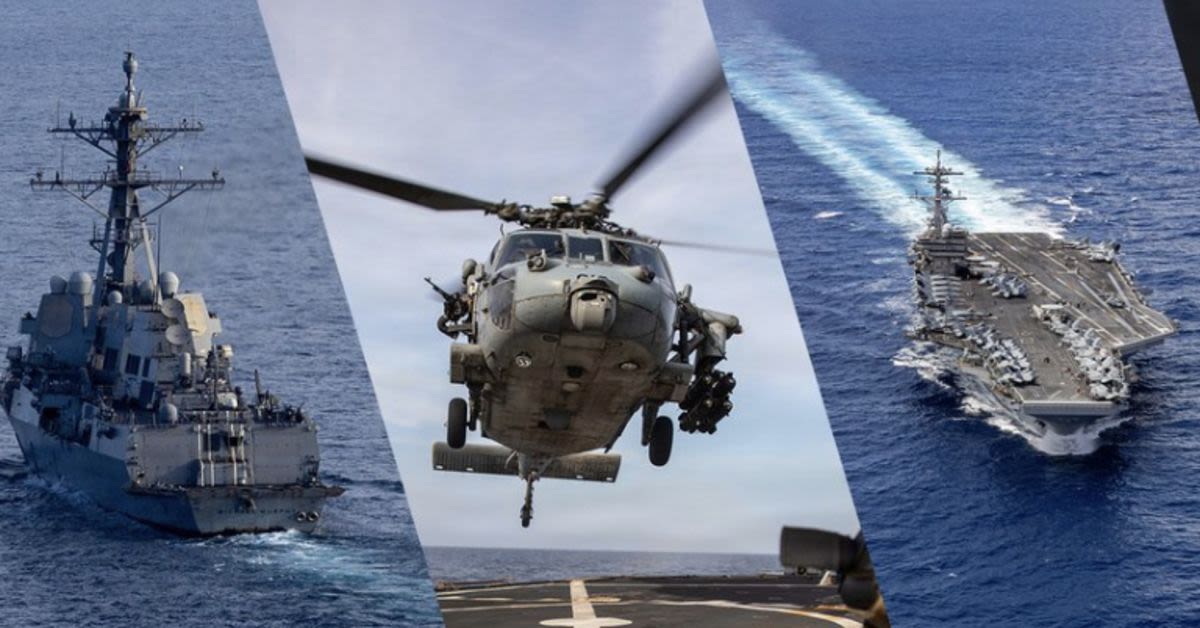
CENTCOM further highlighted the scale of the U.S. commitment, noting that support to Project Freedom will include guided-missile destroyers, over 100 land and sea-based aircraft, multi-domain unmanned platforms, and 15,000 service members. Yet despite this formidable order of battle, subsequent clarifications from both Trumps team and administration officials indicate that guidance will largely consist of passing intelligence and recommending safer routes, not physically shepherding ships through contested waters under an American flag.
Trumps original framing on Truth Social had suggested something more muscular, prompting speculation that the United States was preparing to break Irans de facto blockade of the Strait and reassert full freedom of navigation. Instead, the operation is now being cast as a limited, humanitarian-focused effort to help neutral ships escape a war zone, rather than a comprehensive campaign to normalize two-way commercial traffic through Hormuz.
Trumps own words emphasized this narrower, humanitarian angle, even as they carried an unmistakable warning to Tehran.
This process, Project Freedom, will begin Monday morning, Middle East time. I am fully aware that my representatives are having very positive discussions with the country of Iran, and that these discussions could lead to something very positive for all, he said in the statement.
According to Trump, the mission is centered on assisting neutral vessels that have been effectively trapped by the conflict and Iranian threats. He explained that countries had asked the United States if we could help free up their Ships, which are locked up in the Strait, stressing that They are merely neutral and innocent bystanders!
For the good of Iran, the Middle East, and the United States, we have told these Countries that we will guide their Ships safely out of these restricted Waterways, so that they can freely and ably get on with their business, he added, casting the effort as a way to relieve pressure on innocent parties while leaving room for negotiations with Tehran. Trump further stated that the ships to be escorted out will not be returning until the area becomes safe for navigation, repeatedly describing the operation as a humanitarian process aimed at protecting crews and stabilizing a dangerous situation.
From a strategic standpoint, this approach allows hundreds of vesselsmany likely loaded with oil and other critical cargoto exit the region, providing at least temporary relief to global energy markets without immediately restoring full commercial normalcy.
It also offers Iran a face-saving off-ramp: by tolerating a one-way humanitarian evacuation, the regime can avoid a direct confrontation while still claiming that it has not surrendered control of the Strait.
Trump, ever the negotiator, has hinted at progress in back-channel talks with Tehran, but his public optimism should be treated with caution. Negotiations, particularly with a regime like Irans, are about leverage and perception, and Trump is well known for using public statements as tools of persuasion rather than transparent disclosures of his full strategy.
In a longer Truth Social message, Trump laid out his rationale in detail, stressing that the ships in question belong to nations with no stake in the Middle Eastern conflict. Countries from all over the World, almost all of which are not involved in the Middle Eastern dispute going on so visibly, and violently, for all to see, have asked the United States if we could help free up their Ships, which are locked up in the Strait of Hormuz, on something which they have absolutely nothing to do with They are merely neutral and innocent bystanders! For the good of Iran, the Middle East, and the United States, we have told these Countries that we will guide their Ships safely out of these restricted Waterways, so that they can freely and ably get on with their business.
He continued by emphasizing both the neutrality of the vessels and the limited scope of the mission.
Again, these are Ships from areas of the World that are not in any way involved with that which is currently taking place in the Middle East. I have told my Representatives to inform them that we will use best efforts to get their Ships and Crews safely out of the Strait. In all cases, they said they will not be returning until the area becomes safe for navigation, and everything else. This process, Project Freedom, will begin Monday morning, Middle East time. I am fully aware that my Representatives are having very positive discussions with the Country of Iran, and that these discussions could lead to something very positive for all. The Ship movement is merely meant to free up people, companies, and Countries that have done absolutely nothing wrong They are victims of circumstance."
"This is a Humanitarian gesture on behalf of the United States, Middle Eastern Countries but, in particular, the Country of Iran. Many of these Ships are running low on food, and everything else necessary for largescale crews to stay on board in a healthy and sanitary manner. I think it would go a long way in showing Goodwill on behalf of all of those who have been fighting so strenuously over the last number of months. If, in any way, this Humanitarian process is interfered with, that interference will, unfortunately, have to be dealt with forcefully. Thank you for your attention to this matter!
The risks inherent in any more robust naval presence are obvious, especially to those familiar with modern maritime warfare.
Contemporary surface combatantsaside from heavily protected aircraft carriersare built to intercept threats at range, not to absorb heavy damage, and while they can be difficult to sink outright, disabling them (mission kills) is far easier than in past eras.
A U.S. destroyer in the confined waters of the Strait would be an enticing target for Irans Revolutionary Guard Corps Navy, which has invested in swarming speedboats, drones, mines, and anti-ship missiles precisely to exploit such vulnerabilities.
If Irans capabilities were limited to small boats, American air power and shipboard defenses would likely be sufficient to repel even a sizable swarm, but a coordinated salvo of modern, supersonic anti-ship missiles could pose a far more serious threat.
This raises the question of what Trump and his advisers believe they know about the current threat environment that the public does not.
Is Project Freedom, even in its scaled-back form, a test of Irans willingness to avoid escalation, a signal that some progress has been made in quiet negotiations, or a calculated gamble that Tehran will not risk open conflict with the United States over neutral shipping?
There is also a sophisticated legal dimension that conservatives have noted, particularly in light of Trumps prior War Powers correspondence. On May 1, a War Powers letter formally declared hostilities ended while preserving U.S. force posture and asserting the presidents Article II constitutional authority; on May 3, Project Freedom was announced as a humanitarian operation rather than a new military campaign.
Under this framework, if neutral commercial ships exercise their freedom of navigation rights and Iran fires on them, the regime would be clearly initiating a new conflict. Trump, or any president in that position, could then respond under his inherent constitutional authority to defend U.S. forces and international commerce without triggering a fresh War Powers clock, since the United States would not have started the hostilities.
Yet the latest statements from administration officials now walk back even the perception of a direct escort mission. They insist that Trumps Truth Social post was not intended to suggest that U.S. Navy vessels would be physically accompanying merchant ships through the Strait, but rather that Washington would be advising them on safer routes and providing intelligence support.
This shift has prompted understandable skepticism from those who expected a more assertive American stance in defense of global commerce. Critics have derided the scaled-back concept as little more than asking civilian ships to run the gauntlet, with one commentator sarcastically suggesting that it might be more accurately labeled Project Meat Shield, since Iran has already been firing on civilian shipping without facing decisive consequences.
Axios has reported that The latest: The new Hormuz Strait initiative will not necessarily include U.S. Navy ships escorting commercial ships, according to two American officials. The outlet also noted, What he's saying: Trump wrote on Truth Social that countries from around that are not involved in the war but have ships that are stuck in the strait have asked the U.S. to help free them.
For conservatives who believe in peace through strength and a robust defense of international trade routes, the administrations hedging raises serious concerns about deterrence and credibility.
If Washington is unwilling to place its own ships in harms way while insisting that neutral commercial vessels press ahead under mere guidance, Tehran may conclude that the United States lacks the resolve to enforce even basic norms of maritime security.
At the same time, the legal and diplomatic architecture around Project Freedom suggests that the groundwork is being laid for a clear attribution of blame if Iran chooses escalation over restraint.
By defining the mission as humanitarian, focused on neutral ships, and limited to guidance and intelligence, U.S. officials are drawing a bright line: any attack on these vessels will be seen as an unprovoked act of aggression by Iran, inviting a forceful response under both international law and the presidents constitutional authority.
Whether this carefully calibrated posture will be enough to deter Iranor whether it will instead embolden the regime by signaling American cautionremains to be seen. What is clear is that the stakes in the Strait of Hormuz are enormous: for global energy markets, for the safety of civilian mariners, and for the credibility of the United States as the primary guarantor of freedom of navigation in an increasingly dangerous world.
Login