
The United States has confirmed plans to withdraw thousands of troops from Germany over the next year, marking a significant recalibration of Washingtons military footprint in Europe following the conflict in Iran.
In what appears to be the first major step in the Trump administrations response to what it views as public disloyalty from key NATO partners, the Pentagon announced on Friday that U.S. Secretary of War Pete Hegseth has ordered 5,000 American soldiers to be redeployed from German bases. According to Breitbart, the move is being framed in Washington as part of a broader effort to align U.S. force posture with strategic realities rather than the preferences of European political elites who have repeatedly second-guessed American policy in the Middle East.
In a statement provided to AFP, Pentagon spokesman Sean Parnell said: We expect the withdrawal to be completed over the next six to twelve months. He added that This decision follows a thorough review of the Departments force posture in Europe and is in recognition of theater requirements and conditions on the ground.
The announcement followed President Donald Trumps remarks earlier in the week that his administration was studying and reviewing the possible reduction of Troops in Germany. For years, Trump has questioned why American taxpayers should underwrite the defence of wealthy European nations that, in his view, underinvest in their own militaries while criticizing U.S. foreign policy.
The president has also signalled that Germany may not be the only European country facing a drawdown, with Spain and Italy now openly discussed as candidates for troop reductions. Both governments, to varying degrees, opposed the Iran campaign, with Spain refusing access to its bases and airspace and Italy reportedly restricting its airspace for strikes on Iran.
When pressed on whether he intended to cut troop numbers in Italy and Spain, Trump responded with characteristic bluntness: Yeah, probably, I probably will. Why shouldnt I? As of the end of last year, there were 3,814 active-duty American troops stationed in Spain, 12,662 in Italy, and 36,436 in Germany, a deployment pattern that has long reflected U.S. willingness to shoulder Europes security burdens.
Berlin, unlike Madrid, did not block the use of its bases during the Iran conflict, but that did not spare German Chancellor Friedrich Merz from Trumps ire. Merz publicly criticized the war, claiming there was no coherent strategy behind it, a charge that played well with European elites but further strained relations with Washington.
Trump responded sharply, accusing Merz of neglecting his own responsibilities at home and in Europe. The president declared that the Chancellor of Germany should spend more time on ending the war with Russia/Ukraine (Where he has been totally ineffective!), and fixing his broken Country, especially Immigration and Energy, and less time on interfering with those that are getting rid of the Iran Nuclear threat, thereby making the World, including Germany, a safer place!
The White House has also escalated economic pressure on Europe, particularly Germany, whose export-driven model has long benefited from preferential access to the U.S. market. On Friday, Trump announced a 25 per cent increase in tariffs on cars and trucks from the European Union, arguing that Brussels had failed to fully comply with the trade agreement negotiated by his administration last year.
Trump made clear that European manufacturers have a straightforward way to avoid the new tariffs: invest in American workers and factories. It is fully understood and agreed that, if they produce Cars and Trucks in U.S.A. Plants, there will be NO TARIFF. Many Automobile and Truck Plants are currently under construction, with over 100 Billion Dollars being invested, A RECORD in the History of Car and Truck Manufacturing. These Plants, staffed with American Workers, will be opening soon There has never been anything like what is happening in America today! he wrote on Truth Social.
The planned troop reduction in Germany caps a decade of criticism from Trump, who has repeatedly condemned Berlin for becoming dependent on Russian energy while expecting the United States to guarantee its security against Moscow. From a conservative standpoint, the move reflects a long-overdue insistence that prosperous allies take responsibility for their own defence rather than treating American power as an unlimited subsidy.
Although Trumps pressure campaign has pushed NATO members, including Germany, to increase defence spending, the lack of meaningful support during the Iran war has clearly hardened his stance. The president has argued that when Washington called for assistance, the alliance was largely absent, reinforcing his belief that U.S. commitments must be tied to genuine reciprocity, not empty rhetoric.
NATO, for its part, has sought to project calm and continuity in the face of Washingtons shift. Responding to the announcement, a NATO spokesman said: We are working with the U.S. to understand the details of their decision on force posture in Germany.
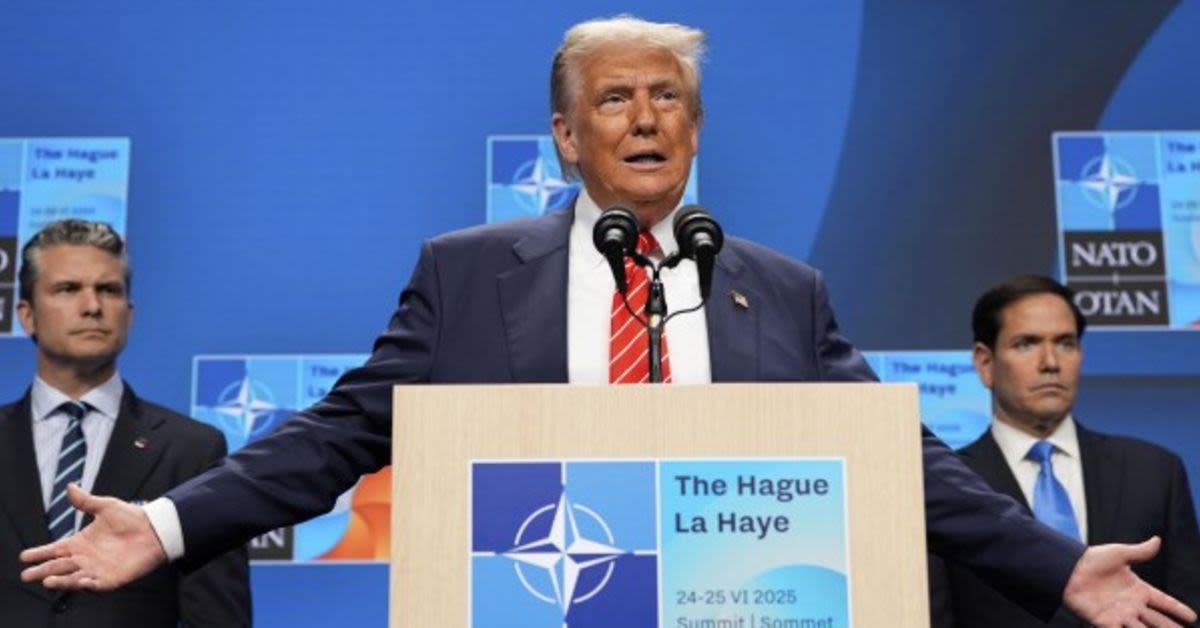
The alliance also framed the move as a reminder that Europe must do more for its own security, not less. This adjustment underscores the need for Europe to continue to invest more in defence and take on a greater share of the responsibility for our shared security where were already seeing progress since Allies agreed to invest 5 per cent of GDP at the NATO Summit in The Hague last year. We remain confident in our ability to provide for our deterrence and defence as this shift towards a stronger Europe in a stronger NATO continue.
Login